




You soundproof a room cheaply by putting mass, damping and airtight sealing on the two or three paths where sound actually escapes, and refusing to pay for decorative coverage everywhere else. Across the residential quotes our factory issued in 2024, a 12 m² bedroom handled that way landed between $300 and $900 in materials. The number is ordinary. Where that money sat is the part worth copying.
The spectrum report I opened on Tuesday came from a 60 m² conference room at a municipal public security bureau in East China. The contract line read DnT,w ≥ 45 dB, and the field measurement returned 51 dB, with the curve sitting above the reference shape at every third-octave band from 200 Hz to 3150 Hz, on a partition that cost less than the decorative cladding beside it. I answer the complaint line at the factory, so I mostly see rooms where nobody ran this test and the phone call gets loud. This room ran it and passed with six decibels of margin, and the reasons are worth more than the invoice.
What the acceptance report actually measured
DnT,w is the weighted field sound insulation between two rooms, the single-number verdict an acceptance test signs. The procedure is unglamorous: a loudspeaker fires pink noise in the source room, a calibrated meter reads the receiving room band by band, and ISO 717-1 collapses the curve into one figure. Homeowners send me a single dB(A) reading from a phone app and expect a diagnosis. I cannot give one. A wall can pass cleanly at 500 Hz and fall apart at 125 Hz, and the 125 Hz band is where traffic rumble and bass-heavy voices live.
GB 55016-2021 sets the ceiling that matters for living spaces: bedrooms at 40 dB(A) daytime and 30 dB(A) nighttime as equivalent continuous levels. Any material plan that cannot be shown to hit those numbers in a field test is decoration, whatever the brochure claims. I hold a cheap build to that line as strictly as a paid one, because physics does not check the invoice.
Cheap means the money follows the leak
Callers open with how much does it cost to soundproof a room, and my answer starts with a torch, a dark room and 20 minutes. Walk the perimeter at night with the lights off. Every sliver of light under a door, around a socket plate or through an unsealed cable penetration is a sound path, and unsealed paths leak sound the way an open window leaks heat. Mass law buys roughly 6 dB per doubling of surface mass, yet a 0.5 mm gap can hand most of that back. Seal before you stack anything.
Most no-effect calls I take share one pattern: the invoice went to visible surfaces while the leak stayed invisible. If you are only staring at the quote sheet, this trap is nearly impossible to dodge. A $35 rubber perimeter kit plus a threshold drop seal on a leaky bedroom door returns more decibels per dollar than any wall panel we ship, which is why it is the first item on my list when someone asks how do I soundproof a room for cheap.
Strip the question how to soundproof a room cheaply down to its studs and you get an audit followed by two purchases: seals, then mass on the surface the audit flags. The same sequence answers how to inexpensively soundproof a room for anyone who hates shopping: audit, seal, add mass, stop. Anyone quoting a price before that audit is quoting a floor with a hole in it.
Four materials on one table
This is the comparison I send to contractors, with prices from our 2024 factory quote sheet and the datasheets that travel with every shipment. Read the insulation column before the price column, because the two disagree loudly in one row.
| Material | Spec | Cost | Insulation effect | Fire class per GB 8624-2012 | Where it earns its keep |
|---|---|---|---|---|---|
| Rock wool, 50 mm | 48 kg/m³ | $4-6 per m² | +6 dB inside a stud cavity with double board | A1 non-combustible | Wall and ceiling cavities |
| Mass loaded vinyl, 2 mm | 5 kg/m² | $9-12 per m² | +5 to +8 dB as a damping layer | B1 | Door upgrades, floors, composite walls |
| Polyester acoustic panel, 9 mm | NRC ≥0.65 | $10-14 per m² | 0 dB blocking, cuts reverb | B1, oxygen index ≥32% | Reverb control on hard surfaces |
| Acoustic foam, 25 mm | NRC ≈0.5 | $5-9 per m² | Rw contribution near zero | B2 untreated | In-room echo only |
| Door seal kit | Rubber perimeter + drop seal | $30-45 per door | +5 to +10 dB on a leaky door | Accessory, no class needed | Every door on the loud side |
Foam ends most arguments. Acoustic foam at 25 mm carries an NRC near 0.5 while its Rw contribution sits close to zero; it treats echo inside a room and does nothing to stop sound crossing a wall. We manufacture and sell foam, so I feel safe telling you it should rarely be the first box on the truck.
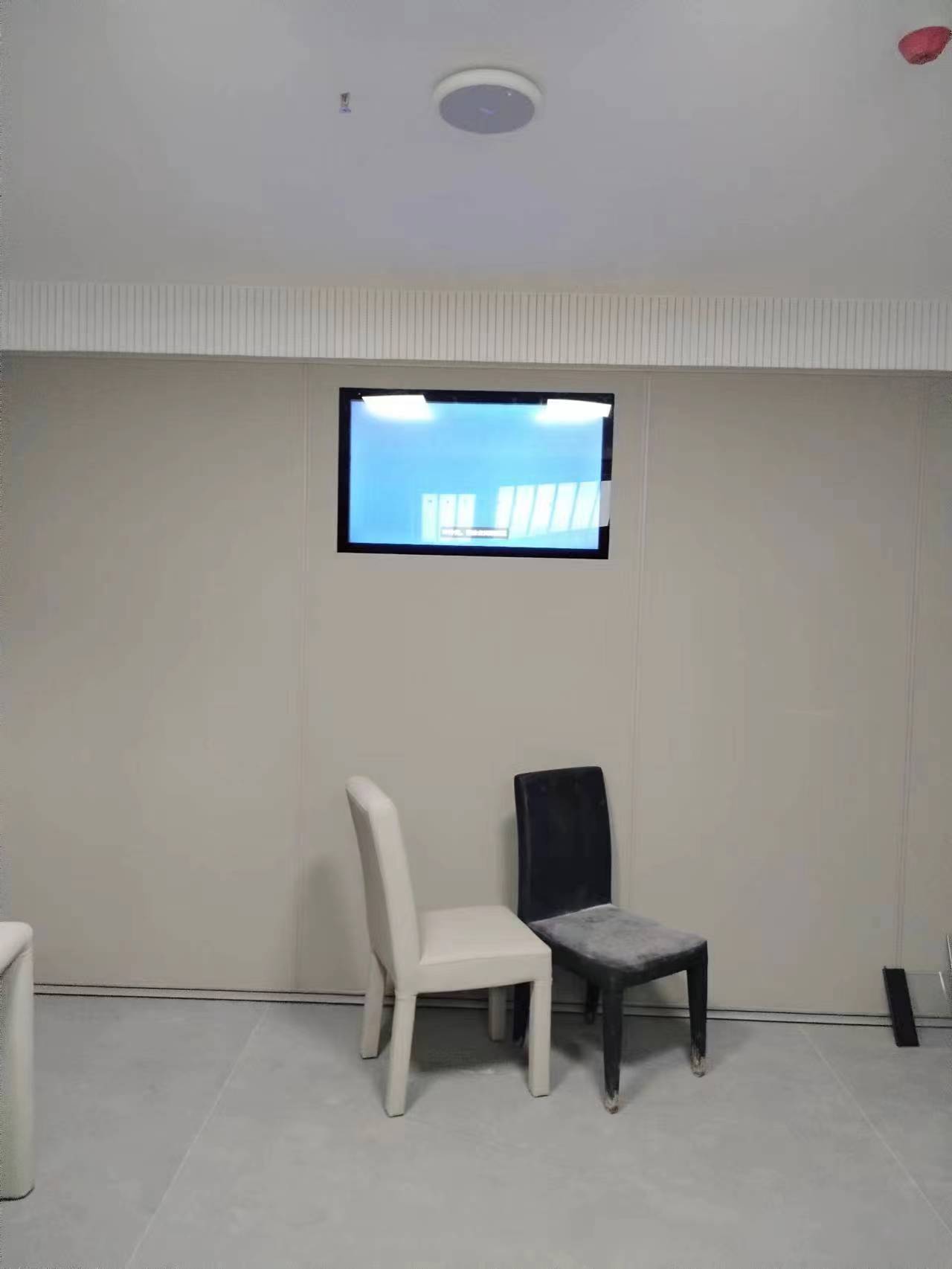
Mass loaded vinyl and rock wool solve different failures, and the bureau partition used both. The vinyl adds mass where no cavity exists, at 5 kg/m² for a 2 mm sheet; the wool kills hollow resonance inside the studs. Stack them and the gains largely add, which is how a mid-budget partition reached 51 dB while looking like ordinary painted drywall.
How do you soundproof a wall cheaply?
When the wall already stands and the budget is thin, the datasheet stack on my desk keeps returning the same ladder. A bare 75 mm stud wall with a single 12 mm board measures near Rw 34 dB. Fill the cavity with 50 mm rock wool at 48 kg/m³, then add a second 12 mm gypsum board with damping compound between layers, and the same wall reads around Rw 50-52 dB on our retest logs. Two moves, 16 dB or more.
- 50 mm rock wool, 48 kg/m³, $4-6 per m², into the cavity before any board goes back on.
- Second 12 mm gypsum layer with damping compound, $18-26 per m² all-in for the pair including perimeter sealant.
The same job fails for small reasons. Sockets cut back to back through a wall leave a 60 mm hole bridging both rooms, so stagger them by one stud bay or pack the boxes in mineral wool. And a wall lifted to Rw 52 next to a hollow-core door rated near Rw 20 wastes itself, since room performance follows the weakest surface and the door drags everything down.
Upgrades I put my name on
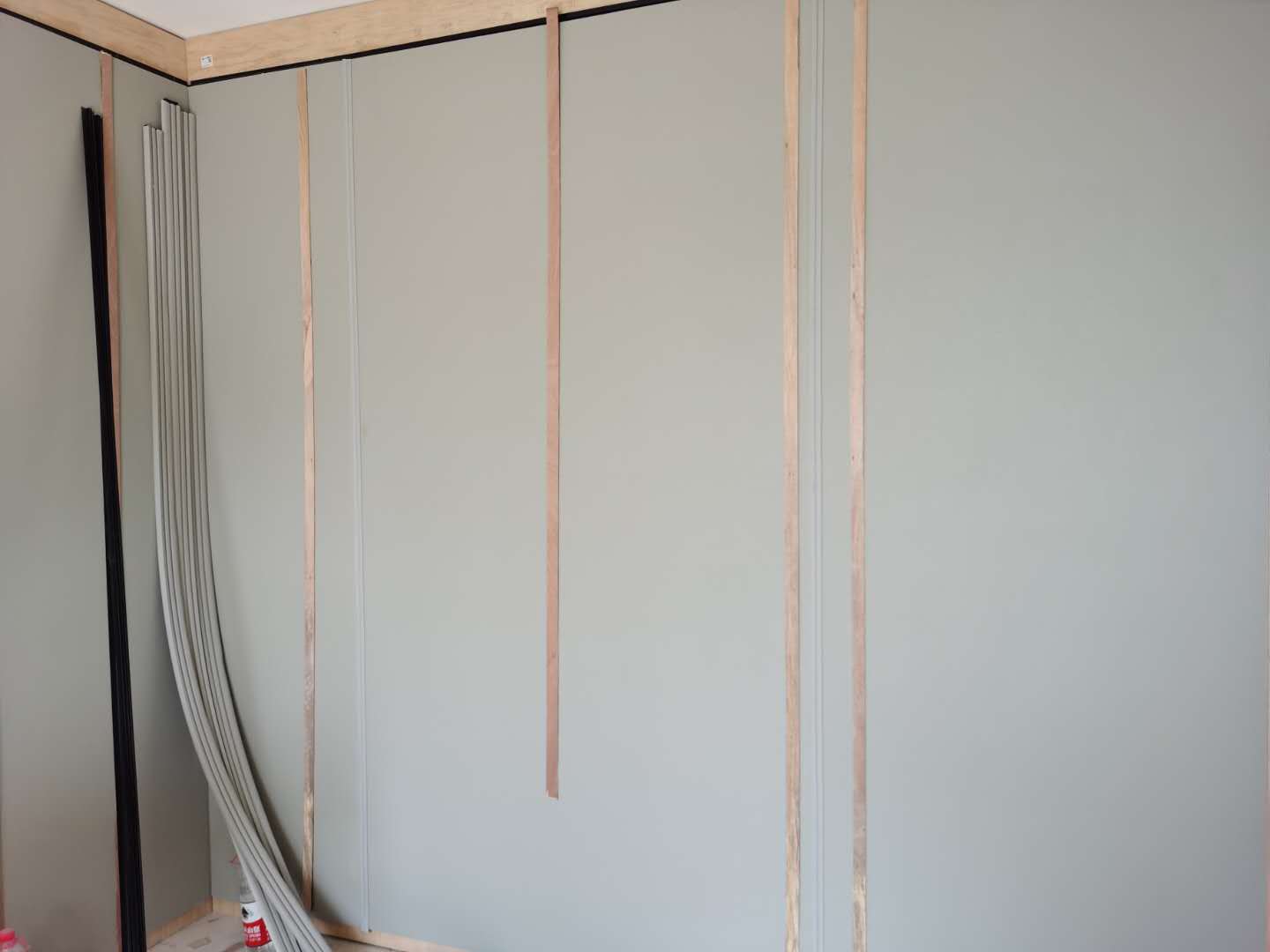
Rock wool, second board, damping compound, door seals. In spring a 22 m² bedroom in a Chengdu apartment took exactly that list for $540 in materials, and the retest we arranged showed DnT,w 49 dB against a 45 dB target, with no resilient clips and no cinema budget.
Upgrades I talk people out of
Honestly, for a home bedroom I do not recommend full decoupling with resilient clips. The extra $8-10 per m² buys 3-4 dB when the installer has done it before, and buys a buzzing wall when they have not. Reserve decoupling for studios next to drum rooms, and spend the difference on the door.
The fire report nobody asks for until it fails
Cheap builds die in inspection more often than in acoustics. Under GB 8624-2012, panels fixed to walls in public buildings need at least class B1, and for polyester and rubber products I insist on oxygen index ≥32% documented in a report from a CMA-qualified testing agency; a supplier self-declaration does not count. The bureau project carried that sheet in the acceptance folder, which is why the fire walk-through took 20 minutes instead of three weeks.
Ask for the report by batch and lot number matching the rolls actually delivered. (At handover, make the contractor bring the batch fire test report; without that sheet the fire inspection stalls and a finished room sits legally unusable.) Decorative retail kits often carry no classification at all, and the seller cannot produce a report because none exists.
Where factory-direct beats the big-box store
How much does soundproofing a room cost at retail versus ex-works? The same 50 mm rock wool sits at $9 per m² on the big-box shelf near our plant and $4.5 per m² on our loading dock. Multiply that gap across a 40 m² treatment and the difference funds the entire door and seal package. The saving is markup and packaging, not physics.
This is the lane 景丽伦英文站 works in: measurement and layout drawings prepared free before you commit a dollar, materials shipped with GB 8624 fire documentation, and pricing straight off the production line with nobody's showroom rent folded in. For anyone asking how much would it cost to soundproof a room end to end, a firm quote drawn on your actual floor plan beats a catalog guess every time, and it costs one message.
A ten-minute check before you pay
You do not own a calibrated analyzer, and a go/no-go call does not need one. Play pink noise inside the finished room at 85 dB(A) on any meter, app included, shut the door, and read outside: 60 dB(A) or lower means the envelope is doing real work, while anything above 70 dB(A) means the money went somewhere decorative. Walk the meter around the perimeter to find the surface that drags the result.
The stricter version is the one the bureau used, and it costs nothing but nerve: write DnT,w ≥ 45 dB, or your own target, into the acceptance sheet before work starts, measured by a third party, payment released on the number. A contractor who refuses that clause is telling you something. Believe them, and call someone else.
How to soundproof cheap?
Seal first: a door perimeter kit, a threshold drop seal and socket gaps, roughly $60-100 in total. Then add mass on the wall facing the noise with 50 mm rock wool plus a second 12 mm board. Most bedrooms land under $400 in materials this way, and foam would not move the meter.
How much to soundproof a room?
Per our 2024 quotes, a 12 m² bedroom runs $300-900 in DIY-grade materials, while a professional retrofit with decoupling and an acoustic door runs $1,500-3,000. Price the door and the noise-facing wall before anything else, because those two surfaces decide the total.
How to soundproof a wall cheaply?
Fill the stud cavity with 50 mm rock wool, screw on a second 12 mm gypsum board with damping compound, and seal the perimeter with acoustic sealant. Materials land at $18-26 per m² factory-direct and lift a standard stud wall from about Rw 34 dB to 50-52 dB.
How to soundproof a bedroom cheap?
Put the budget on the door and the shared wall: a $35 seal kit, cavity rock wool and a second board layer, with heavy curtains covering window leaks. Skip decorative panels until reverb is the actual complaint. Most bedrooms finish between $300 and $600 and get quieter within a weekend of work.
How to soundproof your room cheap?
Audit before buying. Turn the lights off at night, find every light leak, seal those paths, then add mass only to the surface facing the noise source. This ordering is why cheap builds pass and expensive builds fail: sound finds the gap you ignored.
Does acoustic foam block sound or only echo?
Only echo. At 25 mm, foam has an NRC near 0.5 and an airborne insulation contribution close to zero. Use it to tame reverb inside a room, and use mass plus seals when the complaint is noise crossing a wall.
How long does it take to soundproof a 12 m² bedroom?
Seals and sockets take one afternoon. The wall upgrade, cavity fill plus second board, takes two workers two days including taping and paint touch-up. Add one day for drying and a retest, so plan a long weekend, not a renovation.
Send the dimensions of your room and a photo of the noisy door to the 景丽伦英文站 contact page; the measurement and layout drawing are free, and a factory-direct quote with a delivery date lands in your inbox within 48 hours.

Leave A Comment