




Sound deadening plasterboard cuts the airborne noise passing through a wall by raising the surface mass of the lining, and the entire buying decision rests on two figures: surface density in kg/m² and the tested Rw of the complete assembly. Everything else on a typical datasheet is decoration.
I am writing this an hour after walking out of a renovated district library, ears still humming from the reading room. The contractor had lined the walls with 9.5 mm standard board at roughly 7 kg/m² and sold it to the client as acoustic lining. It blocks almost nothing at speech frequencies, so every conversation on the mezzanine drifted straight down into the quiet zone. This sale happens every week in this industry. The numbers below are how you make sure it never happens on your project.
Surface Density and What It Actually Buys You
Sound deadening plasterboard is a gypsum board built with a denser core, usually 1,000-1,150 kg/m³ against the 640-720 kg/m³ of standard board, which lifts a 12.5 mm sheet from roughly 8.5-9 kg/m² to 11.5-12.5 kg/m² of surface mass. Acoustic design runs on mass law: each doubling of surface mass gains about 6 dB of airborne insulation in theory. Real boards land closer to 3-4 dB for a 30 percent mass increase, because coincidence dips and stud resonance eat part of the gain. Thickness stays constant; mass does the work. Two boards of identical thickness can differ by 40 percent in weight, and just one of them belongs on a separating wall.
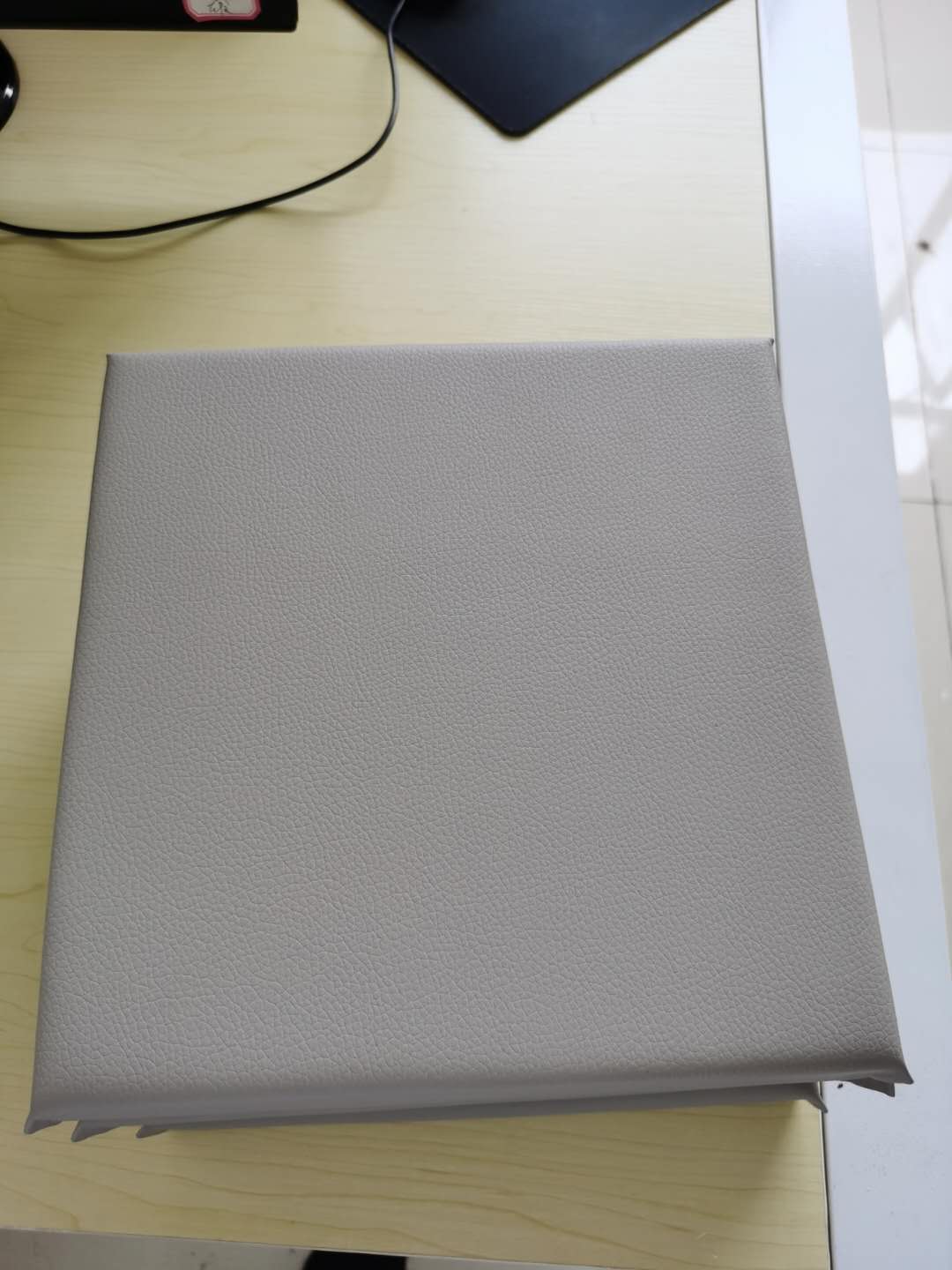
Ask for the kilogram figure before anything else on the quote. A 12.5 mm board declaring 10.5 kg/m² or less is a standard board with better marketing, and I have watched a tender collapse over exactly that line. Reputable plants keep batch tolerance within ±10 percent of the declared surface density under GB/T 9775 or EN 520; a supplier who cannot state their tolerance probably never measures it.
A dense board on its own will not pass the acceptance test
Here is the part the sales sheet skips. GB 55016-2021, the mandatory code for building acoustics in China, requires separating walls between dwellings to reach Rw + C of at least 50 dB. Approved Document E in England sets 43 dB DnT,w + Ctr for the same wall type. A single 12.5 mm deadening board each side on a steel stud frame tests around Rw 37-39 in the laboratory. The distance between 39 and 50 does not close with a fancier board.
It closes with assembly design. Double boarding each side, 50-100 mm of mineral wool in the cavity, resilient channels or staggered studs, and a continuous bead of acoustic sealant at the perimeter push the same board to Rw 52-55 under ISO 10140 laboratory conditions. That is the difference between a certificate and a retest. Spend the budget where the decibels are.
Honestly, I would not pay the deadening premium across every wall of a home. Bedrooms facing a quiet corridor get standard board, and the saved money moves to the party wall or the plant room wall where the real noise energy sits. You, if three quotes are sitting on your desk right now, should ask each bidder which tested assembly drawing the price follows. The bidder who answers with a drawing and a report number is the one worth a second meeting.
Hushboard, sound deadening fiberboard or plasterboard, which one belongs on your wall?
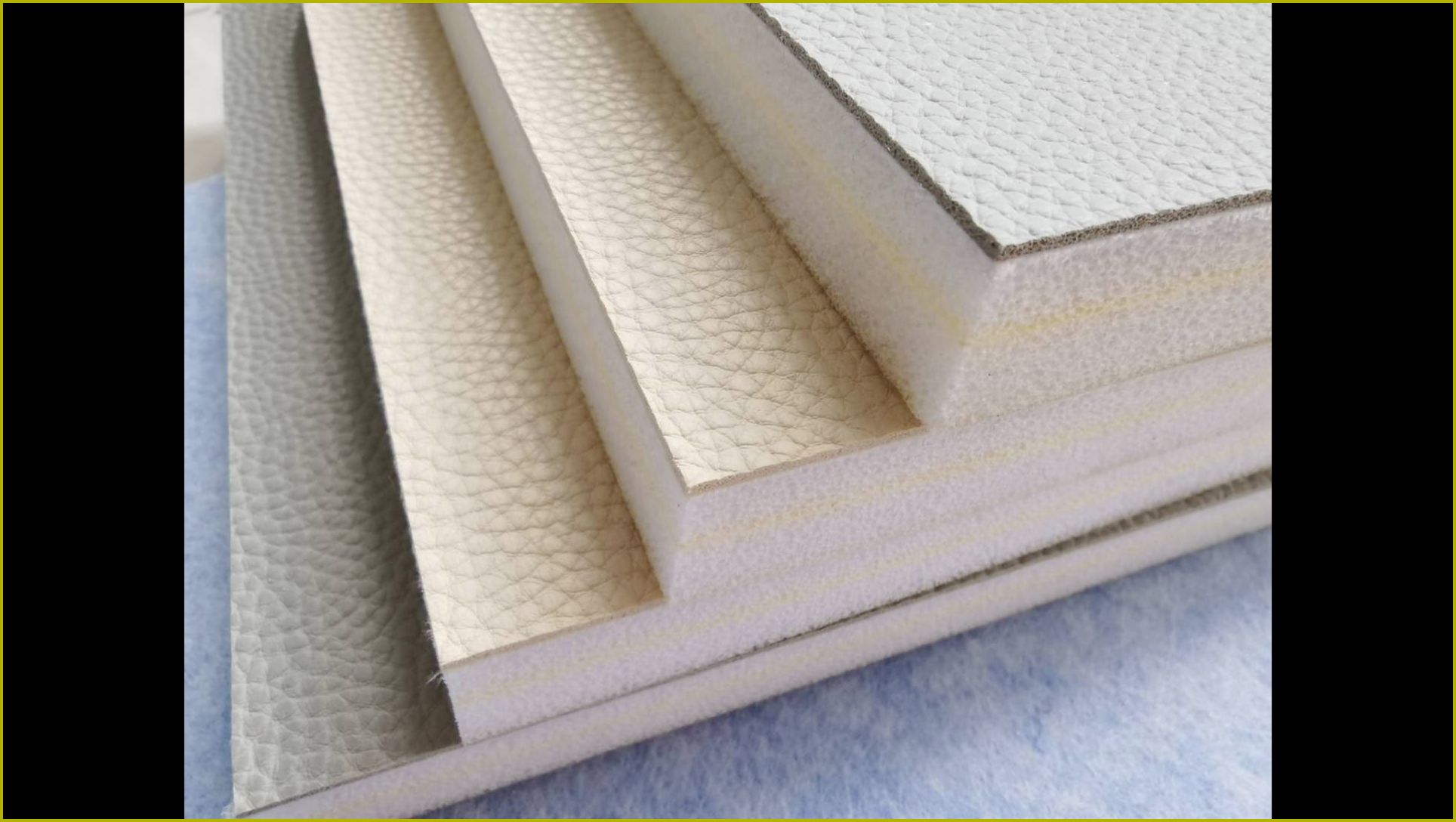
Sound deadening fiberboard is a compressed fibre panel, denser than ordinary fibreboard and slightly porous, so it adds mass while soaking up a little mid-frequency energy. Hushboard-type deadening boards are usually high-density panels bonded straight onto existing masonry as a retrofit layer. Acoustic plasterboard screws to a frame as the lining of a new wall. Three different jobs. Painted gypsum absorbs almost nothing, NRC around 0.10-0.25, so nobody should sell you deadening plasterboard as a cure for echo inside a room; echo needs absorbers, and confusion on this point wastes more budgets than any single wrong board choice.
Installation differs as well, and it moves the labour cost. Dense gypsum goes up with screws at 200-300 mm centres along edges and fields, joints staggered between layers, sealant running around the full perimeter before any trim is fixed. Retrofit deadening boards bond directly to masonry, which skips the frame but demands a flat wall and a pull test on the adhesive first.
Prices for the four common options, taken from the datasheets we test against and a batch report run through a CMA-accredited laboratory last year:
| Board type | Thickness | Surface density | Single layer on 75 mm steel stud, lab Rw | Fire class (EN 13501-1) | Indicative board price |
|---|---|---|---|---|---|
| Standard gypsum board | 12.5 mm | 8.5-9 kg/m² | 33-35 dB | A2-s1,d0 | $3-5 / m² |
| Sound deadening plasterboard | 12.5 mm | 11.5-12.5 kg/m² | 37-39 dB | A2-s1,d0 | $7-12 / m² |
| Sound deadening fiberboard | 12 mm | 9-11 kg/m² | 32-35 dB | B-s1,d0, varies by resin | $6-10 / m² |
| Hushboard-type deadening board | 10-12 mm | 10-13 kg/m² | 35-38 dB on masonry | per batch report | $8-14 / m² |
Read the fire column carefully on the fibre products. Gypsum holds A2-s1,d0 almost by chemistry; fibre boards inherit whatever their resin allows, and the class printed on last year's report says nothing about the pallet delivered this month.
Lab numbers and site reality are different buildings
A laboratory rating comes out of ISO 10140, with the wall built into a massive flanking frame and every edge sealed by a technician who has nothing else to do that afternoon. Your site runs to ISO 16283, complete with structural flanking through slabs, back-to-back sockets and a foreman rushing to the next floor. Well-built partitions typically measure 4-6 dB below their lab rating in the field, so a design written to 50 dB on paper should assume 44-46 dB until a field test proves otherwise.
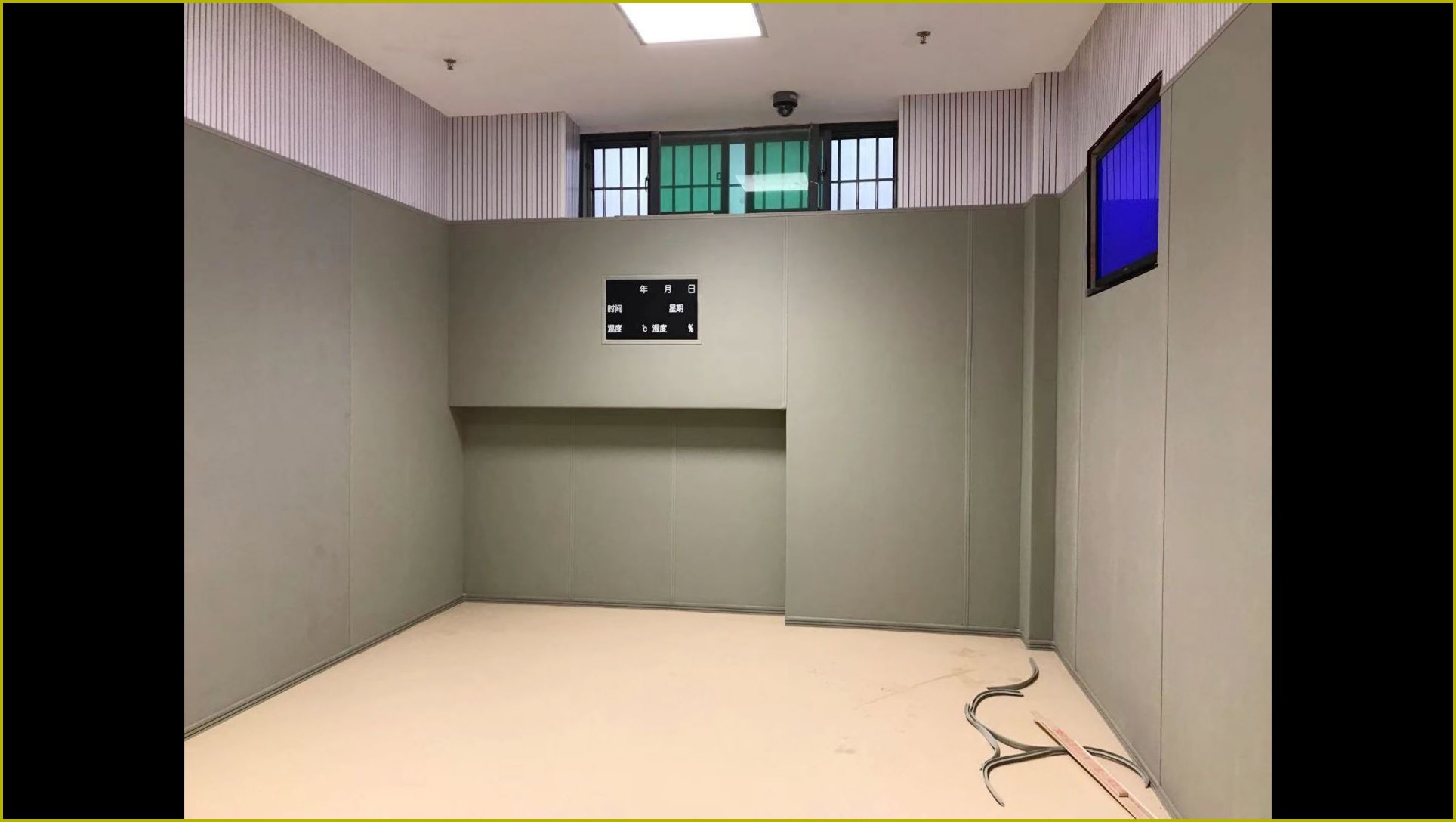
The acceptance sheet from a detention centre in East China, which I still keep on file, tells the story plainly. The assembly was designed at Rw 52 and built properly, yet the first field test read 45 dB. The leak was electrical: two rows of back-to-back socket boxes with no putty pads, plus an unsealed gap above the ceiling line. After staggering the boxes, fitting putty pads and running sealant along the head track, the retest passed at 51 dB. Small holes, expensive consequences. (Book the field test a full week after jointing compound has dried; scheduling it for the day after boarding is a habit that manufactures retests.)
Fire Class, Moisture and the Paper Trail
Gypsum earns A2-s1,d0 under EN 13501-1, and the same chemistry maps to A grade under GB 8624, which is why it passes through corridors and escape routes where class B products need special approval. Fibre-based deadening boards carry whatever their resin permits, B-s1,d0 or C-s1,d0, and the class must come from a combustion report issued by a CMA-accredited testing agency rather than a catalogue page. Ask which agency tested the batch, and keep the report number in the tender file.
Wet areas change the shopping list. Standard gypsum loses strength once the core takes on water, so bathrooms and plant rooms need moisture-resistant grades to EN 520 type H1, and boards should be stored flat in a dry space for at least 48 hours before fixing so the core never sags between screws. Inspectors ask for the batch report; the brochure stays in the drawer.
Where 景丽伦英文站 fits into a spec that survives inspection
Every project reaches a point where paperwork becomes the bottleneck: the density certificate, the tested assembly drawing, the acoustic batch report and the fire documents all have to match the pallets that actually arrived on site. 景丽伦英文站 built its service around that chain, supplying sound deadening plasterboard certified to GB standards directly from the factory, with engineers who carry out free site measurement and issue the layout and assembly drawings before a single board goes up. Factory-direct pricing also removes the distributor layer, which is usually where the record of which batch went to which floor gets lost.
The value shows up at acceptance, when the test lab arrives and the wall either matches the drawing or does not. One batch report per delivery, one assembly number per wall type, one person accountable for every sealant line. Boring discipline is what wins these jobs.
The judgment rule I hand to every client: if a datasheet cannot state surface density in kg/m², a tested Rw or STC value with the standard it was measured under, and a fire class with the testing agency named, that board goes back on the shelf whatever the price says.
Send your wall schedule or floor drawings to 景丽伦英文站 through the inquiry page and request the free measurement and layout design; the acoustic engineers will return an assembly proposal with report numbers you can hand straight to your inspector.
How much does sound deadening plasterboard cost compared with standard board?
Expect a 2-3 times premium: $7-12 per m² for 12.5 mm deadening board against $3-5 for standard gypsum. Framing, mineral wool, sealant and labour push a complete stud assembly to $30-55 per m² installed, and board price is rarely the biggest line item.
What STC or Rw rating can a sound deadening plasterboard wall reach?
One 12.5 mm layer each side on a steel stud frame tests around Rw 37-39 in the lab. Double boarding plus 50 mm mineral wool reaches Rw 52-55. Field results typically land 4-6 dB lower than the laboratory sheet, so always verify on site.
Is a hushboard sound deadening board the same thing as acoustic plasterboard?
No. Hushboard-type deadening boards are dense retrofit panels bonded onto existing walls, while acoustic plasterboard screws to new stud frames as a lining. Check surface density on either product: genuine deadening board sits at 10-13 kg/m², and anything lighter will not move the needle.
Does GB 55016-2021 or Approved Document E apply to my party wall?
GB 55016-2021 governs buildings in China and requires Rw + C of at least 50 dB for separating walls between dwellings. Approved Document E in England requires 43 dB DnT,w + Ctr. A proper test report names the standard and the metric used.
How long does installation of a sound deadening plasterboard partition take?
A 30 m² office partition needs 2-3 working days: one day for framing and boarding, one or two more for taping and jointing. Acoustic sealant cures for 24 hours, so schedule the field test at least a week after boarding finishes.
What is the biggest mistake buyers make with sound deadening board?
Treating the board rating as the wall rating. Back-to-back electrical boxes, unsealed perimeters and missing socket putty pads each cost 2-4 dB, and the assembly fails while the datasheet still looks fine. Demand the tested assembly drawing, then confirm with a field measurement.

Leave A Comment