




Upholstered wall panelling absorbs the echo inside a room, and it does almost nothing to stop sound travelling through the wall itself. Anyone who sells you fabric panels as soundproofing is selling the wrong product, and that single distinction decides whether your project passes acoustic acceptance or gets ripped out in week three.
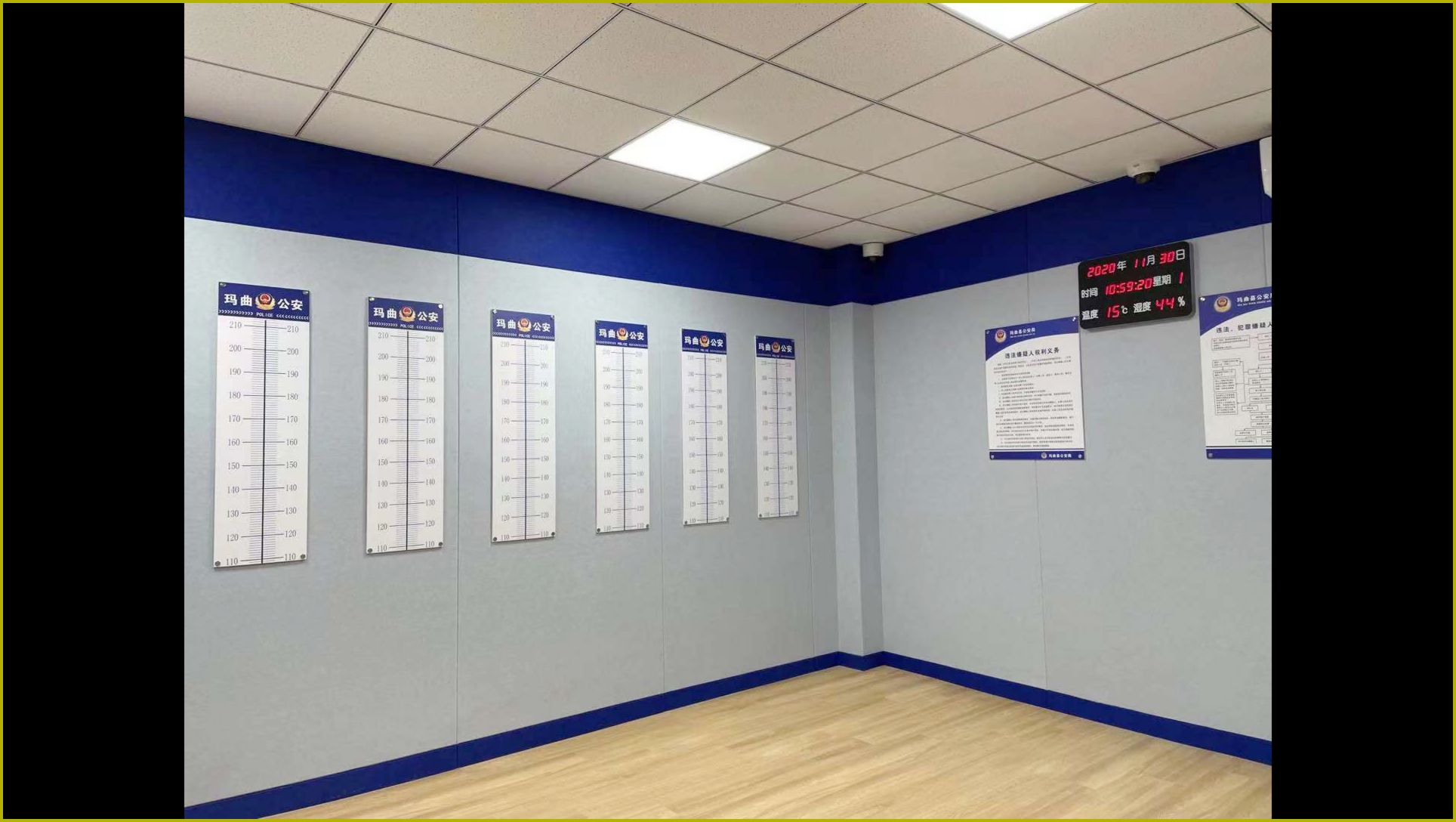
I walked out of a district service hall this morning with my ears still ringing, a phone app showing 2.7 seconds of reverberation in a room that seats maybe eighty people. Marble floor, glass balustrades, gypsum ceiling, and one lonely strip of upholstered wall panelling behind the ticket machine, maybe four square meters of it. The room needed ninety. Whoever signed that acceptance sheet either never read the acoustic clause or gambled that nobody else would. My own last public job was an interrogation-area refit for a municipal public security bureau, where the same material had to clear fire, formaldehyde and pull tests before handover paperwork moved an inch, so allow me a rant with the numbers attached.
Soft fabric blocks noise, right?
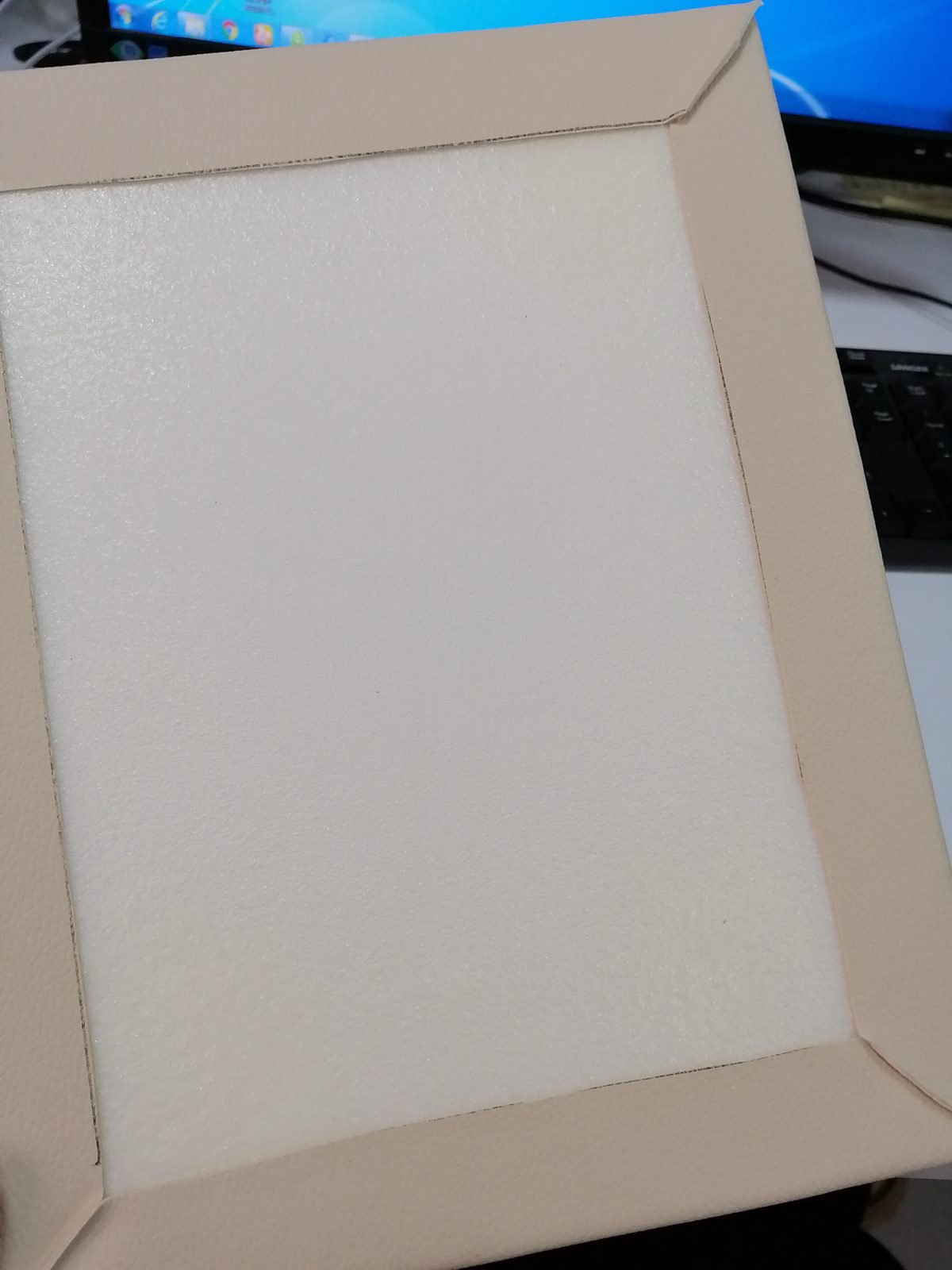
The misunderstanding I correct weekly reads like this: soft equals soundproof. NRC, the noise reduction coefficient, is a single figure between 0 and 1 that says how much of the sound hitting a surface gets absorbed rather than bounced back, averaged across mid frequencies. A 25mm upholstered acoustic panel with a CMA-tested NRC around 0.70, covering 35 to 40 percent of wall area, will drag a hall from 2.6 seconds of reverberation down to 0.8. The identical panel adds under 1 dB of airborne insulation against the neighbouring room, because transmission follows mass and airtightness, and 25mm of foam weighs close to nothing.
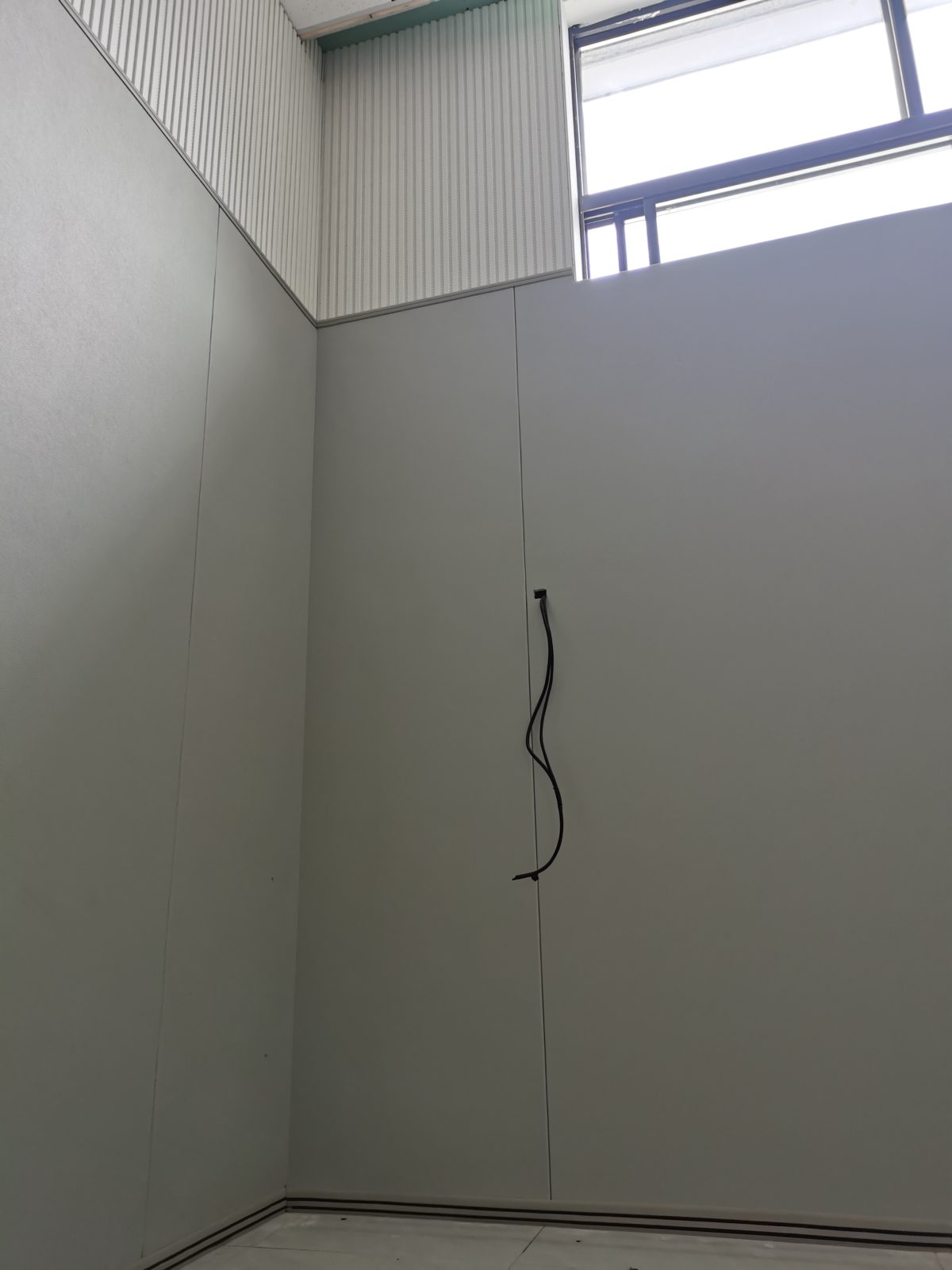
On the bureau refit, the interrogation rooms went quiet because we sealed every cable penetration and upgraded the partition cores; the upholstered panels handled the internal reverb that made voices swim. Since GB 55016-2021, the mandatory general code for building environment, acoustic performance is a binding requirement in public interiors, which is why reverberation time now sits on acceptance checklists next to lux levels. When a client asks me for soundproof upholstered wall panelling, I translate silently: they want the echo gone. If they genuinely want the neighbour gone, the budget belongs in the partition, the door seal and the penetrations, and the fabric follows as finish. Fabric is finish. Mass is silence.
The thickness trap
Twice the thickness buys far less than twice the absorption. The lab sheets that arrive stapled to panel deliveries from a CMA-accredited lab keep telling the same story: moving a fabric-covered panel from 25mm to 50mm pushes useful absorption down toward 250 Hz, while the NRC gain in the speech bands stays under 0.10. You pay roughly 60 percent more per square meter to buy low-frequency control that a speech-dominated room never asked for.
A training room with a PA system and male voices around 120 Hz is a different animal, and there the 50mm panel plus an air gap earns every cent. A call centre fighting 500 to 2000 Hz chatter gets everything it needs at 25mm. I once watched a procurement office order 50mm panels for a corridor because the sample felt plusher, which is like buying winter tires in Singapore. Thickness is a frequency decision. Make it with the test report open on the desk, never with your thumb in a showroom sample.
Glue alone will let you down
The detention-centre refit in East China specified adhesive plus hidden mechanical anchors for every panel above head height, and the base wall had to come in under 3mm of deviation under a 2m straightedge before a single bead of glue went down. Above that tolerance the panel rocks, the seam opens, and anyone leaning on it in year two hears the hollow click. Base prep is the invisible half of an upholstered wall panelling budget, and the cheap quotes leave it out on purpose.
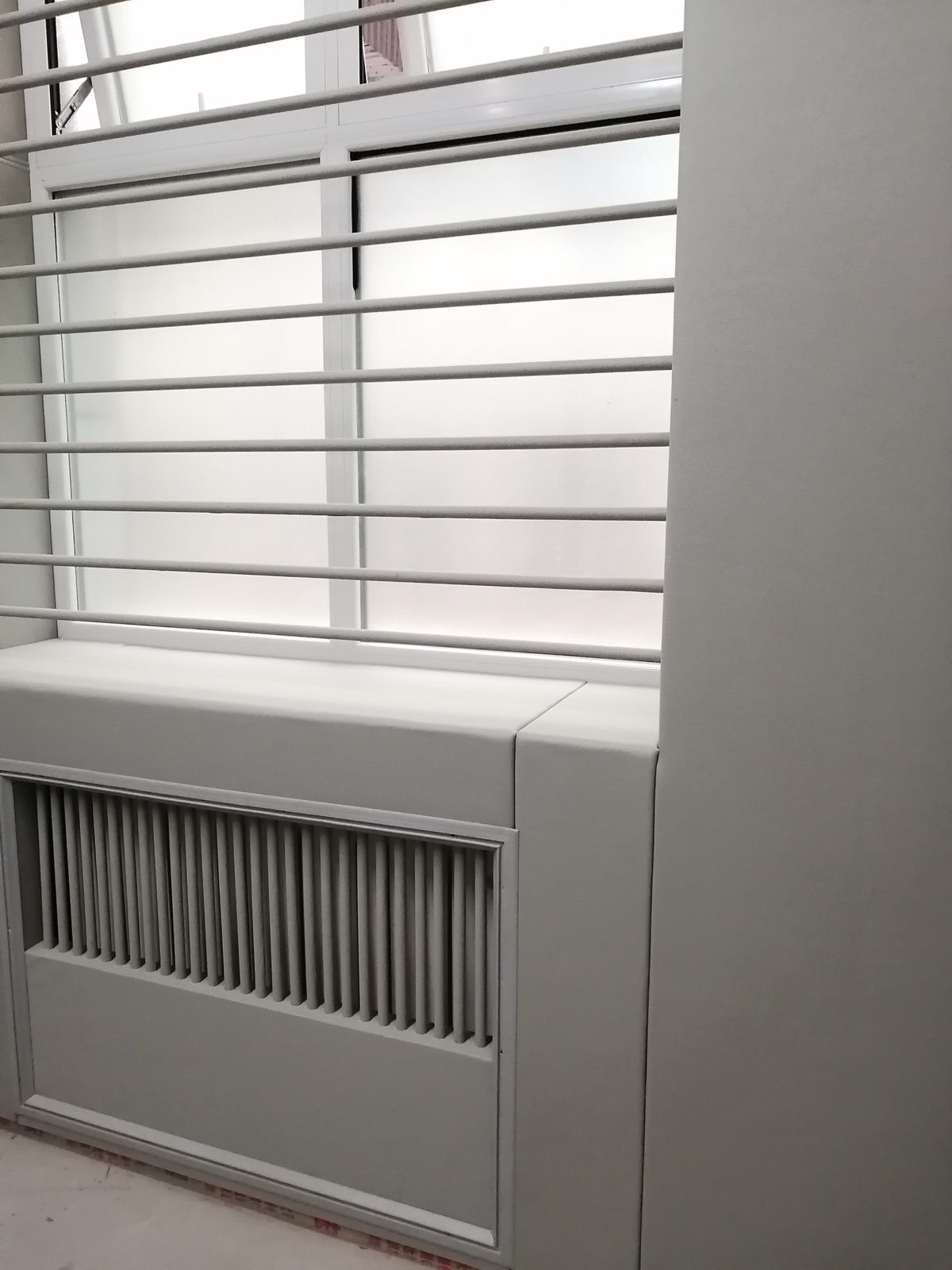
Double-sided foam tape as the only fixing will sag inside a year in any room that touches 30°C, and south-facing lounges touch it every summer. For an upholstered wall panels headboard at home on a flat, primed wall, quality grabber adhesive alone is genuinely enough. The moment a panel sits above a bed, above a walkway, or above 1.8m in a public building, add the hidden anchors. Gravity invoices later, with interest. (On acceptance day, make the installer bring the batch fire report and the NRC sheet; on every public project I have signed, those two papers gate the payment milestone.)
Fire certificates nobody reads until acceptance week
The prettiest linen in the showroom is still fuel arranged vertically. Flame-retardant fabric needs an oxygen index of at least 32 percent per GB/T 5455, and the finished upholstered panel must classify B1 under GB 8624-2012 before it belongs on a commercial wall. A cafe with 40 seats inherits the same physics as a government corridor, even if its inspector is more polite about it.
One bureau project had a batch arrive carrying the fire report for the raw fabric and nothing for the finished panel assembly, and the supervisor held the delivery until samples cleared re-testing at a CMA-accredited lab. Nine days lost. Suppliers who can produce both documents usually produce them within a day, and the ones who stall have generally already read the result. Budget the certificates like line items, because on acceptance week they are worth more than the fabric.
Your headboard is not a recording studio
Domestic upholstered wall panelling answers a comfort question, with acoustics riding along as a bonus. For an upholstered wall panel headboard, 20 to 30mm over rebound foam around 35kg/m³ hits the sweet spot for leaning up with a book, and the same logic scales to an upholstered wall panel bed layout where the padded wall runs the full bed width. Honestly, I would not put 50mm behind a bed; it eats floor area, and leaning on it feels like sitting against a car seat. Upholstered panel bed setups and full-height upholstered bed wall panels get sold on plushness, but past 30mm the extra thickness mostly photographs well and lives badly.
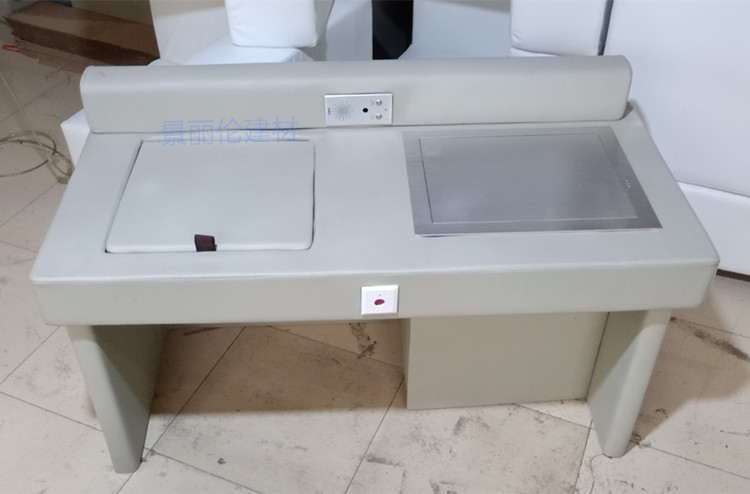
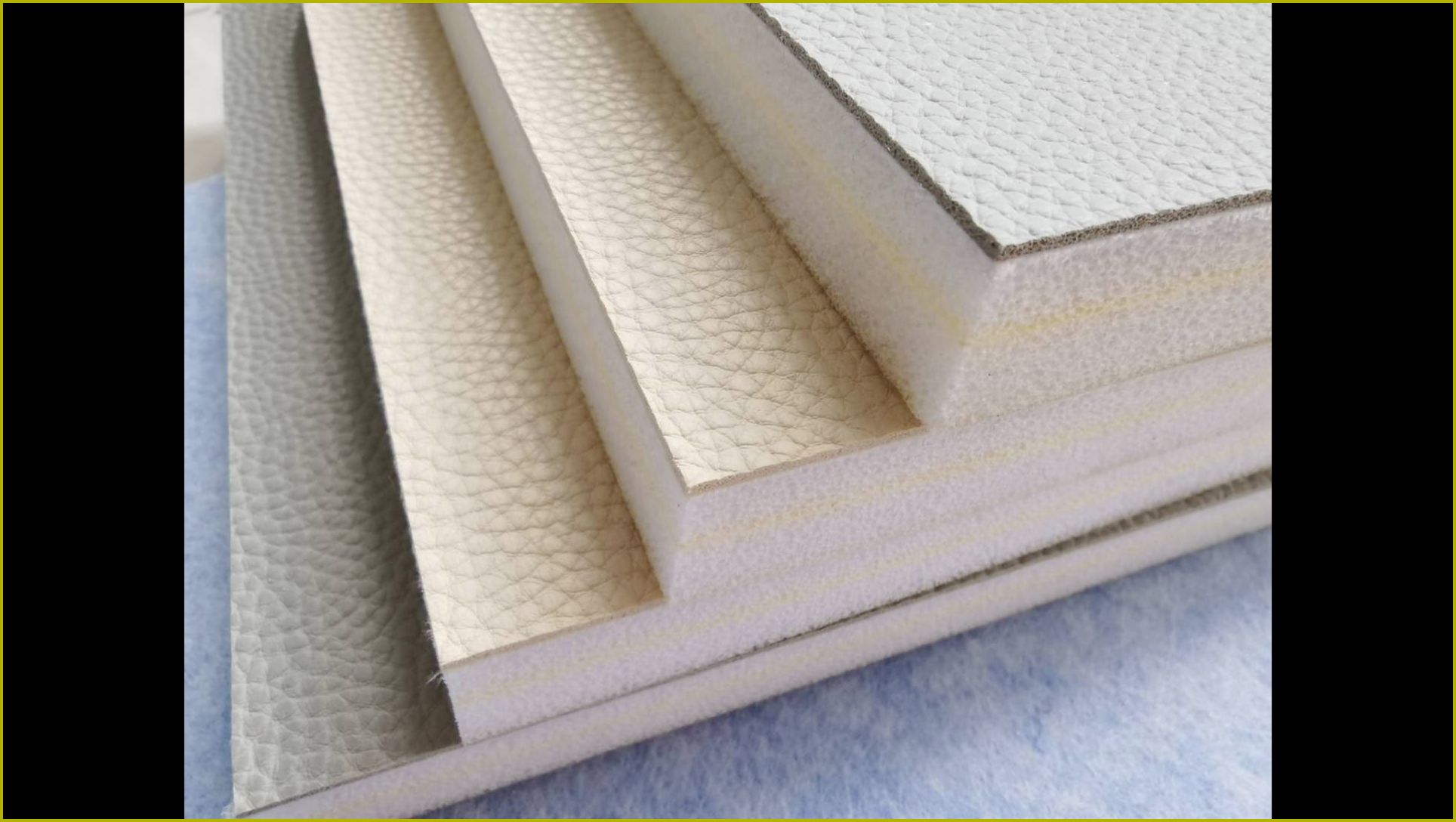
Leather upholstered wall panels earn their premium in bedrooms and hotel feature walls, where coffee, hand cream and small children happen daily; a damp cloth beats a fabric shampoo every time. Fabric faces earn theirs in home cinemas and nurseries, where the softness swallows noise and the weave keeps the room warm. Numbers beat adjectives, so here is the comparison drawn from the bid sheets and lab reports on my desk.
| Spec | 25mm fabric panel | 50mm fabric panel | 30mm leather panel |
|---|---|---|---|
| Face material | Flame-retardant polyester fabric | Flame-retardant polyester fabric | PU leather, wipe-clean |
| NRC per CMA report | 0.65 to 0.75 | 0.80 to 0.90 | 0.40 to 0.55 |
| Fire class, GB 8624-2012 | B1 | B1 | B1 |
| Foam density behind face | 30kg/m³ | 30kg/m³ | 35kg/m³ |
| Factory price | 10 to 16 USD/m² | 16 to 24 USD/m² | 18 to 28 USD/m² |
| Typical use | Offices, service halls, corridors | Meeting rooms, training rooms, studios | Headboard walls, hotel feature walls |
Reading quotes like someone who has paid for mistakes
If you compare upholstered wall panelling quotes on panel price alone, you will confidently choose the wrong supplier. Factory-direct 25mm upholstered acoustic panels landed between 10 and 16 US dollars per square meter across the last three bids I sat on, while showroom retail for the same specification quoted 30 and up, and the product was rarely different. The rent was. An honest quote lines out base prep, adhesive, anchors, edging and installation separately, and attaches the NRC and fire reports as PDFs, not promises. A 60 m² feature wall takes a two-person crew two to three days including base repair; whoever promises one morning has never skimmed a wall.
Friends who ask me where to buy get pointed to the 景丽伦英文站 factory store, the outfit behind half the public projects I have run: batches certified to GB standards with CMA-accredited lab reports, a technical team that measures and draws the layout free of charge, and factory-direct pricing without a showroom layer. Send them wall dimensions and room photos, and a layout with panel counts and both certificates comes back before you commit. Whichever supplier you pick, hold the deposit against two papers:
- Batch fire report and NRC sheet from a CMA-accredited lab, dated inside your production lot.
- A base-work clause: flatness within 3mm over 2m, ground and skimmed before panels arrive.
One filter separates the professionals: a supplier who emails the batch fire report and the NRC sheet within a day, with values matching the sample on your desk, is safe for a deposit; anyone who answers with a discount before documents is a re-test waiting to happen. Send your wall dimensions and reference photos to the 景丽伦英文站 team through the WhatsApp number on the contact page, and you will have the quote with both papers attached the same day.
How much does upholstered wall panelling cost per square meter?
Factory-direct pricing on recent bids: 25mm fabric upholstered acoustic panels at 10 to 16 USD/m², 50mm at 16 to 24 USD/m², and 30mm leather upholstered wall panels at 18 to 28 USD/m². Installation with base prep adds roughly 8 to 15 USD/m² depending on wall condition, and the base repair line is where cheap quotes hide their profit.
Do upholstered acoustic panels stop noise from the next room?
No. A panel with NRC 0.70 absorbs echo inside the room; it adds under 1 dB of airborne insulation. Blocking the neighbour means mass and sealing on the partition itself, an upgraded door, and sealed penetrations, with the upholstered layer arriving afterwards as finish.
What fire rating does upholstered wall panelling need in commercial interiors?
Flame-retardant fabric should show an oxygen index of at least 32 percent per GB/T 5455, and the finished panel must classify B1 under GB 8624-2012, both evidenced by reports from a CMA-accredited lab. Ask for the report on your production batch and never settle for a generic brochure.
How long does a headboard feature wall take to install?
A 4 to 6 m² upholstered wall panels headboard takes a two-person crew one working day on a flat, primed wall. Add a day for base repair if deviation exceeds 3mm over 2m, and count 7 to 15 days of factory lead time for made-to-order fabric or leather faces.
Should upholstered wall panels be glued or mechanically fixed?
Hybrid wins: adhesive plus hidden anchors or clips for anything above 1.8m, above a bed, or in public buildings. Glue alone is acceptable for home headboard panels on a flat primed wall; foam tape alone will sag within a year in any room that reaches 30°C.

Leave A Comment