




A sound panel wall earns its keep on two numbers, an NRC rating for absorption and a fire class under GB 8624-2012, and a vendor who cannot produce both documents tied to one batch number is selling painted furniture at acoustic prices. I spent Tuesday at the building materials market watching those documents fail to appear, booth after booth, which is why this project file is worth walking through in full. Last spring a city public security bureau in East China rebuilt twelve interrogation and inquiry rooms, 260 square meters of wall treatment plus 75 square meters overhead, and the worst room measured 1.9 seconds of reverberation at 500 Hz before anyone touched a wall. After the work, the same calibrated meter read 0.6 seconds. The acceptance sheet says so, not my brochure.
What 1.9 seconds does to a case file
Audio is evidence in those rooms. When a recorded statement drags a two-second echo tail behind it, the transcription clerk starts guessing, and a guess inside a case file is a liability nobody wants to initial. The design institute fixed a hard target in the acoustic drawings, mid-frequency reverberation at 0.8 seconds or below, and cited GB 55016-2021, the mandatory general code for building acoustic environments, when the bureau questioned why the budget carried a line for soft wall finishes at all. Painted concrete and a double-glazed observation window give speech nearly two full seconds of bounce. Nobody in that building was careless. The rooms had simply never been treated.
The equipment office shortlisted three suppliers and asked each for absorption data at 250, 500, 1,000 and 2,000 Hz, with no blended single number accepted. Two of the three never came back with a full set. If you are collecting quotes right now, make that same request before you compare prices, because the supplier who hedges on it has already told you what is inside the box.
That afternoon at the market, magic was on sale
Booth one pushed a 9 mm polyester sound wall board that blocks noise like a brick wall, or so the pitch ran. The sheet weighs 2.9 kg/m². Insulation lives on mass and airtight sealing, and the mass law says surface density has to roughly double for every 6 dB gained, so a board lighter than a framed poster moves the needle by less than 1 dB. Absorption and blocking are separate jobs with separate numbers. Soft absorbers carry NRC ratings, dense composites carry decibel reductions, and a salesman who swaps the two mid-pitch is either confused or working you.
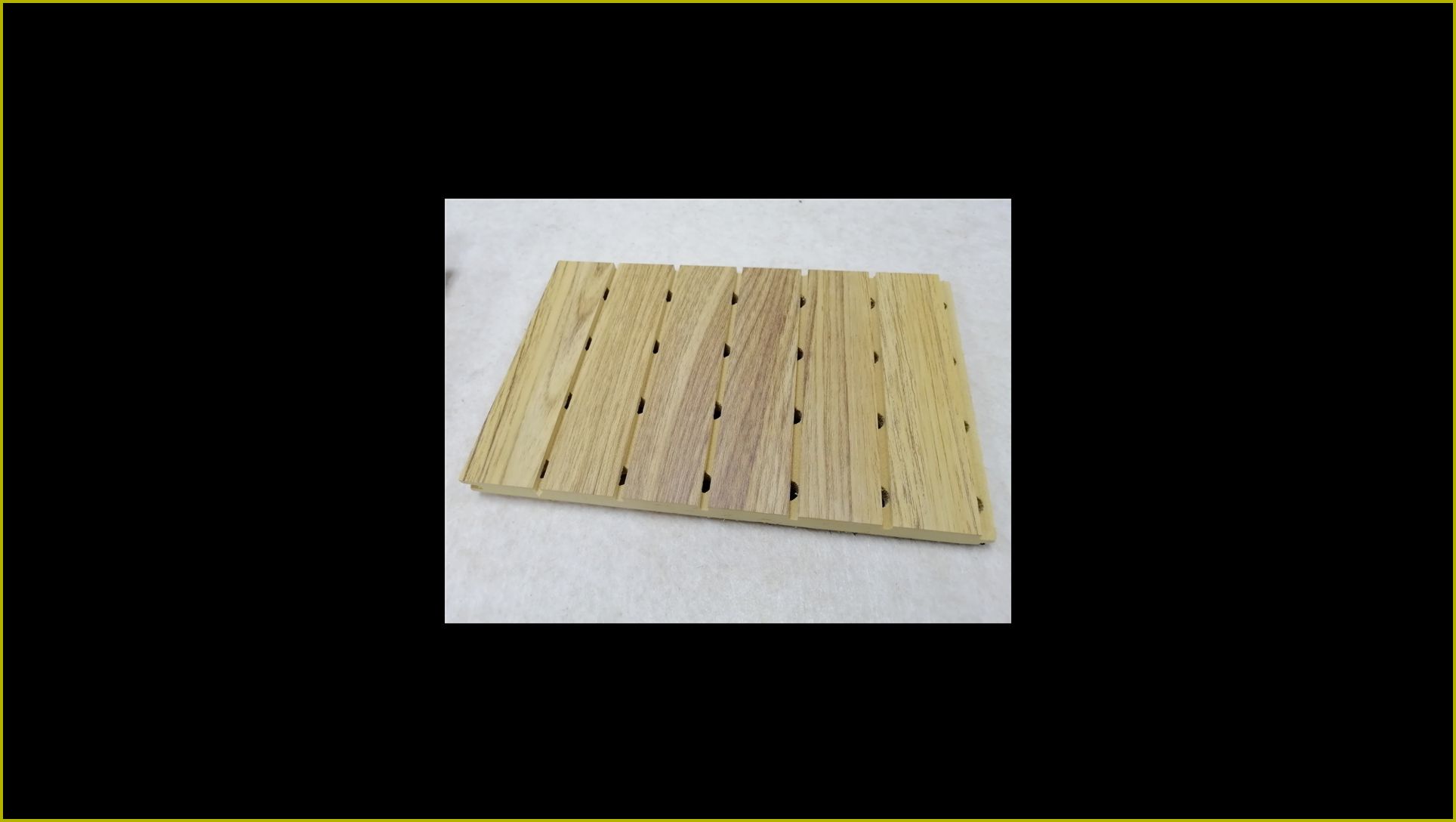
Sound block panels sit on the blocking side of the family, dense layered composites with a mass-loaded barrier bonded to board, worth 8 to 12 dB across a stud partition in our own field tests, and only when the wall is sealed to the slab. Booth two sold a wood sound panel as recording studio grade, slats over a 5 mm felt backing. In an actual studio that slat sits on a 50 to 100 mm mineral wool cavity where the absorption happens, and nailed flat to drywall it is furniture. Booth three quoted a triple price for an imported line whose core, visible on the sample's cut edge, was the same 48 kg/m³ fiberglass our plant ships by the container.

Not one of the three produced a combustion report until it was asked twice.
Which sound panel material deserves the money?
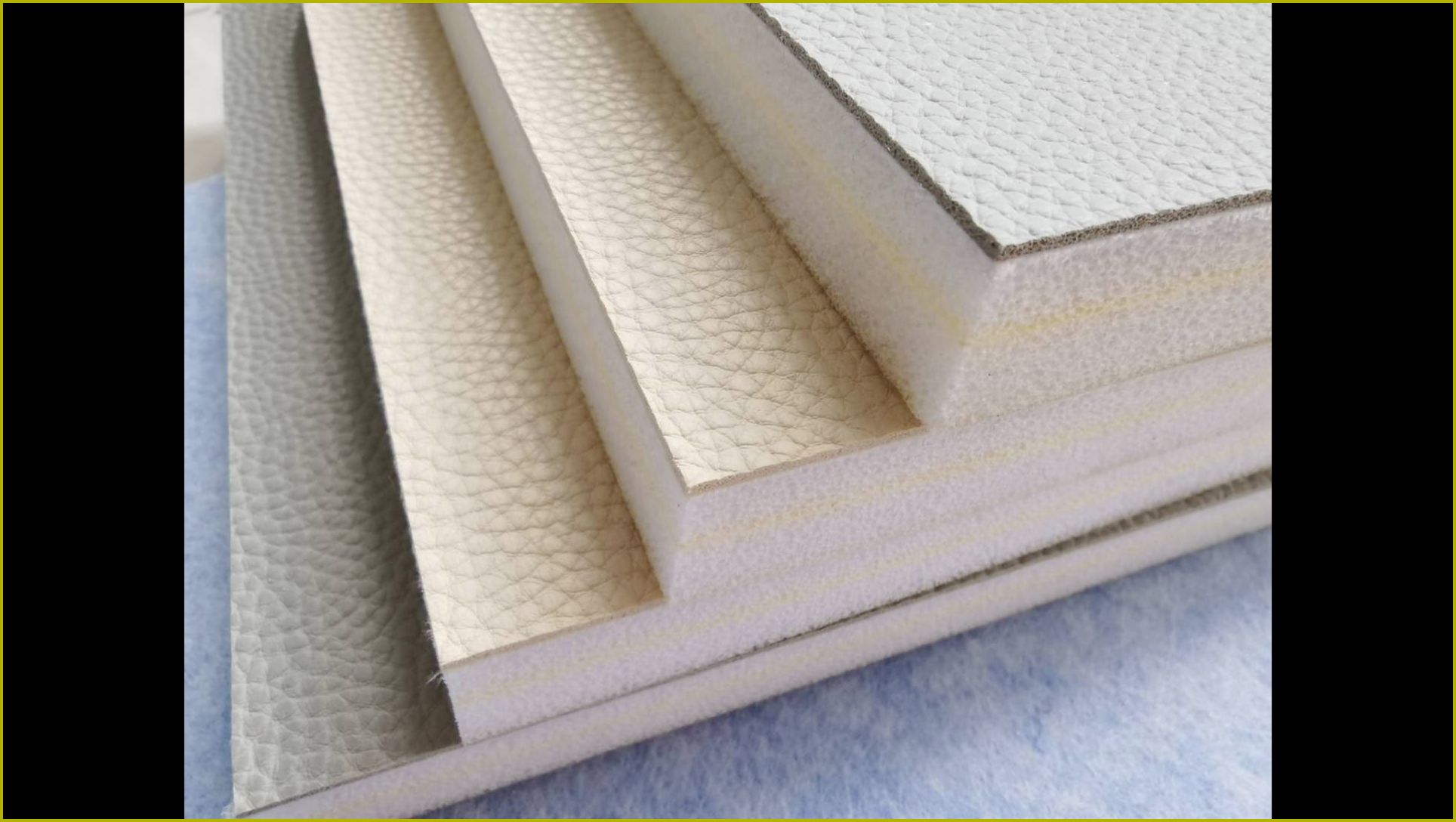
Material follows the room, and this block needed mid-frequency speech clarity above everything else. NRC, the averaged absorption coefficient over 250, 500, 1,000 and 2,000 Hz, is the figure that governs speech, and 25 mm fabric-wrapped fiberglass on a 48 kg/m³ core holds NRC 0.85 to 0.95 while staying stable in humid rooms. No sound panel material covers every frequency evenly, and thin boards fall away below 250 Hz where small-room boom lives, so treating about a third of the boundary surfaces, walls plus sound panels on ceiling grids, beats treating one wall lavishly at the same budget.
Honestly, for a home theater or a study I would not buy this grade; a 12 mm polyester board near NRC 0.50 kills flutter echo in a domestic room at a third of the price. Rooms where recordings carry legal weight are another animal. The three candidates looked like this on paper.
The three candidates on paper
| Item | Fabric-wrapped fiberglass | Wood slat panel | Polyester board (PET) |
|---|---|---|---|
| Build | 25 mm, 48 kg/m³ core | 15 mm MDF slats + 9 mm felt | 9 to 12 mm solid PET |
| NRC, 250 to 2,000 Hz | 0.85 to 0.95 | 0.70 to 0.80 with 50 mm cavity | 0.40 to 0.55 |
| GB 8624-2012 class | B1, core A | B1 | B1 |
| Weight | 4.5 kg/m² | 8 kg/m² | 2.9 kg/m² |
| Ex-works price, USD/m² | 12 to 22 | 18 to 30 | 5 to 9 |
| Role in this job | Walls of all 12 rooms | Corridor feature wall | Rejected, thin low-frequency roll-off |
The wood sound panel stayed out of the interrogation rooms and showed up only on the corridor feature wall, where its 50 mm cavity was framed in properly. The tender set GB 8624-2012 Class B1 as the floor for every interior finish, and the combustion report from a CMA-accredited testing agency rated the fiberglass composite B1, with the bare core testing Class A on its own. Report copies went into the tender package together with the sample, not after delivery.
The install ran faster than the paperwork
Shop drawings came first, panel by panel around doors, conduits and the observation glazing, because trimming fiberglass fabric mid-install is how seams start to wander. Walls went up on 600 mm furring centers with adhesive and concealed L-brackets, edges butted tight, perimeters sealed with backer rod. A crew of four covered 260 m² of wall in five working days, then moved to set sound panels on ceiling frames 600 by 1,200 mm, dropped 150 mm off the slab with a 50 mm wool layer behind, another 75 m² in two days.
Where the noise actually leaked
Two details never appear on a quote sheet. The observation window leaked corridor noise, so the fix paired a secondary sash with 6+1.14+6 laminated glass and a window sound barrier panel lining the deep reveal, and the engineer's field reading afterward put the corridor-side level roughly 10 dB lower across that partition. The party wall beside the archive got sound block panels under a double gypsum skin, because absorption inside a room does nothing for the room next door.
Production ran twelve days from approved drawings to pallets on site, and acceptance testing took another three. (One field habit worth stealing: leave two or three panels unmounted near the door until the reverberation test is done, since shaving coverage by two square meters after an overshoot is a ten-minute fix, while re-ordering is not.)
What the acceptance sheet recorded
The bureau hired an accredited testing outfit with a calibrated source, and every figure below comes from that document, file number and all, which is the kind of number I will take over any brochure claim. Reverberation at 500 Hz fell from 1.9 seconds to 0.6, at 1 kHz from 1.7 to 0.55, both under the 0.8-second line the tender demanded. STIPA speech intelligibility read 0.74 against the 0.60 floor set by the design institute. The acceptance package also carried the combustion report copy, and its batch number matched the label on the delivered pallets; the equipment officer spent ten minutes on that check.
The batch match is where most market games live. A report exists for some lab sample once, and it proves nothing about the pallets that arrive unless the numbers align. Phase two of the project, a two-room annex, went out on exactly that condition, and 景丽伦英文站 took it: the quote came off the factory floor instead of a trading desk, GB 8624 test reports accompany each production batch, on-site measurement and the layout drawing are provided free by the technical team, and the price sat below the trading outfits by the margin you expect when no middle desk takes its cut.
One check before you sign anything
Here is the executable test. Before signing, demand two documents tied to one identical batch number.
- An absorption report covering 250, 500, 1,000 and 2,000 Hz, with the panel sound data spelled out per frequency.
- A combustion report against GB 8624-2012, issued by a CMA-accredited body.
If either paper is missing, or its batch number does not match the label on the pallet, walk out of the booth. A supplier with real production lines produces both in an afternoon. A repackager needs a week and a story.
If there are rooms on your desk right now, send the dimensions, the use and the reverberation target through the contact page on 景丽伦英文站, or ask us to set the target for you. The measurement and layout drawing cost nothing, the quote arrives with batch reports attached, and you can hold it against any competitor's number with the checklist above and see who blinks.
How much does a sound panel wall cost per square meter?
Ex-works, fabric-wrapped fiberglass panels run 12 to 22 USD/m², wood slat panels 18 to 30, polyester boards 5 to 9. Add 15 to 25 percent for furring, labor and freight. Judge quotes with batch fire reports in hand, not on unit price alone.
Do sound panels block noise from the next room?
No. Panels absorb echo and cut reverberation inside the room they serve. Blocking needs mass and sealing: sound block panels, double gypsum skins, secondary glazing. A 9 mm polyester board at 2.9 kg/m² adds under 1 dB of airborne insulation, whatever the sticker claims.
Is a wood sound panel better than fabric-wrapped fiberglass?
For speech clarity, fiberglass wins: NRC 0.85 to 0.95 flat, no cavity required. Wood slats win on appearance and reach NRC 0.70 to 0.80 only with a 50 mm mineral wool cavity behind them. Skip MDF slats in humid rooms, since the edges swell.
How long do production and installation take?
Production runs 10 to 15 working days after drawings are approved. A four-person crew installs 300 to 350 m² in about a week. Reserve two to three days for reverberation acceptance testing, so three to four weeks from signed drawing to signed acceptance sheet.
What fire rating must acoustic panels meet in public buildings?
GB 8624-2012 Class B1 is the common floor for public interiors, and Class A applies where the fire design demands non-combustible linings. Fiberglass cores alone often test Class A. Always request a combustion report from a CMA-accredited agency whose batch number matches the delivered goods.
How is a sound panel wall verified at acceptance?
Measure reverberation time before and after at 500 Hz and 1 kHz following the ISO 3382-2 method, then compare against the design target. Add STIPA speech intelligibility where speech matters. This project went from 1.9 seconds to 0.6 at 500 Hz.
}
Leave A Comment