




Nine out of ten failed bass trap installations that cross my desk share one root cause: the budget went to panels that photograph well and go quiet below 300 Hz, while the 40 to 120 Hz band stayed untreated and kept flunking the curve. Yesterday the acceptance spectrum for a 42 m² post production room in Suzhou came back clean, RT60 at 63 Hz down from 1.76 s to 0.82 s, signed against the limits in GB 55016-2021 without one word of argument.
The room measures 7.8 m by 5.4 m by 3.2 m, and that 5.4 m wall plants its second order axial mode at 63.5 Hz, almost exactly the note the engineers complained rang on after every kick. The first contractor had spread 100 mm fabric panels evenly over the walls, which flattered the band that was already fine and left the mode untouched. The redesign pulled every spare centimeter into four floor to ceiling corner fills at 600 mm depth, two behind the monitors, two at the rear. Same budget, different aim.
What follows is the set of misconceptions I keep correcting on calls like that one, written down once so the explanations stop costing me my evenings. Every claim here ties to a standard, a datasheet rule or a project that either passed or did not, because a number without a source is just a mood.
You Bought Panels and Called Them Traps
A bass trap panel is a porous velocity absorber, and particle velocity peaks a quarter wavelength away from any rigid surface, which means the material has to reach out into moving air before it can turn sound into heat. At 63 Hz that quarter wavelength measures about 1.36 m. A 100 mm panel covers one fourteenth of the distance, hanging in air that is barely moving for that mode at all.
The arithmetic no brochure volunteers
In plain terms, a 100 mm porous panel holds its advertised performance above roughly 250 Hz and gives back almost nothing at 63 Hz, so datasheets that publish NRC 0.90 and start the coefficient table at 125 Hz are telling you exactly where their product stops working. Read the lowest row before the headline number. If the table begins at 125 Hz, put the sheet down and ask what lives underneath.
Panel format still earns a low frequency job when it brings depth or an air gap along: 300 mm bass trap panels straddling a corner, or boxed soffit builds above the monitors, reach far enough into the velocity zone to bite below 150 Hz. A ten centimeter panel is a mid band tool wearing a low band price tag, and no fabric pattern changes that.
Why the Corner Owns the Low End
Every axial mode family in a rectangular room terminates at the boundaries, and the corner is the one place where all three families stack their pressure maximums, so material standing in a tri-corner intercepts more modal energy per cubic meter than anywhere else in the room. That single piece of physics is the whole logic behind corner bass traps, and it has outlived every treatment fashion I have watched come through the trade.
Placement order is boring and reliable: fill the four vertical joints where walls meet, floor to ceiling, before anything else, then the wall to ceiling junctions if budget survives. A county level broadcast station in Anhui fought a 55 Hz hump with side wall panels for a season, then killed it in a week with two junction fills above the monitor line. Nothing else changed. Same amplifier, same monitors, same puzzled engineer.
What actually killed the Suzhou mode? Depth, 600 mm of it, standing inside the pressure field instead of skimming its surface. Installers who quote by square meter of wall covered will spread material evenly and call the look balanced, and evenly spread thin material is the most expensive way to change nothing below 150 Hz, a sentence I have now typed for the fourth project this year. If your quote counts square meters, ask why it is not counting corners and centimeters.
Does a Denser Core Absorb Deeper Bass?
No, and this belief costs real money. Absorption below 100 Hz depends on depth ahead of flow resistivity, and resistivity has a working band rather than a ceiling: glass wool between 40 and 60 kg/m³ does the corner job, while cores pushed past 80 kg/m³ begin reflecting the midrange back into the room. Heavier looks like an upgrade on the spec sheet. The room hears a thin wall.
A music training school in Chengdu learned this the loud way, after a contractor swapped a 32 kg/m³ core for an 80 kg/m³ one on the theory that density equals performance, and the speech band turned harsh within a month of commissioning. We re quoted at 48 kg/m³ with the same 400 mm depth, the harshness cleared, and the difference in invoice covered the extra corner treatment they had skipped the round before.
When a supplier names a density, make them print it beside the thickness on the cut sheet, because density without depth is decoration and depth without density is furniture. The pair is the product. Anything described only as high density acoustic cotton belongs in the decorative half of the catalog, whatever the sales pitch calls it.
Cylindrical Bass Traps and the Shape Question
Circular bass traps sell on looks before physics, and the physics is honest about what the curve buys: a round face scatters the mid band instead of beaming it straight back, which helps rooms that sound boxed in between 300 Hz and 2 kHz. What the curve does not buy is extra low end per unit of floor area, because a cylinder loses effective depth toward its edges while a square chunk of the same footprint stays deep across the whole face.
Below 100 Hz, judged per square meter of floor, a full corner chunk has beaten a cylindrical bass trap of equal footprint every time I have put the pair on the same analyzer, and the margin has never been subtle. The cylinder earns its floor space in rehearsal rooms and live tracking spaces that want absorption and scattering from one object, or in client facing rooms where a row of barrels reads better than monolithic corner blocks.
Choose by complaint. A modal note that rings on after the kick drum calls for depth in the corners, and shape is decoration; a honking, boxed midrange on voice and guitar is where the cylindrical route does two jobs with one object. Rooms carrying both complaints need both objects, and the corner work signs off before the curves ship.
What an Active Bass Trap Actually Does
An active bass trap is a driven membrane in a cabinet that senses incoming pressure and moves against it, presenting the room with the impedance of a far larger passive absorber while occupying the floor space of a monitor. A genuine unit works roughly between 15 and 150 Hz, requires no measurement sweep, no DSP profile and no recalibration when you rearrange the room, and that is the entire honest promise. When a brand promises beyond that band, the brochure is doing the talking.
The active route earns its invoice on the small room problem, where the passive depth required below 50 Hz climbs past a meter and a 12 m² control room simply does not have a meter to give. One unit sitting at the pressure maximum of the worst mode does the work of a corner fill that physically cannot exist in that space. Placement still decides everything, since a unit parked in a dead spot becomes an expensive shelf.
| Aspect | Passive corner chunk | Active bass trap |
|---|---|---|
| Working band | Roughly 80 Hz upward, set by depth | Roughly 15 to 150 Hz, set by the driver |
| Setup | Fill the corner, walk away | Power outlet plus placement at the pressure peak |
| Cost per position | Material, fabric, install labor | Electronics inside, a multiple of passive |
| Fails when | Depth too small for the mode | Power cut or parked in a dead spot |
Honestly, for a bedroom mixing setup I would not put an active unit on the shopping list, because the same money spent on 600 mm of corner depth plus a measurement microphone fixes more problems and never asks for a firmware update. Active belongs in tight rooms with stubborn sub 50 Hz modes, and selling it as a general upgrade is how studio budgets die young.
The Fire Report Nobody Asks For Until Inspection Day
The costliest misconception in this trade treats acoustic treatment as furniture, and furniture needs no certificate. Any room facing acceptance, a rented studio, a school hall, a broadcast facility, gets checked against the interior finishing fire code, and the inspector wants GB 8624-2012 B1 grading with an oxygen index of 32% or higher, documented by a CMA accredited lab for the batch actually mounted on the wall, not for a golden sample from three years back.
A corporate auditorium project in Xi'an sat locked for a week because the wall fabric matched the brochure word flame retardant while the file held no batch report at all, and the delay cost more than the price gap between certified and uncertified material ever saves. (On acceptance day, have the installer bring the batch fire report on paper; the version on a phone has a way of belonging to the wrong batch.) Brochure wording is marketing. The lab sheet is the product.
Ask for that document before the deposit clears rather than after the glue sets, because stripping uncertified fabric off a finished wall and re ordering certified stock doubles the material bill and the schedule, and someone always absorbs it. GB 55016-2021 governs the acoustic side of acceptance and collects all the attention, while the fire sheet quietly decides whether the room opens on schedule.
Can Affordable Bass Traps Match the Imported Names?
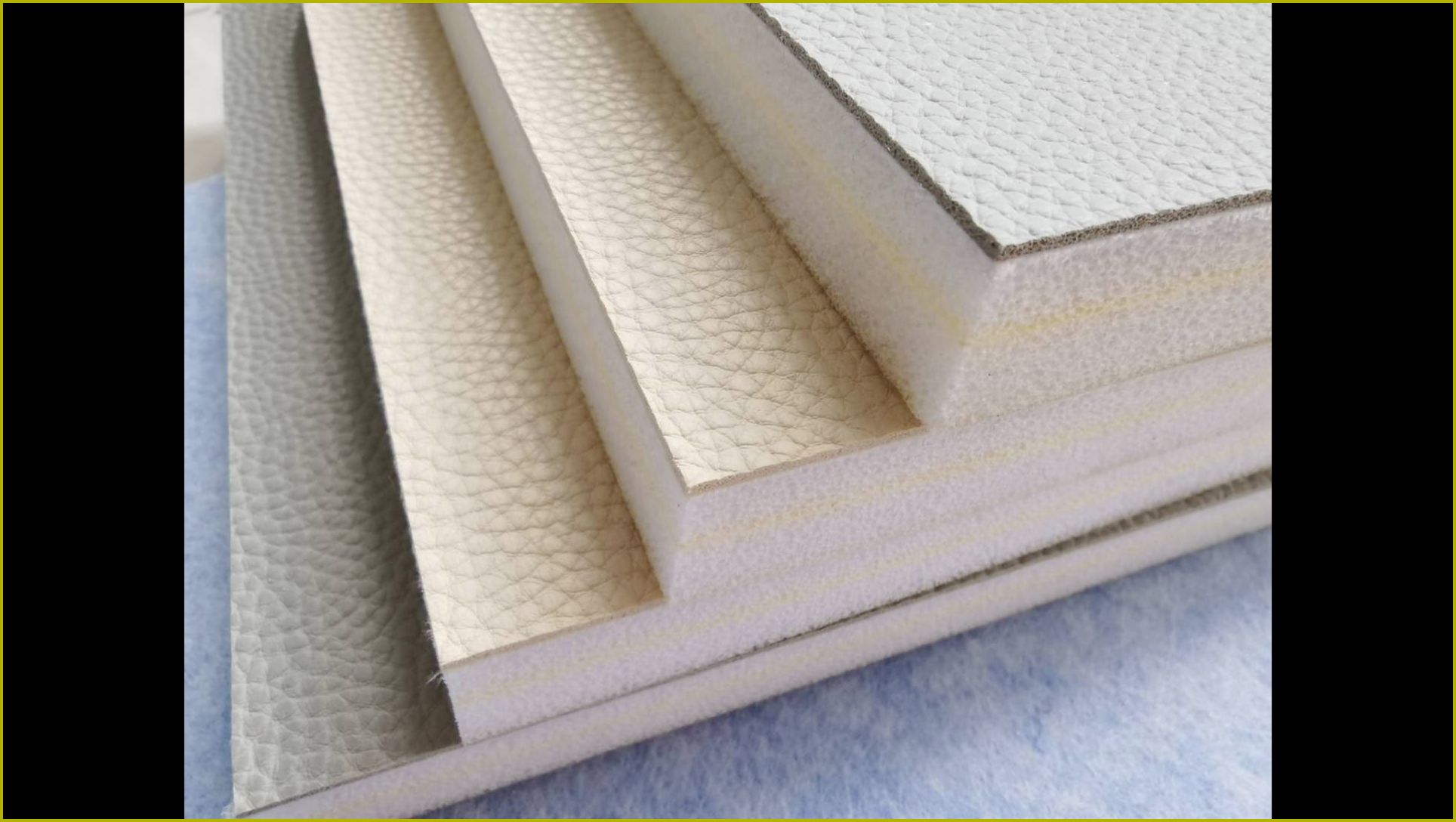
Imported shelf brands set the benchmark, and gik bass traps deserve the credit they get for consistent cores, honestly published coefficients and a room calculator that works, which is precisely the standard any competitor should be judged against. What the import price buys breaks into core, fabric, freight and margin, and the core is commodity glass wool: compare quotes at equal density and equal certified depth, and the premium shrinks to weave, finish and shipping.
Affordable bass traps fail in one specific way, by hiding the specification that decides the curve. A corner chunk priced far under the market with no printed density is a gamble on unknown wool, and the gamble settles at commissioning, in front of the client. If you compare quotes on thickness and price alone, this is the trap that catches you every single time.
What the quote sheet must show
- Core density and depth printed together, for example 48 kg/m³ glass wool at 600 mm face depth.
- A batch dated B1 fire report from a CMA accredited lab covering the fabric and core actually shipped.
That is the standard we quote against on the 景丽伦英文站 line: factory direct corner fills and bass trap panels with density printed on the cut sheet, per batch B1 paperwork, and a free measurement and layout pass drawn on your floor plan before anything ships. Direct pricing strips out the middle layers while the quarter wavelength arithmetic stays exactly where it was, so the cheap option only wins when depth and density survive the comparison.
The Number to Demand Before You Sign
Here is the judgment standard, usable on any project at any budget: treat NRC as evidence of nothing below 250 Hz, because it averages coefficients at 250, 500, 1000 and 2000 Hz and stays silent about your mode, and demand instead the measured absorption coefficient at 100 Hz or at your known worst frequency, plus a before and after RT60 at that same frequency. A supplier who cannot produce those two numbers is selling wall covering, whatever the brochure calls it.
The Suzhou acceptance sheet closed its argument in one line, RT60 at 63 Hz measured 1.76 s before and 0.82 s after, dated, signed, tied to the batch numbers on the corner fills. Two numbers and a date. That is what a result looks like on paper, and it repeats in your room whenever depth, density and placement survive contact with the installer.
Send the floor plan, ceiling height and the frequency that keeps bothering you to the 景丽伦英文站 team through the site contact form or the factory line, and the free layout pass comes back with corner count, depth and density marked on your own drawing, usually inside two working days. Measure after the first install, then spend again only where the curve says to.
How much do real bass traps cost?
Open cell foam kits under 30 USD per sheet do almost nothing below 200 Hz, so they do not count as bass treatment. Certified corner chunks with 40 to 60 kg/m³ cores typically run 50 to 120 USD per corner bought factory direct, imported shelf brands land clearly higher, and an active bass trap costs several corners at once. Fund all four corners before any decorative panel.
Can foam pyramid panels absorb bass?
No. A 50 mm foam tile works from roughly 500 Hz upward, and its absorption coefficient at 100 Hz sits near zero. Use foam for flutter echo and harsh reflections, and hand the modes to deep corner fills; foam bought as bass treatment is the most common wasted spend in home studios.
How many corner bass traps does a home studio need?
Fill the four vertical wall joints floor to ceiling, then measure. Rooms under 20 m² with one dominant axial mode often settle with two to four corner fills plus treatment at the first reflection points, and the wall to ceiling junctions come next only if the mode survives the first pass.
Is an active bass trap better than passive corner traps?
They do different jobs, so compare fit instead of rank. Passive chunks absorb broadband from roughly 80 Hz upward, cost less and need no power; active units cover roughly 15 to 150 Hz and win only where the room lacks the half meter of depth passive low end requires. Below 50 Hz in a small room, active earns its invoice; everywhere else, buy depth.

Leave A Comment