




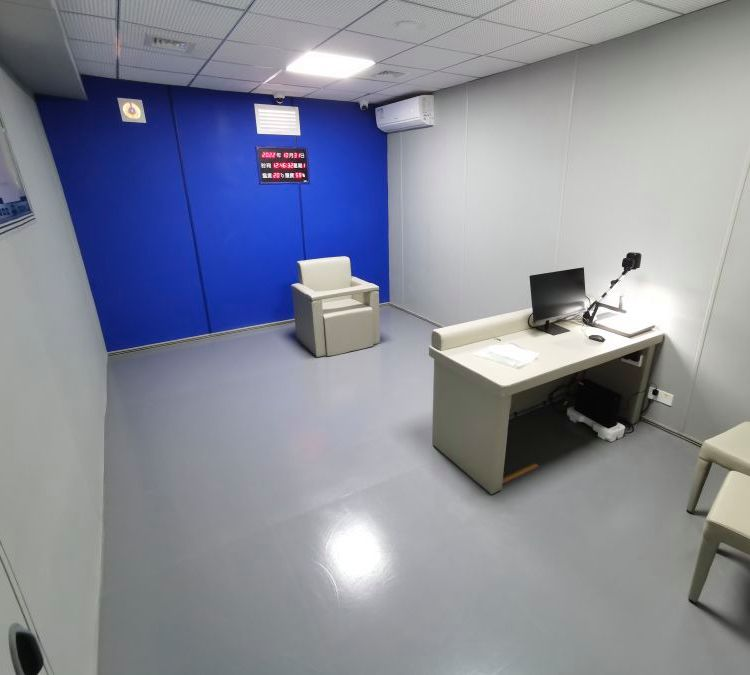
The retest sheet for a municipal public security bureau's 420-square-meter training hall landed on my desk this morning: T30 reverberation at 0.58 seconds averaged across 500 Hz to 2 kHz, down from 2.1 seconds on the empty-site reading, measured by a CMA-accredited agency. The whole treatment was 12 mm polyester acoustic boards for walls fixed on 50 mm furring strips with mineral wool infill, hung by a four-man crew in three days. Short version before any data: flame-retardant polyester returns more usable absorption per dollar than the alternatives, fabric-wrapped fiberglass wins wherever speech clarity is written into the contract, and wood acoustic panels are a design decision first and an acoustic one second.
What follows is how I read that report, where each wall material actually belongs, what the numbers cost per square meter, and the single document check that decides whether a supplier gets a signature from me.
What the acceptance report actually measures
The agency tested six octave bands from 125 Hz to 4 kHz, plus background noise with the air conditioning running, and handed back a table of seconds per band. That simplicity fools people. The number that mattered on this job was 0.72 seconds at 1 kHz, because that band carries most of the energy in a human voice, and the client had written 0.8 seconds into the acceptance sheet as a contractual line.
One term deserves pinning down, because suppliers blur it on purpose: acoustic boarding for walls is a factory-made absorption layer fixed to a wall structure to shorten reverberation inside the room; it does not stop sound leaving the room, so it is never a substitute for a soundproof partition. Speech sits mainly between 500 Hz and 2 kHz. GB 55016-2021, in force since 1 April 2022, makes indoor noise limits a mandatory acceptance item for buildings in China, which is why these tables now carry contractual weight instead of sitting in an appendix.
Field results and lab datasheets never match exactly. If a datasheet for noise reduction boards for walls prints a single absorption coefficient with no octave bands, close the file, because the missing 125 Hz column is doing quiet work there. On this project, our layout software missed the measured mid-band figure by 0.05 seconds; mounting method, seam treatment, and coverage ratio move a field result more than brand names ever do. (Keep the furring strip layout drawing on file, the retest crew will ask for mounting details before they switch on the meter.)
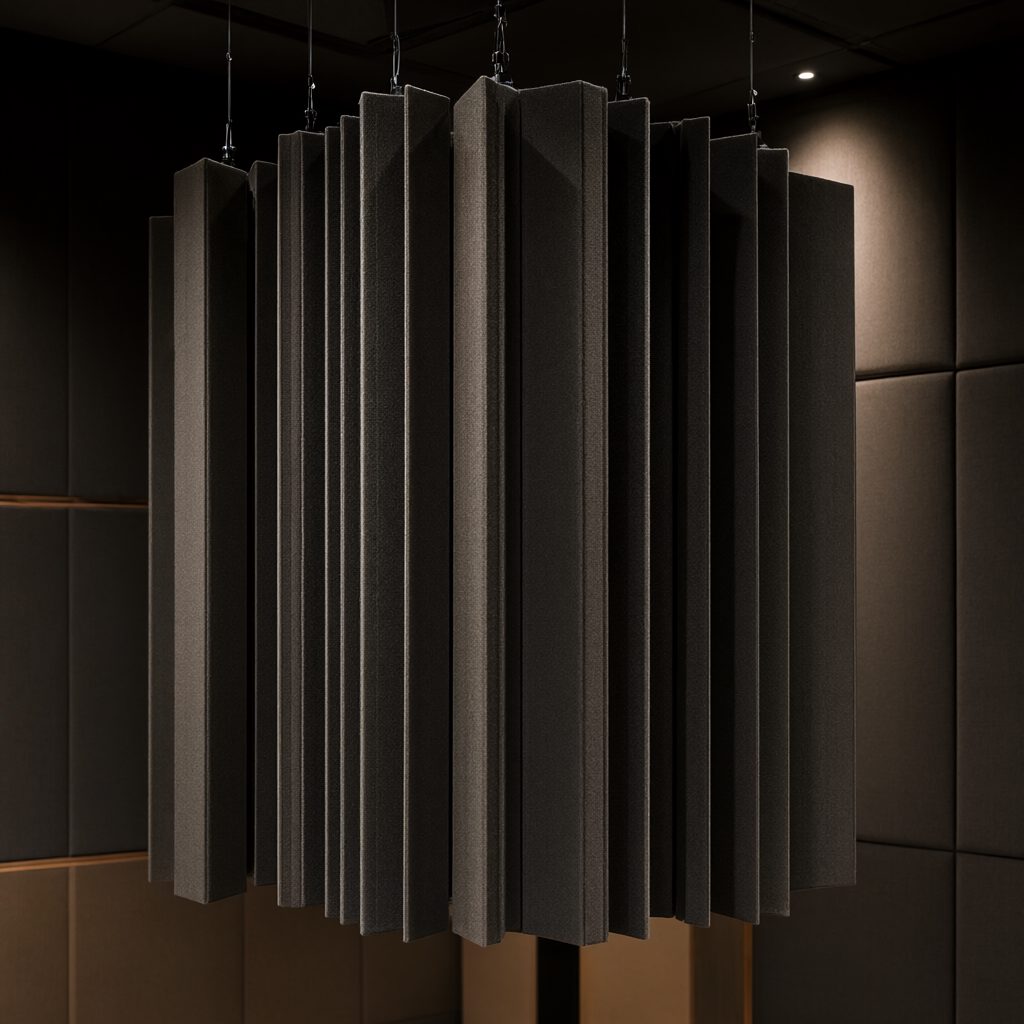
Polyester, fiberglass, or wood acoustic panels for walls?
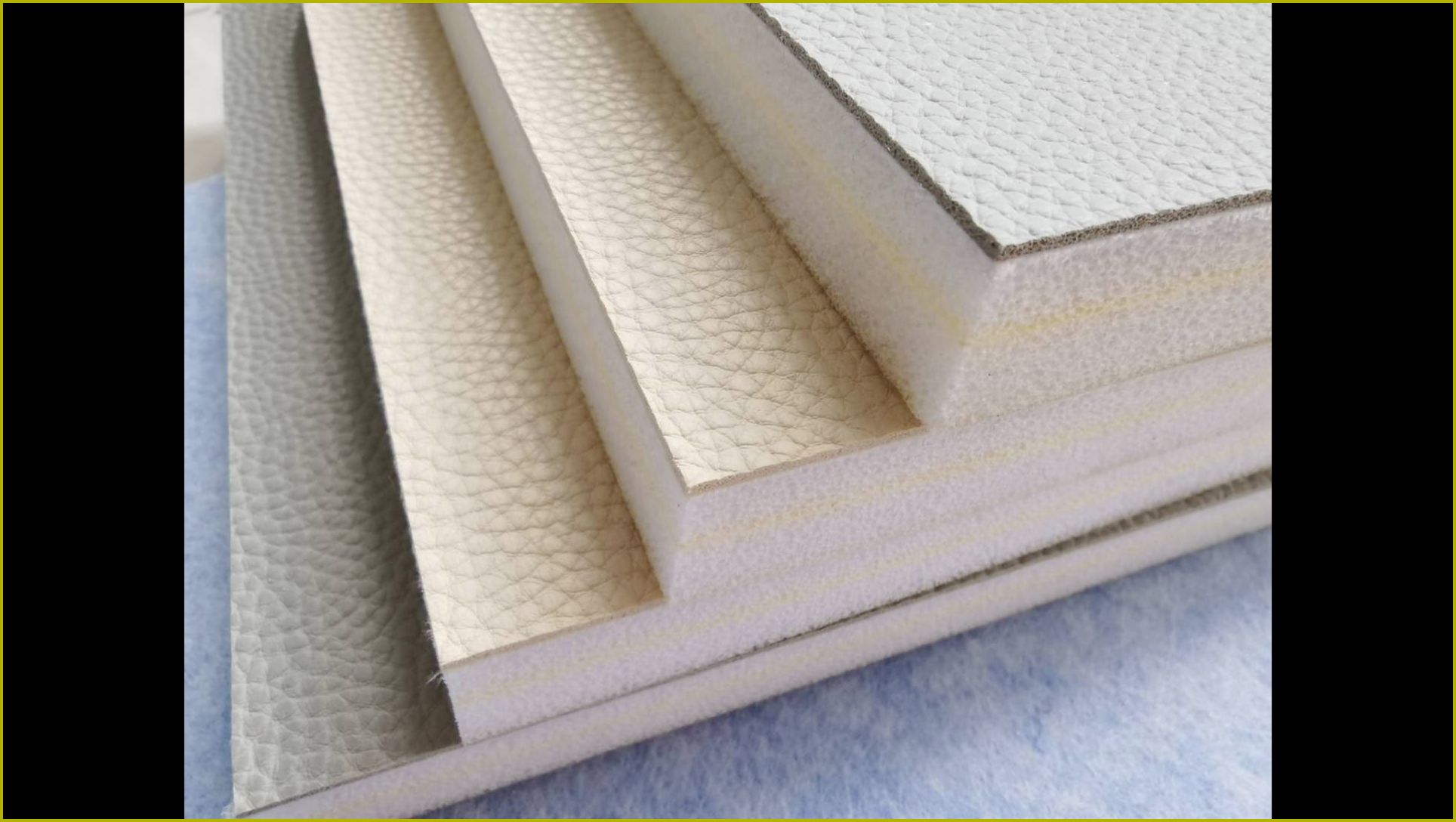
Polyester fiber board is heat-pressed PET fiber in 9 to 24 mm thickness, and it covers ordinary rooms without specialist labor because it cuts, nails, and glues cleanly. A 12 mm board direct-fixed measures NRC 0.65 to 0.75 depending on density, and flame-retardant grades carry a GB 8624 B1 classification with an oxygen index of at least 32 percent. White acoustic panels for walls in this material are the standing request for classrooms and offices, and the color holds as long as the batch documentation includes the anti-UV line.
Fabric-wrapped fiberglass sits at the top of the absorption curve. At 50 mm thick on an E-400 mount it reads NRC 0.90 to 0.95 and pulls 250 Hz down far harder than polyester, which is why courtrooms and broadcast studios pay roughly double for it. The edges chip during handling, the fabric colors run limited, and every panel needs a frame or a Z-clip. Honestly, for a home theater or a living-room acoustic wall decor job I would not push this material either; you would be paying for mid-band performance the room cannot use.
Wood acoustic panels for walls are slotted or perforated boards laid over a black acoustic fleece, and they live a double life as decorative acoustic panels for walls in lobbies and auditoriums. Give a 15 mm slotted panel a 50 mm cavity with mineral wool and it reaches NRC 0.60 to 0.75 in the speech band; below 250 Hz it contributes almost nothing. Clients pick it when the architect has drawn timber on the elevation and the acoustician wants absorption in the same square meters, and that is a legitimate way to buy.
Material choice, then, follows the room's job. Offices and training rooms take polyester, speech-critical rooms take fiberglass, image-facing lobbies take wood over infill, and mixed elevations happily mix products side by side.
The comparison table I hand clients before arguments start
Figures below come from supplier datasheets, our last three procurement batches, and the acceptance records of the projects mentioned here. Prices are factory-direct bulk rates from early 2025; retail counters typically mark them up 30 to 60 percent.
| Item | Polyester fiber board 12 mm | Fabric-wrapped fiberglass 50 mm | Slotted wood panel 15 mm + 50 mm cavity |
|---|---|---|---|
| NRC (ASTM C423) | 0.65 direct / 0.80 with cavity | 0.90 to 0.95 (E-400) | 0.60 to 0.75 mid-band |
| Fire class (GB 8624) | B1-s1,d0 | A-s1,d0 | B1 treated, B2 untreated |
| Oxygen index | 32% or higher | non-combustible core | batch report required |
| Material price, USD/m2 | 4 to 9 | 18 to 35 | 25 to 45 |
| Installed price, USD/m2 | 14 to 22 | 30 to 50 | 40 to 65 |
| Weight | 2.9 kg/m2 | 4 kg/m2 | 11 kg/m2 |
| Fits | offices, classrooms, training halls | courtrooms, studios, broadcast | lobbies, auditoriums, cinemas |
Read the price line against the NRC line, never against the brochure photo. Polyester delivers roughly one NRC point per 20 dollars of installed cost, fiberglass asks close to double that, and wood trades absorption for appearance, which is fair once everyone admits the trade out loud. The training hall budget held at about 18 dollars per installed square meter and still cleared the contractual retest with margin.
The weight column deserves its own warning. Eleven kilograms per square meter concentrated on furring screws is a real load for an existing drywall partition, and I have re-hung two lobby walls because nobody checked the substrate before ordering; either add blocking or move to a panel the wall can carry.
Fire class kills more quotes than NRC does
Fire performance ends procurement conversations faster than any absorption figure. GB 8624-2012 grades wall linings into classes, and two matter here: Class A covers non-combustible cores like fiberglass, while B1 covers flame-retardant polyester provided the delivered batch shows an oxygen index of 32 percent or higher. GB 50222-2017 goes further and requires Class A wall finishes along evacuation corridors and in specified assembly spaces, so a compliant B1 quote can be dead on arrival for that location.
Datasheets from five years ago count for nothing. On a county-level court job, a supplier produced a combustion report from 2021 for a 9 mm board while the delivery was 15 mm stock at a different density; the CMA-accredited lab that retested the delivered batch returned B2, and the whole consignment went back on the truck that afternoon. Ask for the report tied to the delivery batch, with thickness and density matching the purchase order line by line.
A real B1 certificate chain is checkable in minutes: production batch number, the lab's CMA stamp, a test date under two years old, and product photos that match the goods on the pallet. A salesperson who offers to send photos of a report instead of the file has already answered your question.
Where lab numbers meet a real wall
The same board behaves differently depending on the air behind it. Glued flat onto drywall, a 12 mm polyester board absorbs high frequencies and leaves 250 Hz nearly untouched; on 50 mm furring with mineral wool infill, the low-mid absorption roughly doubles and the field NRC climbs toward 0.80. An air gap is free performance, yet about half the quotes I review price adhesive-only installation.
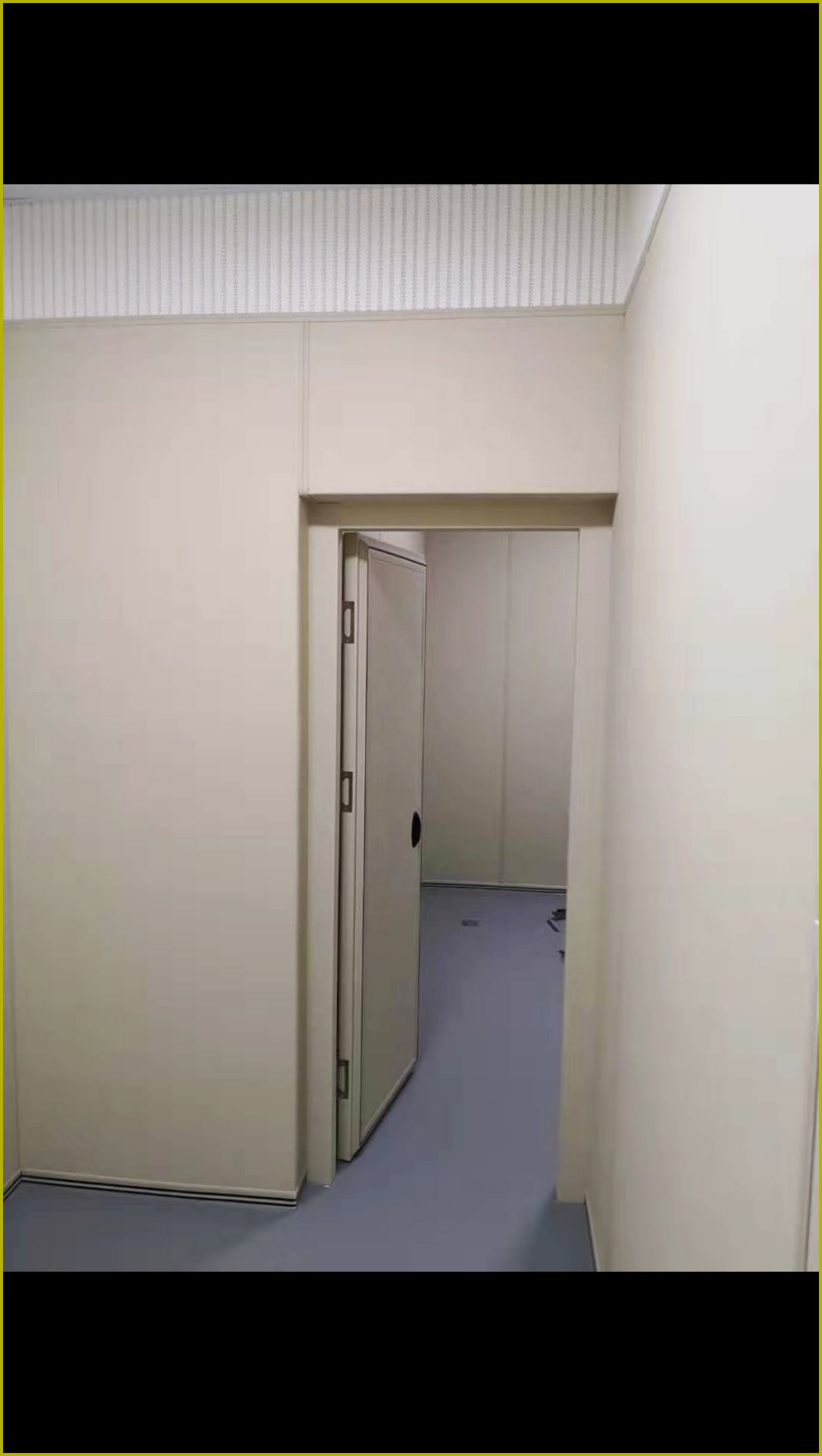
Coverage ratio matters as much as product selection. Absorption works in percentages: treat 30 to 40 percent of the wall area, concentrated at first-reflection points and behind the sound source, then stop. Spreading boards thinly as acoustic wall decor across every elevation costs more and measures worse than a concentrated layout, and it pushes the room toward that unnaturally dead sound clients complain about afterward.
On the training hall, four workers hung 190 square meters of board in three days: one day for furring leveled to a 2 mm tolerance, one day for boards and seams, one day for edge trims and cleanup. The retest ran a week later with furniture in place, because empty-room measurements flatter the result and I wanted the number that survives an audit.
What should acoustic boards for walls cost?
Budget from installed prices, because material-only numbers mislead. Acoustic boarding for walls lands between 14 and 22 dollars per square meter installed for 12 mm flame-retardant polyester on furring, 30 to 50 for 50 mm fabric-wrapped fiberglass, and 40 to 65 for slotted wood systems with cavities and infill; all ranges assume factory-direct orders at 2025 prices with standard edge finishing.
Searching acoustic panels for walls near me usually routes you to a local distributor adding a retail layer, which is fine when you need twenty boards by Friday and expensive when the order runs to five hundred. Our team at 景丽伦英文站 works the factory-direct route instead: engineers come out to measure for free, the design office returns a panel layout with a projected reverberation figure, GB-certified goods ship with their batch documents, and the factory price is the price. That structure cut roughly 25 percent from the training hall budget against the two distributor quotes we collected alongside it.
Compare bids on NRC with its mounting method and on fire class with a matching batch report, then check whether the installed price includes substrate preparation. You should read that sentence twice, because the bid that undercuts everyone else almost always omits the fire documentation or the cavity work, and both resurface during acceptance at triple the saving. (Line-item the cavity and the mineral wool explicitly, or someone will quote adhesive-only and call it equivalent.)
The one check I run before any signature
Demand the same-batch fire report and the NRC curve measured at the quoted mounting, in one email, before any deposit is due. A manufacturer holding genuine certificates produces both within a working day; a reseller without them starts talking about documents after delivery, and after delivery is exactly when you do not want to discover the wall fails acceptance.
A report worth trusting carries the lab's CMA accreditation, a batch number that matches the purchase order, thickness and density consistent with the goods, and a test date inside two years. Anything missing from that chain is a negotiation signal, not paperwork trivia.
Send your room dimensions, wall photos, and what the room is for to 景丽伦英文站, and you will get back a panel layout with an absorption calculation and an itemized quote inside two working days; if our installation misses the contractual figure, our crew returns and reworks the wall at our cost.
How much do acoustic boards for walls cost installed?
Factory-direct installed prices in 2025 run 14 to 22 US dollars per square meter for 12 mm flame-retardant polyester with furring strips, 30 to 50 for 50 mm fabric-wrapped fiberglass, and 40 to 65 for slotted wood systems. Local retail distributors typically add 30 to 60 percent on top.
Are wood acoustic panels for walls good for soundproofing?
No. Slotted wood boards absorb mid-frequency reverberation inside a room, reaching NRC 0.60 to 0.75 with a mineral wool cavity, but they block almost nothing; stopping transmission requires a decoupled, mass-loaded partition. A supplier quoting wood boards as soundproofing is selling the wrong product for the problem.
How long does installation take for a 200-square-meter room?
A four-person crew needs three to four working days: one day for furring strips leveled to a 2 mm tolerance, one to two days fixing boards and finishing seams, and a final day for trims and cleanup. Book the acoustic retest roughly a week later, with furniture already in place.
Do white acoustic panels for walls turn yellow over time?
Quality flame-retardant polyester keeps its color for years when the batch includes anti-UV treatment, which should appear in the supplier's documentation. Untreated cheap stock near south-facing glazing yellows visibly within two to three years, so request the anti-UV line from the same-batch report before ordering white.

Leave A Comment