




Reduce echo in a room by covering 25 to 35 percent of the total wall and ceiling area with material rated NRC 0.75 or higher, starting at the ceiling, and confirm the gain with a measured reverberation time before anyone signs anything. Everything below is a footnote to that sentence. Last Tuesday I stood on a site watching a crew glue 9 mm decorative PET foam straight onto bare concrete inside a home studio while the owner announced the echo would be gone by Friday. It was not gone by Friday. My after-sales line at the factory rang at 8:40 the next morning, and the voice on the other end used the word scam, which was generous, since the panels did exactly what their test report said they would.
Most people who type how to eliminate echo in a room into a search box are actually chasing one of two different problems. A true echo is a discrete repeat arriving more than 50 milliseconds late, which needs a hard reflective surface roughly 9 m or farther away, a concert hall or long corridor situation. What most callers really have is reverberation, sound stacking up because every surface bounces it back. Reverberation time, written RT60, is the time a sound takes to decay by 60 decibels after the source stops, and it is the number that decides whether a treatment worked or whether my phone keeps ringing. The rest of this page is the field manual for anyone asking how to reduce echo in a room, with numbers you can hold a supplier to.
NRC 0.40 Is Decoration, Not Absorption
NRC, the Noise Reduction Coefficient, is the average of a material's absorption coefficients at 250, 500, 1000 and 2000 Hz, rounded to the nearest 0.05, and it is the single number most quotes try to hide. A 9 mm PET decorative panel typically tests at NRC 0.25 to 0.30, which means it reflects more than two thirds of the speech-band energy hitting it. That is wallpaper with acoustic ambitions. The sheets look technical, they photograph beautifully, and they change almost nothing you hear, which explains a solid share of the complaint calls I take every month.
The frequency table is where cheap material gets caught. Thin PET shows an absorption coefficient near 0.05 at 125 Hz and perhaps 0.30 at 500 Hz on a CMA-qualified agency report, while a proper 50 mm panel runs roughly 0.60 and 1.00 at those same bands. Speech carries energy right through that low region, so a room wrapped in the thin stuff still booms and turns meetings into a muddle. If you read only the price column on a quote, this is exactly where the money disappears. I have walked into finished rooms where the installer doubled the panel count, at double the labor, chasing an improvement physics had already refused.
A 180 m² dance studio in Foshan learned this the loud way. The owner spent the full budget on 9 mm grooved sheets across every wall, called us when the microphone still fed back, and ended up re-doing the ceiling with 42 m² of 50 mm rock wool baffles at NRC 0.90. The project acceptance sheet shows RT60 moving from 1.9 s down to 0.7 s after the redo. The first attempt had moved it by roughly nothing.
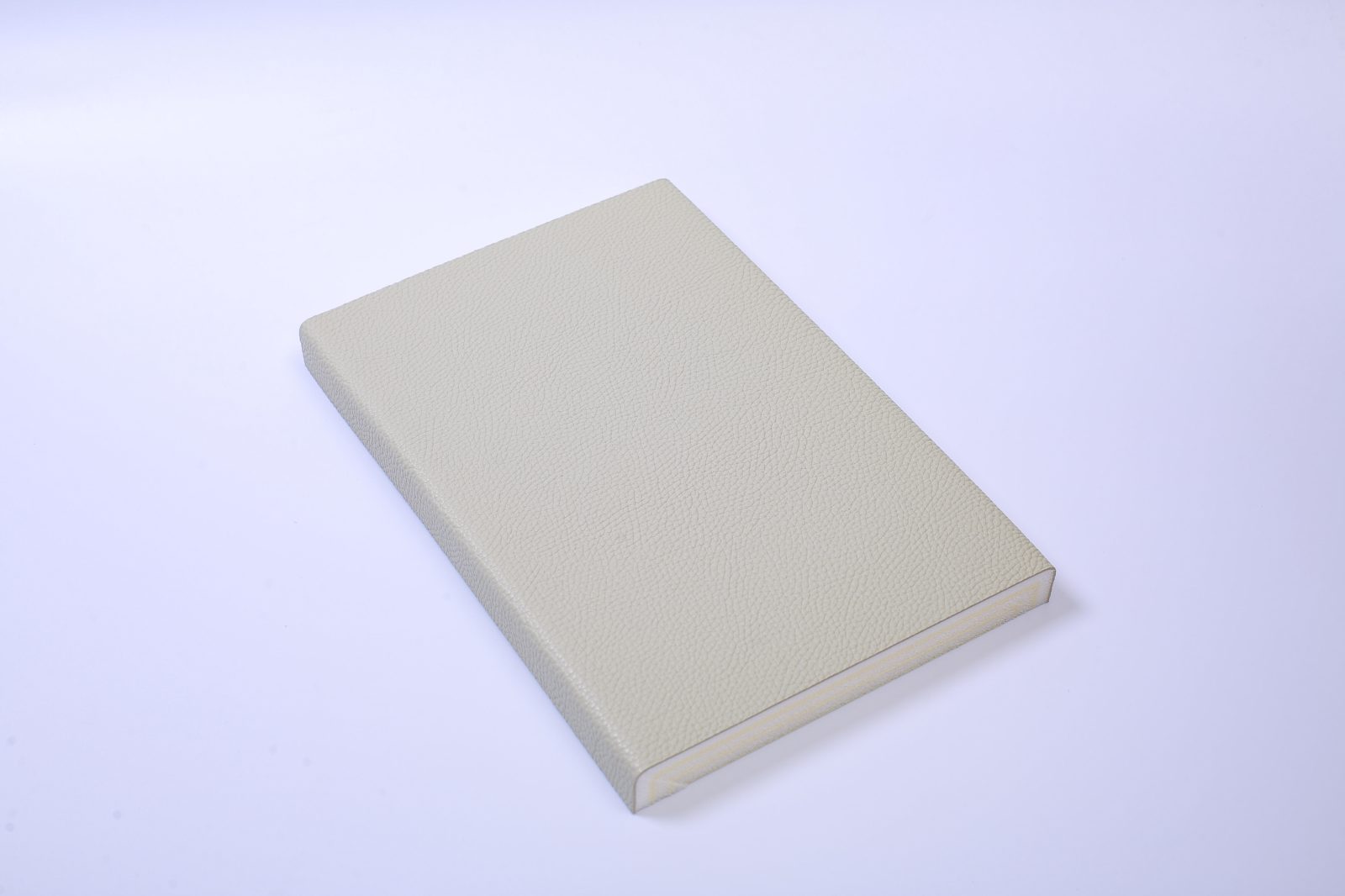
The Thickness That Eats Bass
Thickness decides which frequencies you capture, because a porous absorber needs depth comparable to a quarter wavelength of the sound it targets. A 50 mm panel with a 50 mm air cavity behind it works effectively down to around 250 Hz, and its 125 Hz coefficient climbs from about 0.35 to about 0.60 with that cavity, figures pulled from a CMA test report I keep in the drawer for arguments exactly like this one. A 9 mm sheet, cavity or not, is dead below 500 Hz. No install trick fixes a thickness problem.
Density is the second dial, and it gets misread constantly. Rock wool acoustic board at 80 kg/m³ performs; the 40 kg/m³ slabs some suppliers quietly substitute will sag in the frame and lose mid-band grip within a couple of years. Push too dense, past roughly 100 kg/m³, and the surface starts reflecting instead of absorbing, so more is not automatically better. Fabric-wrapped fiberglass board around 48 kg/m³ reaches NRC 0.80 at just 25 mm, which is why it owns the office market.
Reading the Table Like a Buyer
Here is the comparison I send to procurement teams who ask how to minimize echo in a room without buying twice. Prices are factory-direct export ranges per square meter, and they assume the fire report travels with the batch.
| Panel type | Thickness | Density | NRC | GB 8624-2012 class | Factory price | Where it belongs |
|---|---|---|---|---|---|---|
| 9 mm PET decor sheet | 9 mm | ~220 kg/m³ | 0.25-0.30 | B1 | $4-6 | Looks-only walls |
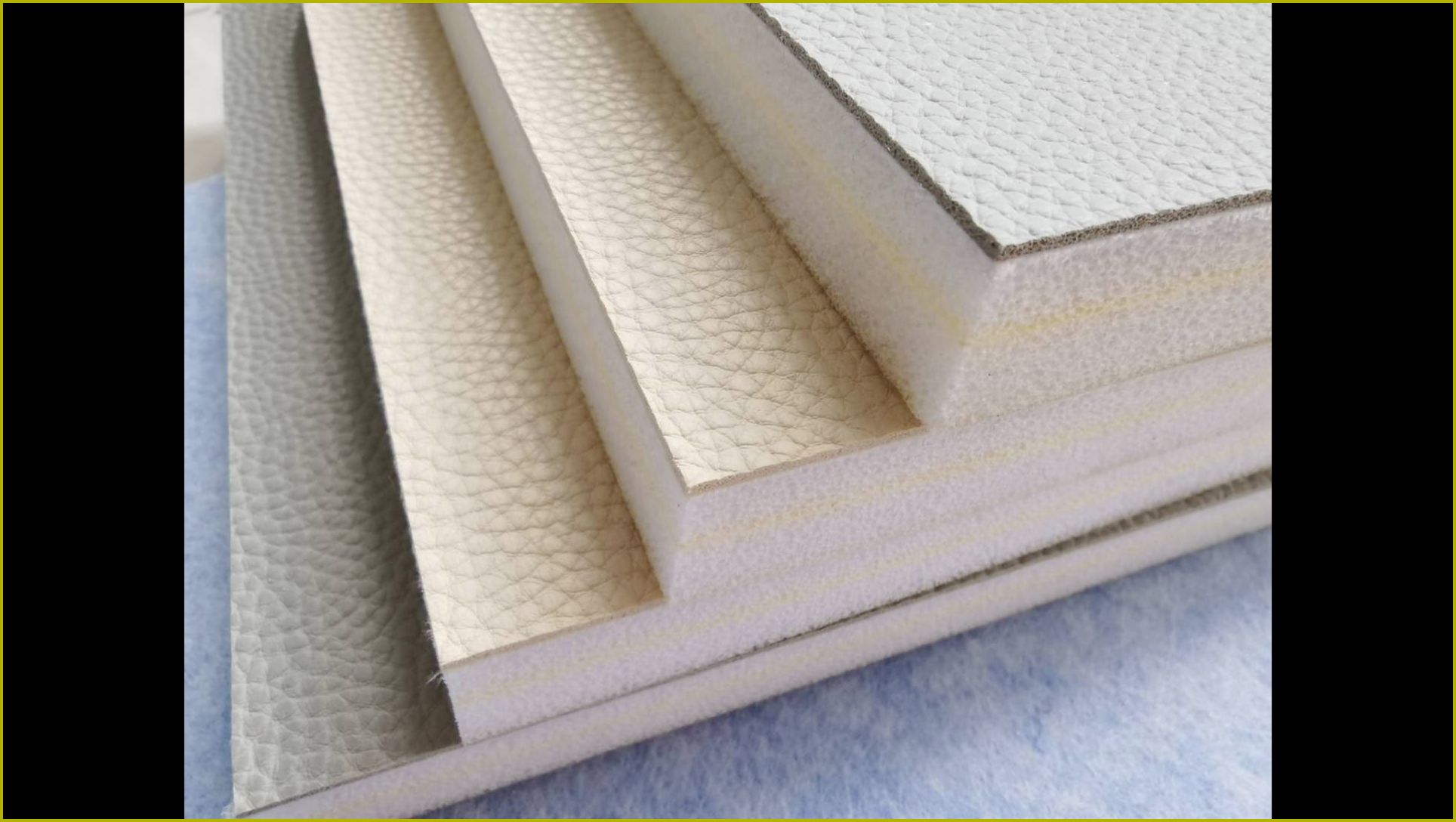
| Fabric-wrapped fiberglass board | 25 mm | 48 kg/m³ | 0.80 | A2 | $9-14 | Offices, meeting rooms |
| Rock wool acoustic board | 50 mm | 80 kg/m³ | 0.90-0.95 with cavity | A2 | $10-16 | Studios, ceilings, factories |
| Slat wood over rock wool core | 12+50 mm | 80 kg/m³ core | 0.75-0.85 | B1 | $28-55 | Lobbies, boardrooms |
| PU foam wedge | 30 mm | ~30 kg/m³ | 0.45 | B2 or worse | $3-5 | Nowhere with an inspection |
One row in that table fails inspections for a living. PU wedge foam ships at B2 or worse, and its 0.45 NRC flatters it, since the number collapses at the low end where hard rooms actually struggle. Every time a client asks how to eliminate echo in room cheaply and then mentions PU wedges, I give them the same answer: cheap panels are only cheap until the fire acceptance.
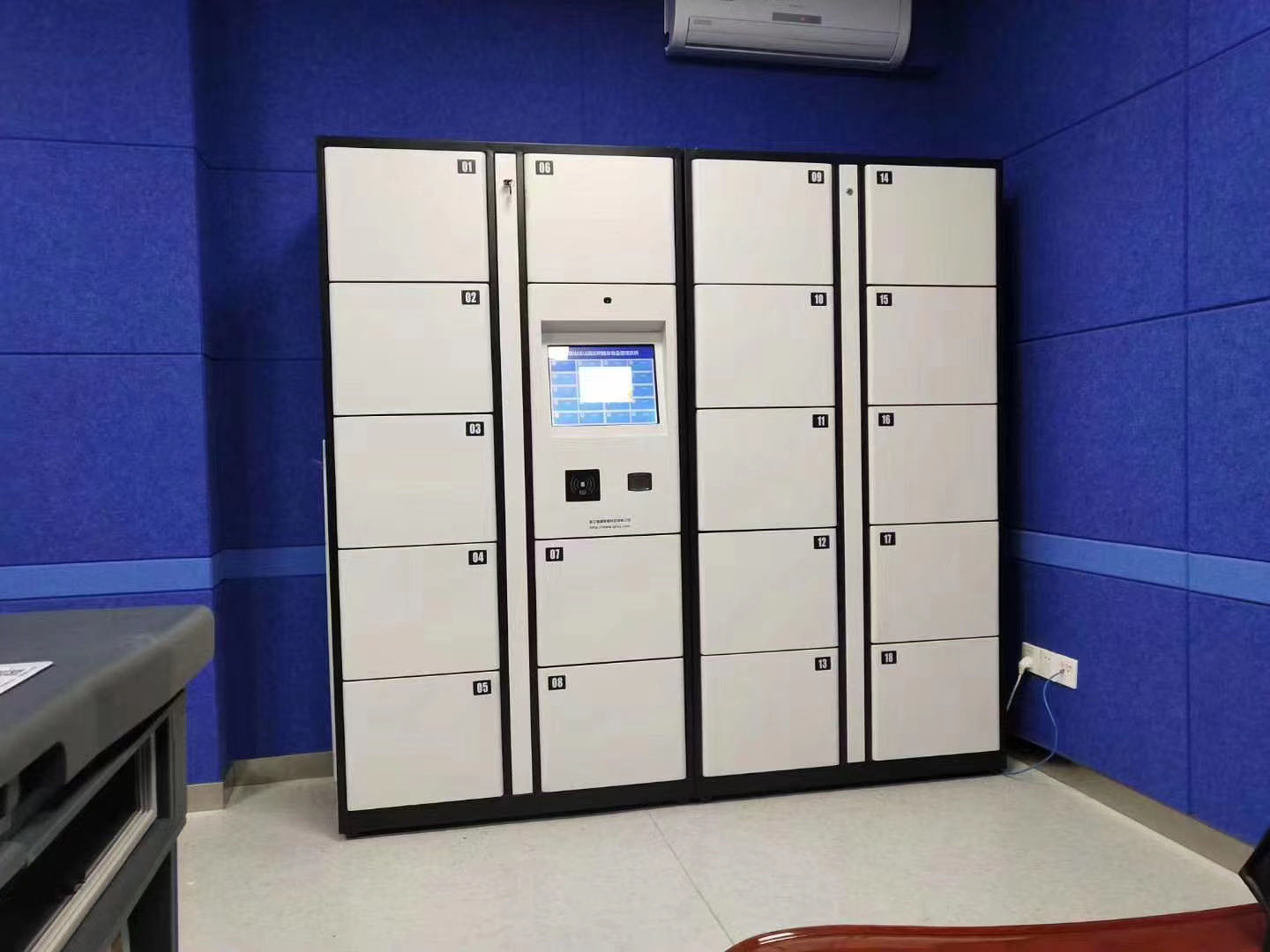
Will the Fire Inspector Fail Your Panels?
Wall and ceiling finishes in public buildings must reach GB 8624-2012 Class B1, and most project specs add an oxygen index of 32 percent or higher on top. This is not a detail you negotiate at handover. A business hotel corridor project in Hangzhou, 600 m² of it, had cheap PU foam stripped off the ceiling at fire acceptance, and the general contractor paid for removal and reinstall out of his own margin. The material invoice was the cheap part of that lesson.
The document matters as much as the material. A report from a CMA-qualified testing agency should carry the sample name, the thickness you actually bought, the batch number, and the class result, on agency letterhead. (Ask the crew for the batch fire report when the delivery truck arrives; acceptance day is a terrible moment to learn it never existed.) Suppliers who promise the report later are describing a future that does not arrive.
Here I take a side. For a private living room, B1 PET is genuinely enough, and pushing A2 rock wool on a homeowner is over-selling. Above a hotel corridor, a school hall, or any space on a sprinkler drawing, treat anything below B1 as a rejection slip and move on. Getting the spec right at design stage is also the honest answer to anyone searching how to prevent echo in a room, because the right panel on paper costs nothing while the wrong panel on a ceiling costs everything twice.
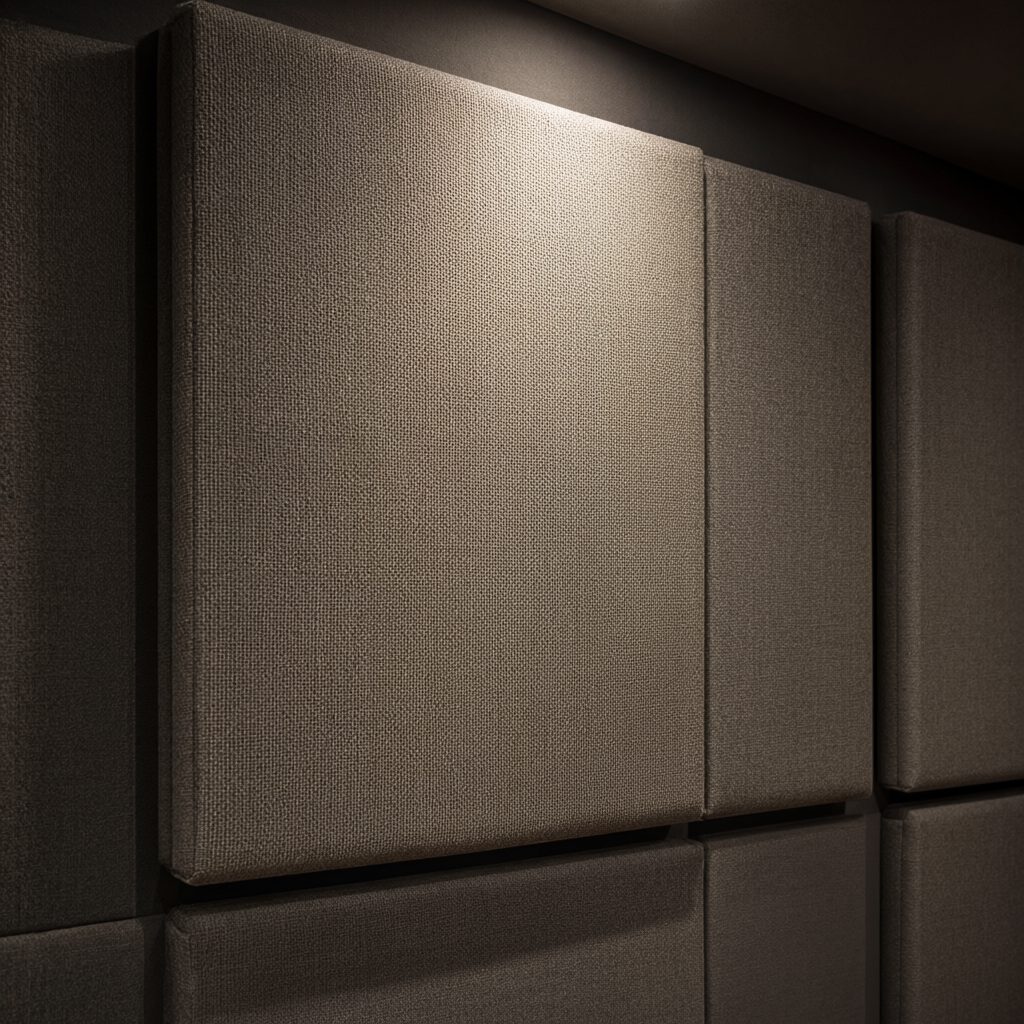
Coverage Math Beats the Rule of Thumb
The Sabine formula, RT60 = 0.161 x V / A, turns guesswork into a purchase order, where V is room volume in cubic meters and A is total absorption in sabins. Take a 6 x 4 x 2.8 m conference room, 67.2 m³, with a measured baseline RT60 of 1.3 s, meaning the room already holds about 8.3 sabins. Target 0.6 s and you need 18 sabins, so the gap is roughly 10, which 12 m² of NRC 0.85 ceiling panel closes with room to spare. Twelve square meters, calculated on one line, where a rule of thumb would have ordered thirty.
GB 55016-2021 puts the mid-frequency reverberation ceiling for a small conference room under 200 m³ at around 0.8 s, and larger halls get their own table, so the target number exists on paper before any panel is ordered. My working range for speech rooms sits between 0.4 and 0.6 s, because lower starts sounding dead and higher starts ringing. The number is a spec, a preference, and an argument-ender all at once.
Curtains and carpet alone will not carry a hard room. A curtain hanging loose runs NRC 0.10 to 0.15, heavy carpet on underlay perhaps 0.30, useful as trim, useless as the main course. A municipal bureau meeting room we serviced had floor-length drapery on two walls and still measured 1.6 s before treatment; 14 m² of ceiling cloud brought it to 0.7 s on the acceptance measurement. Soft furnishings finish the job, panels do the job.
Ceilings Before Walls, Always
Two large hard parallel surfaces, the floor slab and the ceiling slab, bounce sound back and forth like a rally that never ends, so the ceiling is where treatment pays first. A suspended cloud or a vertical baffle exposes both faces to the room, close to doubling the effective absorbing area per square meter of material, which is the easiest efficiency gain in this trade. In a factory workshop we hung rows of 50 mm baffles under a 6 m deck, and the speech-intelligibility complaints simply stopped being filed.
Mounting detail changes the numbers. Frame wall panels on a keel with a 50 mm air cavity instead of full glue spread, because that cavity is what lifts the 125 Hz coefficient on the test report from about 0.35 to about 0.60. Full adhesive on painted concrete locks out the cavity and glues your low-frequency performance shut at the same time. In humid spaces, indoor pools, kitchens, coastal corridors, specify PVC-faced panels, since bare fabric-wrapped board drinks moisture and stains within a season.
The phrase how do i reduce echo in a room lands in my inbox most often around midnight, usually from a home theater owner who has already glued something to the glass. Glass needs layered window treatment or heavy drapery, and the room needs panels on the wall opposite the speakers first. The same physics answers anyone asking how to decrease echo in room for a podcast corner: treat the wall you speak toward, treat the ceiling above the desk, and leave the window for last.
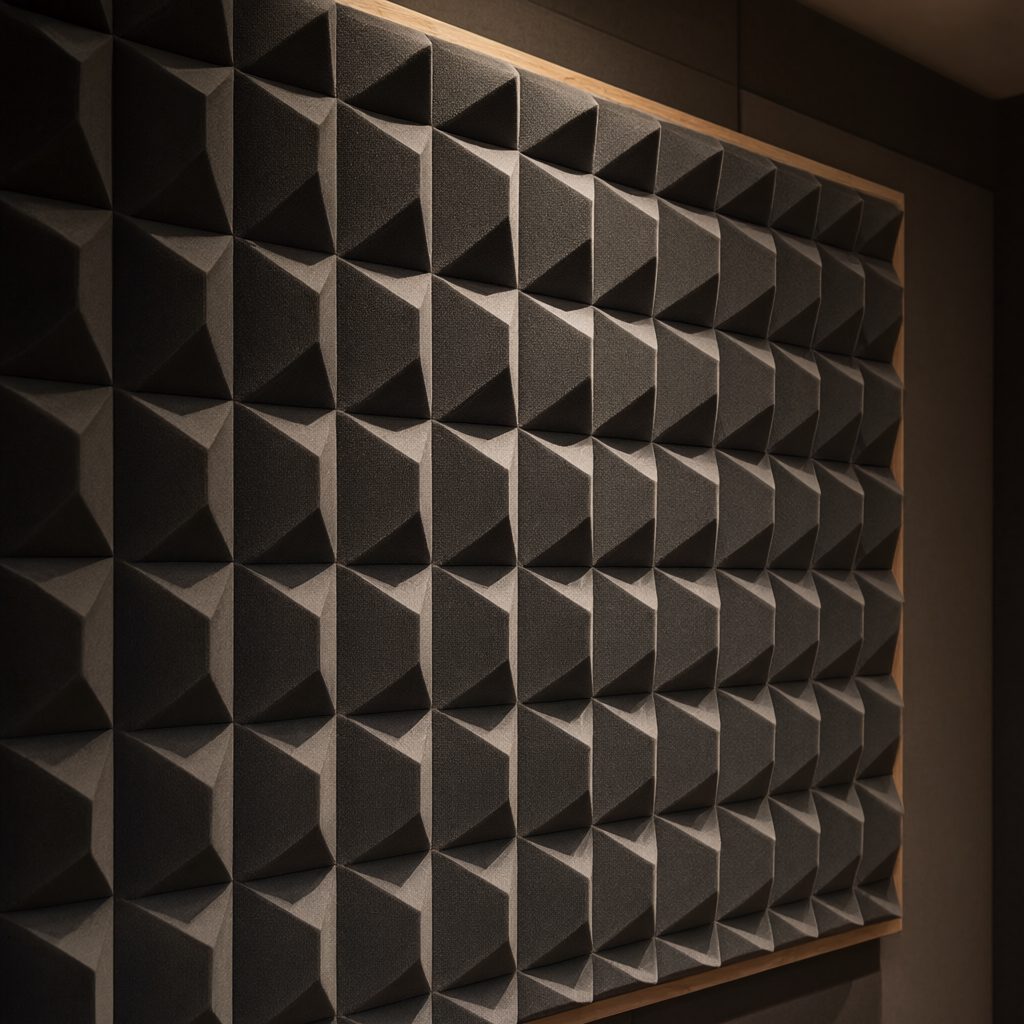
How Do You Reduce Echo in a Room and Prove It on Paper?
An unverified claim is an unfinished job. Insist on a before measurement and an after measurement, RT60 with a meter and an omnidirectional source, taken at the same positions and written onto the acceptance sheet. A clap test with a phone app gets you within roughly 0.1 s, which is enough to catch a fake. My rule on commercial projects is blunt: no acceptance record, no final payment, and that single sentence has salvaged more installations than any product upgrade ever did.
- Before RT60 value with measurement positions
- After RT60 value, same positions, same meter
- Panel model, thickness and batch numbers as installed
- Fire class per GB 8624-2012 with report numbers attached
When clients ask where to buy after the diagnosis, I point them at our own 景丽伦英文站 line, and yes, I am biased, so check the numbers instead of the brand. Every batch ships with a CMA-qualified fire report, the core products run the densities and NRC values in the table above, the measurement team returns a coverage layout free of charge, and factory-direct pricing keeps the 25 mm class in that $9-14 band rather than the $25 retail bracket. A quote without a coverage plan attached is just a price list wearing a suit.
So here is the judgment standard to carry into any meeting: demand NRC at 125 and 500 Hz, demand fire class with report number, demand the RT60 value the contractor will sign for on the acceptance sheet. Any supplier who cannot answer all three in one breath is selling decor, and you already know what decor does to an echo.
How to reduce room echo?
Cover 25 to 35 percent of wall and ceiling area with NRC 0.75+ material, ceiling first. In a 67 m³ conference room, 12 m² of NRC 0.85 panel took RT60 from 1.3 s to 0.6 s on a measured acceptance sheet. Decorative foam under NRC 0.40 will not change what your ears notice.
How to remove room echo?
Room echo is usually excess reverberation, removed by porous absorption with an air cavity. Mount 25-50 mm panels rated NRC 0.80 or higher on the ceiling and one long wall, keep a 50 mm gap behind them, and aim for RT60 near 0.6 s in speech rooms. Glass needs drapery, since panels never stick to it usefully.
How to make room quieter?
Split the question first. Echo inside the room is an absorption job, panels and soft mass. Noise entering from outside is an insulation job, double 12 mm gypsum, sealed door bottoms, airtight windows. Absorption panels barely touch traffic noise, and knowing that difference saves people thousands.
How to reduce room noise?
Work from the source outward: seals on doors and windows, soft flooring, curtains, then absorption on ceiling and walls at 20 to 30 percent coverage. Loose curtains run NRC 0.10-0.15, so treat them as trim only. For impact and mechanical noise, isolating mounts and mass do what fabric never will.
How to make my room quiet?
For a home room: thick rug, full curtains, a loaded bookshelf, then 4-6 panels of 25 mm NRC 0.80 fabric board on the ceiling or rear wall. Skip 9 mm decor foam entirely. A bedroom-sized project usually lands between $150 and $400 in materials at factory-direct pricing.
How much do acoustic panels cost per square meter?
Factory-direct export pricing runs about $4-6 for 9 mm PET decor, $9-14 for 25 mm fabric-wrapped fiberglass, $10-16 for 50 mm rock wool board, and $28-55 for slat wood with a rock wool core. Installation adds 15-30 percent. Anything far below these bands usually fails the fire report check.
Take a tape measure this week, note the length, width and ceiling height, count the hard surfaces, and send those numbers through the quote form or the WhatsApp line on 景丽伦英文站; the measurement team replies with a free layout plan and a factory-direct quote within one working day. Bring the three-part spec line from above to whoever pitches you, and the argument ends before the invoice starts.

Leave A Comment