




Straight answer first: for acoustic panels going into occupied public spaces, melamine foam and resin-bound fiberglass are the only two core materials I will put my signature under. Untreated polyurethane foam fails the fire walk-through in most public buildings, and the thin wedge tiles sold online as ready-made acoustic panels absorb so little below 500 Hz that they decorate a wall instead of treating it. Neither claim comes from a brochure.
Last spring, 480 square meters of polyurethane-core panels came off the walls of a municipal conference hall because the quotation never named GB 8624-2012 and nobody on the client side asked. Two days of demolition, a plastering crew on standby, and a pushed-back opening ceremony followed. What you are reading is the comparison I wish someone had pinned to the site office wall before that purchase order went out.
480 Square Meters Down in Two Days
The hall was an ordinary municipal conference space, roughly 1,100 square meters of floor area under a suspended ceiling, with painted masonry walls and worse acoustics than the drawings admitted. The tender specified a mid-frequency reverberation time of 0.8 seconds, a requirement traceable to GB 55016-2021, the general code for building environment that makes acoustic limits mandatory for schools, offices and assembly rooms across China, and the acceptance sheet is exactly where that number gets tested. On handover day the walls looked flawless.
Flawless until the acceptance crew measured 1.4 seconds. That reading sits nearly double the target, and it came attached to one question the contractor could not answer: what is inside these panels? The purchase order named a fabric color and a 50 mm thickness. It never named a core material, and that single omission turned a handover ceremony into a demolition job.
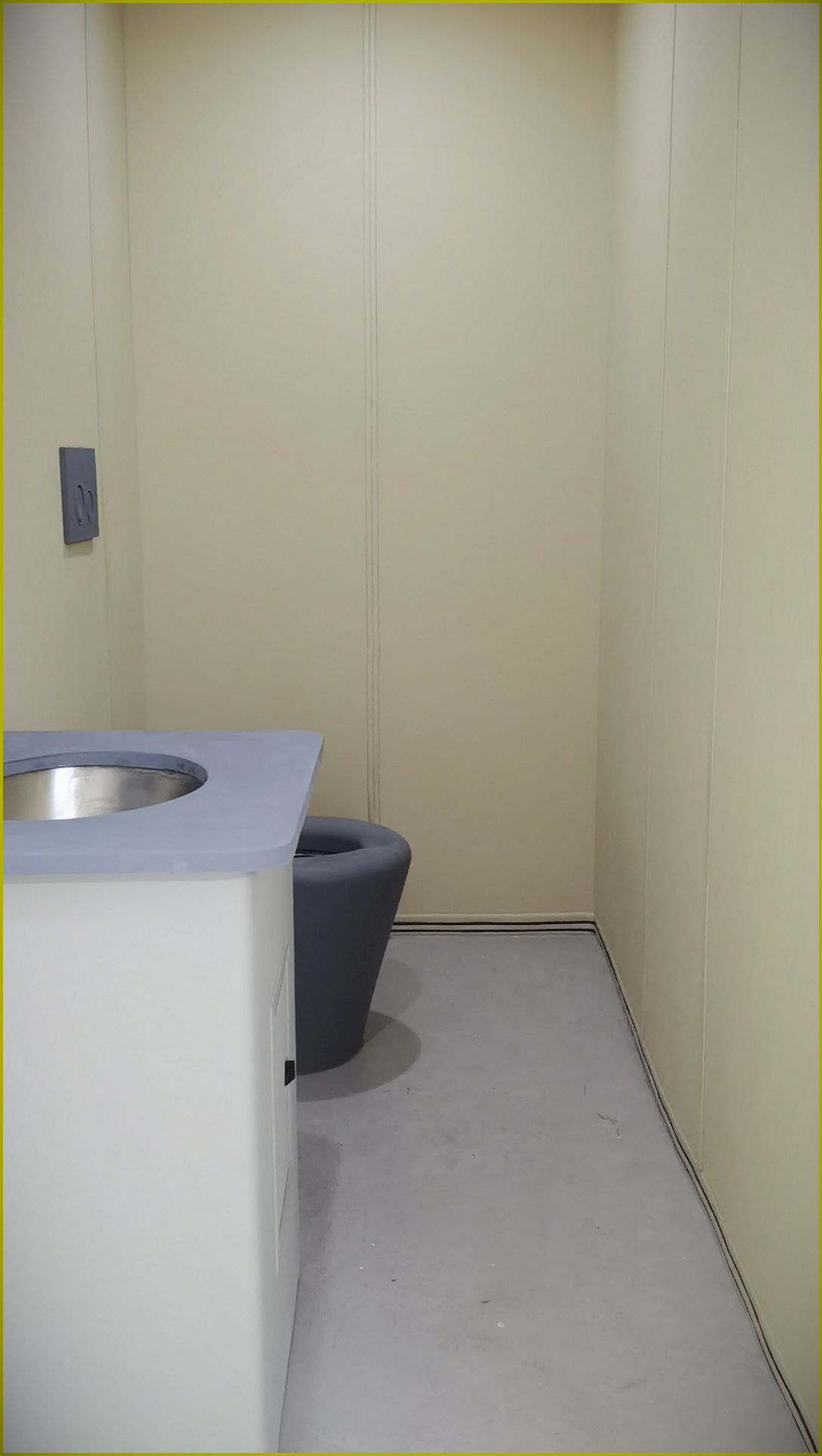
We stripped 480 square meters in two days, and under the fabric sat yellow polyurethane foam with flame retardant on the surface only, the kind that passes a visual check and collapses in a combustion test. The replacement melamine-core panels, ordered from a different supplier at short notice, cost the main contractor more than its entire profit margin on the fit-out. You can guess who signed that change order.
Why Polyurethane Foam Keeps Failing the Fire Walk-Through
GB 8624-2012 is China's classification standard for the burning behavior of building materials, and it grades products from A (non-combustible) down to B3 (easily ignited). Untreated polyurethane foam typically lands at B2 or B3 with an oxygen index near 22 percent, barely above the 21 percent oxygen concentration of the air around it. Touch it with a flame and it keeps burning on its own.
Melamine foam is a different chemistry altogether. It reaches B1 through its own structure before any coating enters the picture, and the combustion report from a CMA-accredited laboratory for our last melamine batch listed an oxygen index above 32 percent alongside low smoke density values, which matter far more than flame spread during an evacuation. Flame-retardant treated polyurethane can hit B1 too, but that treatment lives in the cell walls and degrades with humidity and heat over the years, so I trust chemistry over coating every single time.
Honestly, for a private home studio I do not insist on melamine. A treated polyurethane core in a single-family room, with nobody sleeping next door, carries a manageable risk profile and a genuinely friendlier budget. Public assembly interiors are another animal, and in those rooms the grade is not a preference.
The NRC Number on Your Quote Hides More Than It Shows
NRC is the average of a material's sound absorption coefficients measured at 250, 500, 1,000 and 2,000 Hz, compressed into a single number between 0 and 1. That averaging erases the low end. Speech clutter in meeting rooms lives between 250 and 500 Hz, exactly the band where thin foam does almost nothing.
Readings from one accredited laboratory, one mounting method, one thickness, line up like this: a 25 mm polyurethane wedge tile tests around NRC 0.45, a 50 mm melamine-core panel reaches roughly 0.70, and a 50 mm fabric-wrapped fiberglass panel runs between 0.85 and 0.95. The wedge tile is not four-fifths as good as the fiberglass panel. In the frequencies that decide whether a conference room is intelligible, it delivers barely half the usefulness.
This is the whole acoustic panels vs acoustic foam debate compressed into one measurement. Foam tiles are a product for high frequencies and small rooms. Panels with real cores are a product for reverberation targets and code compliance. When a quotation shows a single NRC figure with no frequency bands attached, ask for the laboratory report with the curves on it, because curves do not flatten themselves the way summary numbers do.
A Comparison Table Worth More Than Any Brochure
Four core materials dominate the panel trade, and each belongs somewhere different. This is the table I now draw on whiteboards before a contract gets signed, because it answers the only question that matters in the first five minutes of a supplier meeting.
| Core material | NRC at 50 mm | GB 8624-2012 grade | Relative cost | Where it belongs |
|---|---|---|---|---|
| Untreated polyurethane foam | 0.55 to 0.65 | B2 to B3 | Low | Not inside any occupied public interior |
| Flame-retardant polyurethane foam | 0.60 to 0.70 | B1 or B2 depending on batch | Low | Home studios, home theaters |
| Melamine foam | 0.65 to 0.75 | B1 through its own chemistry | Mid | Offices, meeting rooms, classrooms |
| Resin-bound fiberglass | 0.85 to 0.95 | A or B1 | High | Auditoriums, halls, gyms |
Read the grade column before the price column. Only materials rated B1 or better under GB 8624-2012 belong inside public assembly interiors, so a quotation that leaves the grade blank has already answered your question. The cost gap between melamine and untreated polyurethane runs roughly 30 to 40 percent per square meter, which sounds steep until you price a delayed opening ceremony against it.
If you judge quotations on price per square meter alone, you will pay for the same wall twice, once in cash and once in rework. PET polyester deserves a mention before we move on, because schools keep requesting it: fiber-free, safe to handle, B1 rated, with absorption that depends heavily on density and thickness. A 9 mm decorative PET board is furniture, while a 24 mm acoustic-grade PET panel starts behaving like a real absorber near NRC 0.60, which makes it a sensible classroom choice and a weak primary treatment for a hall.
Corner Cutting Never Announces Itself Until the Meter Runs
The same panel performs differently depending on how it is mounted, and the distance between a careful crew and a lazy one shows up in measurements, never in photos. Glue dabbed at four corners, panels butted with 5 mm gaps nobody sealed, perimeter battens skipped to save half a day: none of it is visible at handover, and all of it leaks performance.
Mounting a 50 mm panel with a 20 mm rear air gap instead of gluing it flat pushes the absorption gain down into the 250 to 500 Hz bands, exactly where meeting-room muddiness lives. Independent laboratory tests of foam with a rear cavity consistently show the improvement concentrating below 500 Hz, and the furring-strip build adds maybe 15 percent to material cost. That 15 percent is the first line I spend on any specification carrying a reverberation target.
Workers cut corners wherever the specification is vague. So vagueness gets fixed in writing: put adhesive coverage into the method statement, require full bonding or mechanical fixing on every panel, and seal every joint. (Keep the batch combustion report in the handover file as well, because without it the fire walk-through stalls and the whole site stands still while somebody phones a supplier.)
So What Should You Actually Order?
Match the core to the room before opening the catalog, because a catalog will happily sell an auditorium product into a bedroom and a bedroom product into a courtroom.
Home studios and small rooms
Treated polyurethane wedge foam or light melamine tiles at 25 to 50 mm do the job, combined with a rug, heavy curtains and soft furniture. Spending auditorium money on a spare-bedroom booth makes little sense; treat the first reflections, put absorption in the corners, and stop there.
Offices, schools, and assembly spaces
Melamine-core fabric panels for meeting rooms and classrooms, fiberglass-core panels for halls and auditoriums, both at 50 mm minimum, both with the GB 8624-2012 grade printed into the contract. On recent jobs we have been sourcing cores and finished panels through 景丽伦英文站, a manufacturer running its own production line, shipping the batch test reports with the goods, sending a team for free on-site measurement and panel layout before the order is cut, and pricing from the factory without a distributor in between. Certification plus layout service plus factory pricing is what I screen suppliers for, and it beats any brand story I have heard at a sales dinner.
Whatever supplier you shortlist, the contract must name two things beyond price and color:
- The core material by type and density, not just a panel trade name.
- Its GB 8624-2012 combustion grade, supported by a CMA-accredited test report for the production batch.
One question then settles almost every conversation. Ask for the batch combustion report before any deposit changes hands; if a real factory stands behind the panels, the report arrives within the hour, and if you have just met a trader, what arrives is a brochure with stock photos.
How much does foam for acoustic panels cost per square meter?
Raw 50 mm melamine foam sheet typically lands between 8 and 15 US dollars per square meter before facing and framing, while finished fabric-wrapped fiberglass panels run 15 to 40 depending on facing and edge treatment. A price quoted without a combustion grade is a bet, and bets get settled during fire acceptance.
Acoustic foam vs acoustic panels, which one do I actually need?
If the goal is killing flutter echo in a small studio, wedge foam helps at mid and high frequencies. If the goal is hitting a reverberation target in an office, classroom or hall, finished panels with fiberglass or melamine cores outperform foam tiles by a wide margin below 500 Hz. Match the product to the target, not the Instagram photo.
What fire standard should the foam inside acoustic panels meet?
In China, grade B1 under GB 8624-2012 is the practical minimum for interior decoration in public buildings, proven by a CMA-accredited laboratory report for the production batch. Export markets use EN 13501-1 B-s1,d0 or ASTM E84 Class A to the same effect. No grade on the documents, no order from me.
How long does installing 100 square meters of acoustic panels take?
A two-person crew with the wall already prepped covers 60 to 80 square meters per day on straight runs. Add a day for furring and layout on uneven masonry, plus 24 hours of adhesive cure before anyone touches the facing. A 100-square-meter meeting room is a clean two-day job when nobody rushes the layout.
What is the biggest pitfall when ordering foam for acoustic panels?
Ordering on price per square meter without writing the core material and its combustion grade into the contract. Untreated polyurethane photographs exactly like B1 melamine foam, costs 30 to 40 percent less, and fails the fire walk-through. Specify the grade, demand the batch report, and keep it in the handover file.
Send your room dimensions and draft panel specification to 景丽伦英文站 through the website contact page for the free measurement and layout review, then check the reply against the numbers in this article before you sign anything. If the figures do not match, walk away and keep walking.

Leave A Comment