




For a studio, buy acoustic panels with an NRC of 0.80 or higher and a fire rating of GB 8624-2012 Class B1 or better, and refuse any quote that cannot show a batch-dated test report behind both numbers. That single sentence clears out most of what gets sold to home recordists. Everything below is how I apply it, sheet by sheet, on the line where the panels get made.
My ears are still ringing from the railway waiting hall I walked through this morning. I clapped once near the ticket gates and the echo hung in the air for close to three seconds. That is what bare concrete does to a voice. A studio fights the same physics from the opposite side, and the panels on its walls decide whether a vocal sits close to the listener or sounds like it was sung into a stairwell.
Weighing panels against their promised surface weight and matching batches to combustion reports is my job, so I read studio fit-out quotes line by line and ask which number came from which test. Salespeople enjoy that less than you would think. Here is the comparison I would run with my own money on the table.
The numbers I check before a batch ships
Weight comes first. On our line the 24mm polyester sheet is specced at 2.4 kg per square meter, and a batch running 8 percent light means the fiber cells were stretched to save material. Stretched cells lose absorption exactly where music lives, in the low mids. A hand scale, a calculator and a cutting of known area settle the argument in five minutes.
Fire comes next. Decent polyester board carries an oxygen index of 32 percent or higher, and only a combustion report from a CMA-accredited lab makes that claim real. Last spring a trade customer showed us a 9mm board from a competitor, pitched as flame-retardant; the lab put its oxygen index at 24 percent and the sample dripped flaming droplets in the vertical test. Board like that has no business on a wall in any room where people gather.
One more number, because half the quotes get it wrong. NRC is the average absorption coefficient measured at 250, 500, 1000 and 2000 Hz in a reverberation room under ISO 354 or ASTM C423. An NRC 0.95 claim with no test standard named beside it gets rejected at my bench, and it should get rejected at your inbox too.
Absorption and soundproofing are different purchases
Acoustic panels for studio use are broadband absorbers, porous material that converts sound energy into a small amount of heat inside the room. They fix reverberation, flutter echo and the boxy midrange that makes a mix collapse on other speakers. They do not keep sound inside the room, and mixing up those two jobs is the most common complaint I hear in after-sales calls.
Keeping noise away from neighbors takes mass and decoupling: double drywall, resilient channel, sealed mass layers, a solid-core door with proper perimeter seals. A panel weighing 3 kg per square meter cannot stop drum leakage through a stud wall, whatever the listing promises. Acoustic wall panels for bedroom studios will make the recording sound tighter, and they will do nothing for the people next door; anyone who blurs that line on a sales call knows exactly what they are doing.
Absorption earns its keep between 250 Hz and 4 kHz, where vocal intelligibility and most instruments sit. Put panels at the first reflection points and behind the monitors before covering every wall. Frankly, in a small bedroom studio I would rather own four well-placed 50mm panels than twenty thin ones, and I would leave a wall bare before covering it in printed foam that absorbs nothing below 1 kHz.
Polyester, fiberglass and wood wool, side by side
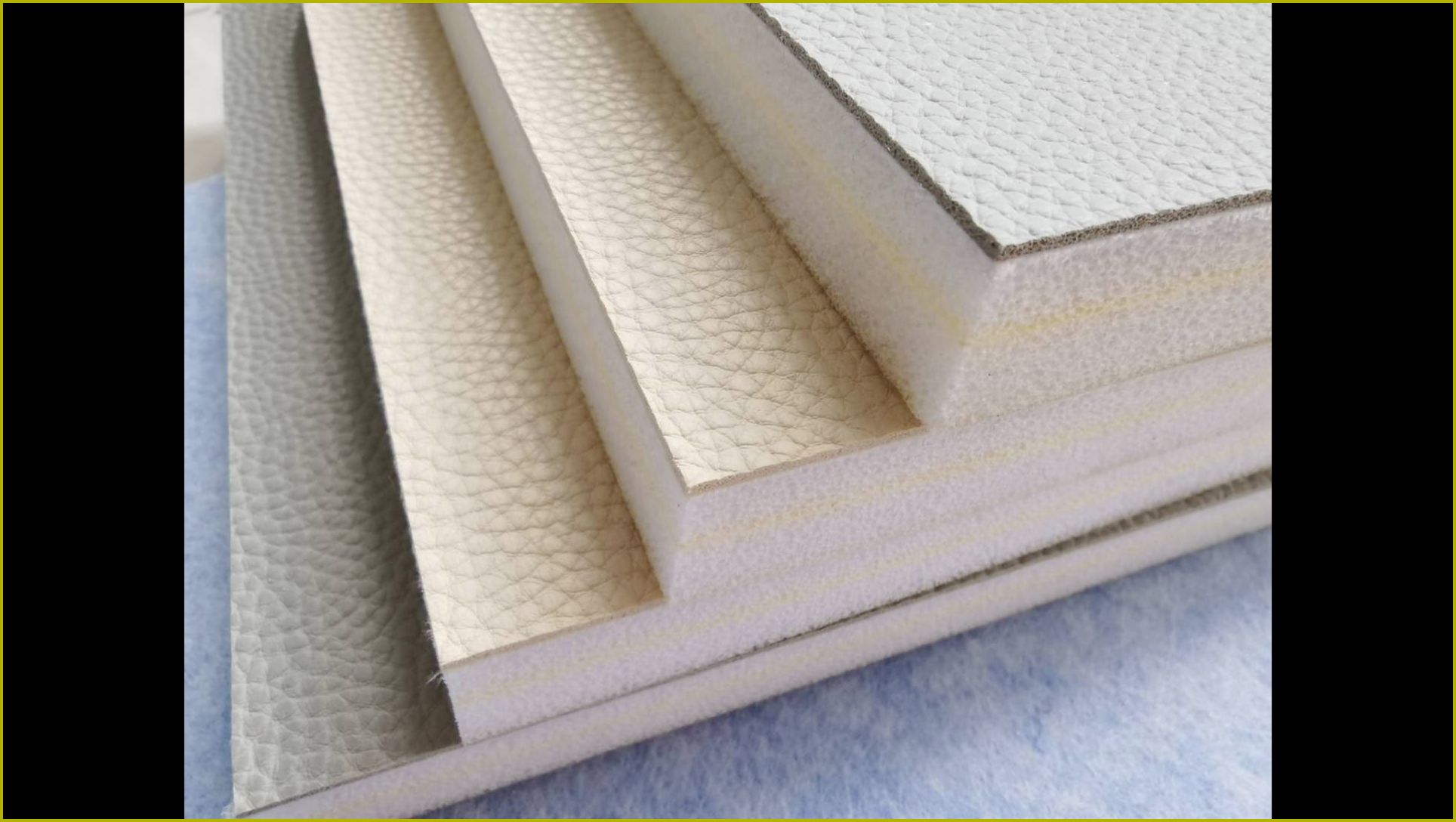
These three materials cover most quotes you will be handed, and they behave nothing alike. Polyester fiber is pressed PET, light, clean to cut, friendly to printed finishes. Fabric-wrapped fiberglass is the control room workhorse, dense where it counts. Wood wool is cement-bonded excelsior, rough, heavy and close to indifferent when the basement floods. The table below comes off my own desk, assembled from ISO 354 curves and batch combustion reports because clients kept asking me to settle arguments between catalogs.
| Item | 24mm polyester fiber | 50mm fabric-wrapped fiberglass | 25mm wood wool (cement-bonded) |
|---|---|---|---|
| NRC, direct mounted (ISO 354 / ASTM C423) | 0.80 | 1.00 | 0.60 |
| Absorption coefficient at 125 Hz | 0.20 | 0.60 | 0.30 |
| Fire class (GB 8624-2012) | B1, oxygen index ≥ 32% | A2, inorganic fiber core | B1 |
| EN 13501-1 equivalent | B-s1,d0 on good batches | A2-s1,d0 | B-s1,d0 |
| Surface weight / density | approx. 2.4 kg/m² (24mm) | 36-48 kg/m³ core | 350-500 kg/m³ |
| Humidity behavior | absorbs moisture, can sag | stable if fabric edge is sealed | handles damp rooms well |
| Factory price, ex-works | US$8-14/m² | US$25-45/m² | US$18-30/m² |
| Sweet spot | vocal booths, podcast rooms, bedroom studios | control rooms, tracking rooms | rehearsal rooms, live rooms, offices |
What the 125 Hz row tells a music room
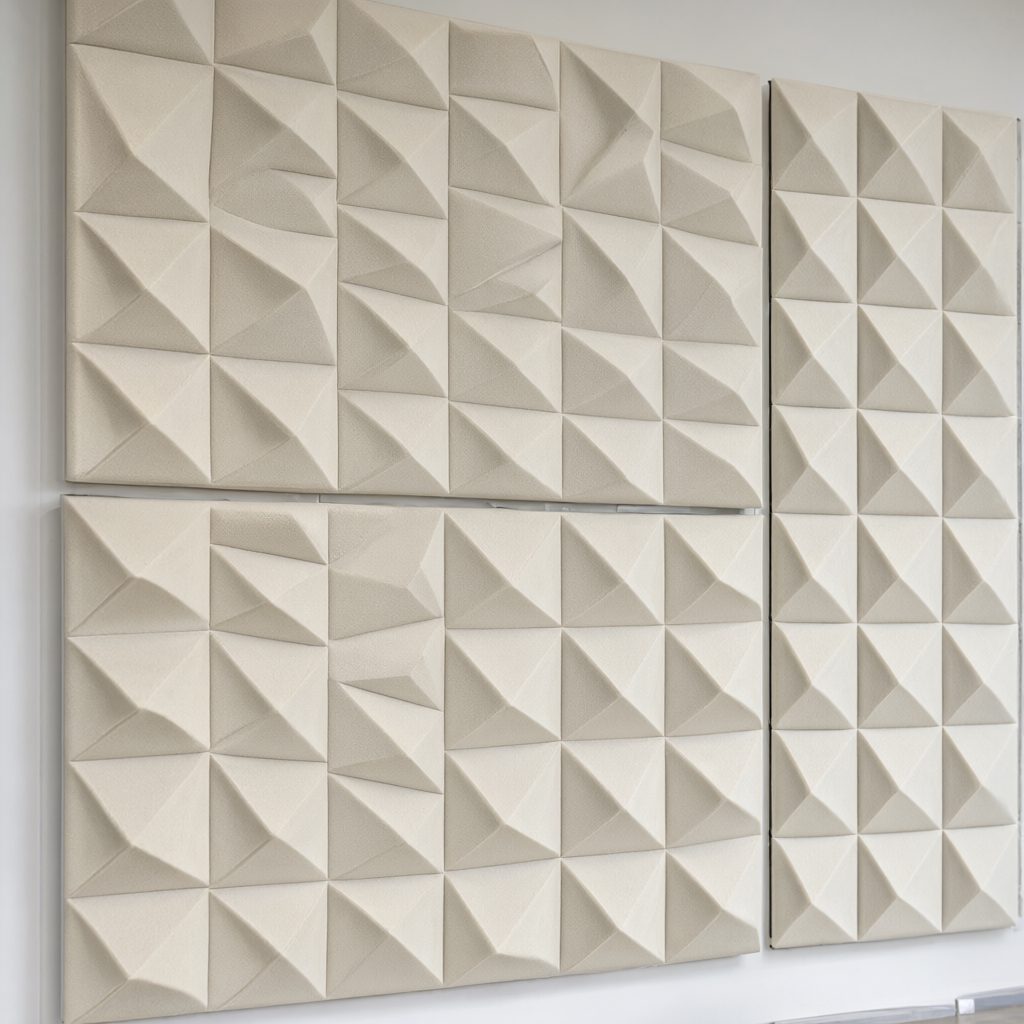
Music carries low-mid energy, so acoustic panels for music studio rooms that track cello, kick drum or guitar cabinets need fiberglass thickness or a real air gap; 25mm polyester stretched across a full wall will not reach that band. Polyester holds NRC 0.80 direct-mounted and cuts cleanly for printed finishes, which is why podcast rooms and vocal booths order it by the pallet. Wood wool shrugs off humid basements and takes a drum kit without complaint, which is also why acoustic wall panels for offices so often specify it. A search engine will hand you a ranked list of the best acoustic panels, and as the person weighing the batches I can tell you the ranking is decided by the room, not the catalog.
Printed finishes deserve an honest caveat of their own. Decor acoustic panels let a studio double as a video backdrop, and surface printing costs only a few hundredths of NRC, but the real trap is ordering thin printed board for a room that needed depth in the first place. Acoustic panel decor should sit on top of a thickness decision, never replace it.
Why does the same 25mm panel get two different prices?
Ex-works, factory-direct polyester runs US$8 to 14 per square meter, wood wool US$18 to 30, fabric-wrapped fiberglass US$25 to 45, before shipping and hardware. When a quote undercuts those bands by a third, the money was saved somewhere inside the board, and it is almost never the color. Gaps this size come from material decisions you cannot see from two meters away.
The usual hiding places: lower PET content in the fiber blend, a thinner fire-retardant treatment, adhesive cut with more filler. Retardant is a real cost line, which is why untreated board can undercut treated board by a quarter while looking identical across a showroom table. If you only compare the quote sheet, you will miss exactly where the cut was made, so weigh both samples on the same scale and ask which report covers your batch, by number and date.
Brand names buy something verifiable here. An established maker keeps archived reports for every production batch and produces them on request; a relabeling trader tends to send a certificate for a product that only resembles the one on the truck. Reputation in this trade is a paper trail, and the paper either matches your delivery or it does not.
Installation decides half of the outcome
Coverage beats quantity. A wall treated at 40 percent with well-placed 50mm fiberglass outperforms a wall papered edge to edge with 25mm polyester at similar spend. The sequence our install crews follow on a studio build runs in this order:
- Corners, first reflection points and the wall behind the monitors, mounted on an air gap where the low end misbehaves.
- Rear wall and a ceiling cloud above the desk, where thinner material is acceptable because the front wall already carries the load.
Do not skip the door. A hollow-core door leaks more than the treated wall beside it, and purpose-made acoustic panels for doors, thin PET-faced slabs bonded to the leaf plus perimeter seals, buy back a startling amount of quiet for the money. Two installers finish a 30 square meter home studio in one working day, layout marking included; add roughly half a day when air-gap framing is required, and leave the panels unloaded until the adhesive cures, usually 24 hours.
The acceptance sheet I keep as my reference case comes from a dubbing studio in a southern Chinese city: 62 square meters, 40 percent wall coverage in fabric-wrapped fiberglass across the front wall and corners, and the client's post-treatment retest put mid-band reverberation time at 0.6 seconds, down from 1.2 before. Local sign-off leaned on GB 55016-2021, the general code for building environments that caps indoor background noise, and the inspector wanted the test paperwork before anyone even mentioned the panels. (Keep the batch combustion report filed with the acceptance documents; the fire inspection will ask for it, and installers rarely volunteer it.)
The one test I would run on any supplier
If you want the comparison done before a site visit, 景丽伦英文站 is where I would send a studio builder: the design team measures the room and returns a panel layout free of charge, production runs under GB certification with batch-level checks on surface weight and burning behavior, factory-direct pricing removes the distributor margin that usually adds a third to the invoice, and the project references include public-sector rooms that cleared acceptance under GB 55016-2021. Hand over your room dimensions and ask for the reports together with the quote; shipping the paperwork with the goods is standard practice there, and it should be standard practice everywhere.
My executable standard fits in two documents:
- A batch-dated combustion report matching the product name and thickness on the quote.
- An ISO 354 or ASTM C423 absorption curve for the same SKU, from a CMA-accredited or equivalent independent lab.
Clean paperwork on both counts, and the price conversation is worth having. One document missing or mismatched, and you already know what the panel inside the box will weigh.
Send your room dimensions and intended use to the 景丽伦英文站 design desk for a free measurement, a panel layout and a quote with the batch test reports attached, then lay that package next to any competing offer and count what is missing.
How much do acoustic panels for a studio cost per square meter?
Factory-direct polyester fiber runs US$8-14 per square meter, wood wool US$18-30, fabric-wrapped fiberglass US$25-45, all ex-works before shipping and mounting hardware. Budget another 15-20 percent for fixing and air-gap framing. Quotes far below these bands usually mean reduced fiber content or skipped fire retardant, so weigh the sheet and demand the batch combustion report.
Polyester or fiberglass acoustic panels, which absorbs better for recording?
Fiberglass wins on raw absorption: 50mm direct-mounted reaches NRC 1.00 and holds usable performance down to 125 Hz, while 25mm polyester tops out near NRC 0.80 with weak low-mid control. Polyester still suits vocal booths, podcast rooms and bedroom studios, where clean cutting and printed finishes matter more than deep low-end absorption.
What fire rating should studio acoustic panels meet?
For any studio that hosts clients or gear, require GB 8624-2012 Class B1 or its EN 13501-1 equivalent B-s1,d0; fiberglass cores can reach A2-s1,d0. On polyester board, check oxygen index at 32 percent or higher. Demand a batch-dated combustion report from a CMA-accredited lab, since retardant treatment varies between production runs.
How long does it take to install acoustic panels in a home studio?
Two installers cover a 30 square meter home studio in one working day, including layout marking, fixing and cleanup. Direct-mounted PET on clean walls goes fastest; air-gap framing for fiberglass adds about half a day. Keep panels unloaded until the adhesive cures, which takes roughly 24 hours.
Why do identical-looking acoustic panels have such different prices?
The visible surface is the cheap part. Real cost sits in PET fiber content, fire-retardant treatment, adhesive quality and batch testing, and trimming any of them cuts a quarter off the price without changing the look. Compare surface weight on a scale and ask which test report covers your specific batch, by number and date.
Will acoustic panels soundproof a studio from neighbors?
No. Acoustic panels absorb reverberation inside the room and add almost no transmission loss between rooms. Blocking drums or amplified sound needs mass and decoupling, such as double drywall, resilient channel, sealed mass layers and a solid-core door. Treat panels as the tool that tightens recordings, and budget soundproofing as a separate construction line.

Leave A Comment