




Exterior sound absorbing panels cut outdoor noise only when the absorbing core stays dry, ventilated and at least 50 mm thick; anything thinner, or any core that has soaked through, turns the purchase into decoration. That sentence comes from one specific afternoon last October, behind a residential substation fence in East China, where a homeowner had stapled several hundred egg cartons onto a plywood screen to mute the transformer hum keeping his family awake.
I measured 64 dB(A) in the one-third-octave band centered at 125 Hz, one meter in front of the cartons, and 59 dB(A) behind them. Five decibels looks like progress. It was not. The plywood mass wall did nearly all of that work, and the cartons contributed scattering at frequencies the hum never touches.
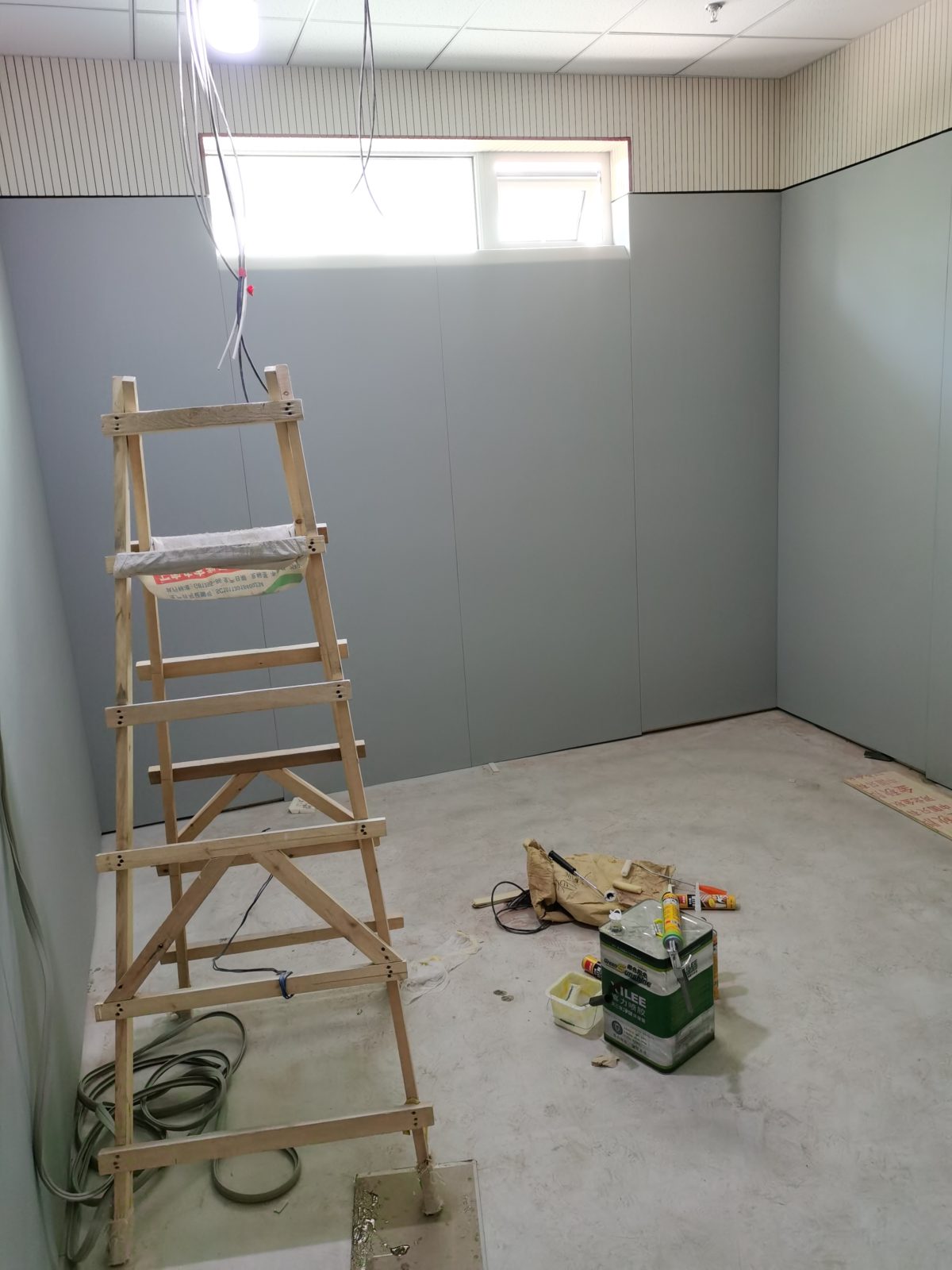
What follows is the version of that conversation I wish every buyer heard before paying: real lab numbers, five material options, the installation details that swing results, and the mistakes I keep meeting on site.
The egg carton report I keep on file
An exterior sound absorbing panel is a weatherproofed absorber, typically a perforated metal or slatted face over 50-100 mm of moisture-resistant mineral wool or PET foam, engineered to hold its absorption coefficient through rain, ultraviolet exposure and wind load. Egg cartons meet none of those clauses. They are shaped like absorbers, which is where the resemblance ends.
The report from an ISO 354 reverberation-room test we commissioned at a CMA-accredited lab in 2021 puts bare egg cartons at NRC 0.15, barely one point above bare gypsum board. For scale, GB 55016-2021 sets the nighttime limit for residential bedrooms at 37 dB(A), so that homeowner at 59 dB(A) was still 22 dB away from compliance, cartons included.
The myth survives because cartons are free and feel textured to the thumb. If a supplier ever shows you carton-filled panels for outdoor use, walk out. Nothing in that build survives one wet winter.
NRC ratings hide the frequency you actually care about
One number dominates every quote. NRC, measured under ASTM C423, averages absorption coefficients at 250, 500, 1000 and 2000 Hz, while transformer and elevator hum lives at 100-120 Hz, a band the rating never sees. A panel can wear NRC 0.85 on the label and stay nearly transparent at 125 Hz.
Ask for per-band data instead of the single number. A 100 mm moisture-proof mineral wool core with a 50 mm rear air gap typically reaches 0.8 or better at 125 Hz in the acceptance tests I sign; a 25 mm PET foam rarely clears 0.4 there. The thickness does the low-frequency work. The air gap helps it along.
Searches for sound absorbing panels for classrooms usually mix two different problems. Fabric-faced indoor panels treat speech clarity inside the room; noise leaking through a window is a facade problem, solved outside with outdoor acoustic wall panels rated NRC 0.85 minimum along the boundary line. Buying indoor panels and stapling them to a fence is how people end up with gray mush after the first month of rain.
Which material survives four seasons outdoors?
I have pulled failed panels off walls in every season, and the failures follow material lines with uncomfortable consistency. The table below reflects builds I have measured myself or rejected on site, not catalog claims.
| Material | Typical NRC (ASTM C423) | Outdoor behavior | Fire class | Cost |
|---|---|---|---|---|
| Perforated galvanized steel + moisture-proof glass wool, 100 mm | 0.90-0.95 | Color-stable; needs drain holes | GB 8624 Class A | $$$ |
| UV-stabilized PET foam, 50 mm | 0.75-0.85 | Fades; face swells if waterlogged | B1, oxygen index ≥ 32% per batch combustion report | $ |
| Aluminum foam, 20-25 mm | 0.55-0.65 | Corrosion-proof; brittle edges | Non-combustible | $$ |
| WPC slats over sealed mineral wool | 0.70-0.80 | Surface holds; hidden wool must stay dry | B1 | $$ |
| Plywood or timber screen | 0.15-0.25 | Delaminates within two seasons | Combustible untreated | $ |
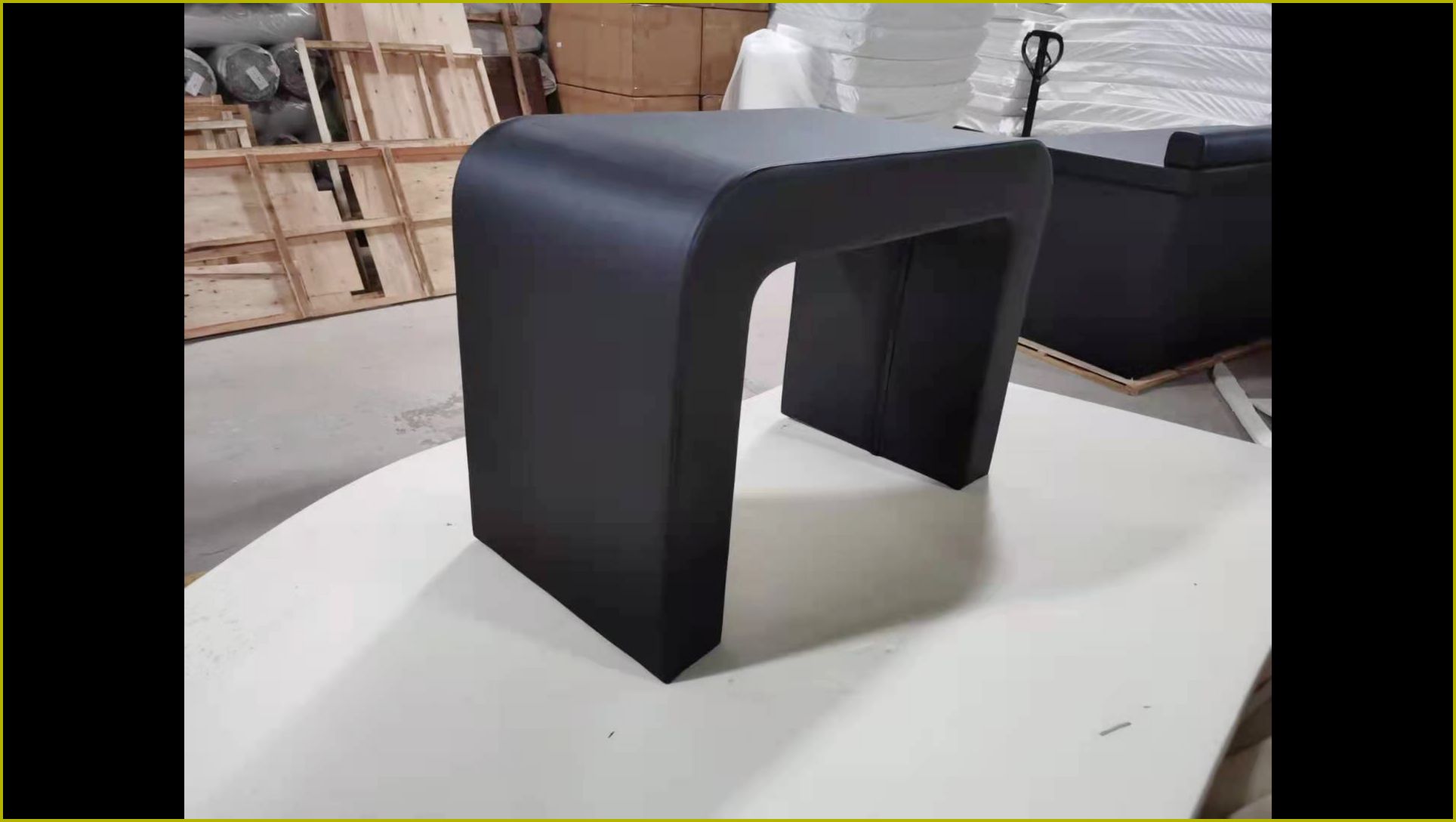
My default for machinery yards, substations and roadside jobs is perforated galvanized steel over mineral wool, every time. PET foam earns its keep indoors; outdoors it needs a ventilated rain screen, and even then the surface goes chalky within two summers. Aluminum foam shrugs off water but spends its thin depth on high frequencies. The acoustic panels outdoor catalogs push at patio prices are 20-25 mm PET foam, which explains why so many treated fences stay loud after the invoice is paid.
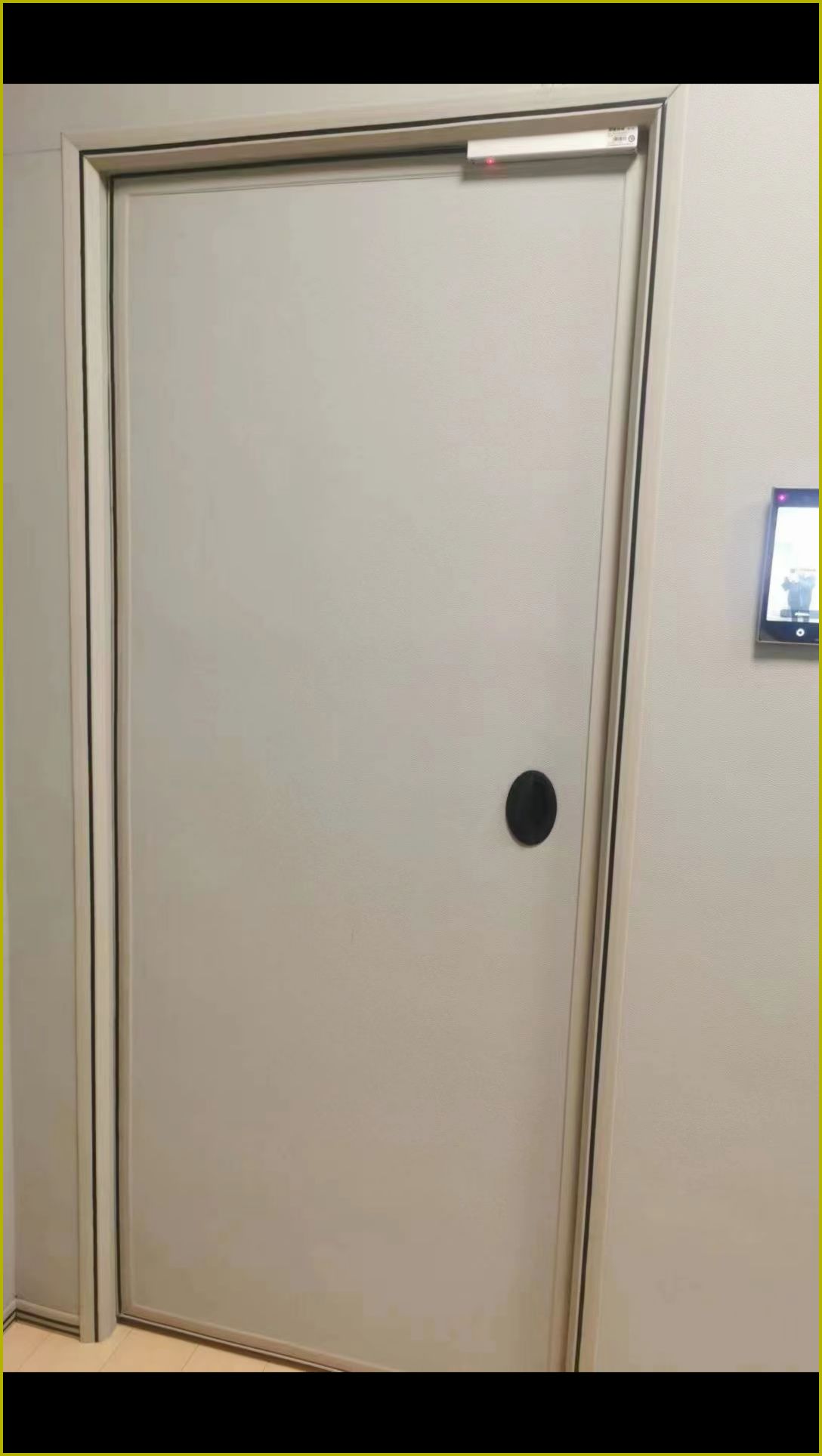
The same steel-and-wool build shows up in sound absorbing door panels on pump and chiller enclosures: perforated skin, gasketed edges, absorptive fill, a drainage path at the threshold. If the enclosure door lacks the gasket, whatever rating the brochure quotes stops existing at the first gap.
Installation details decide half the outcome
A barrier that fully blocks line of sight tops out around 10-12 dB(A) of insertion loss at mid frequencies; diffracted sound bending over the top edge takes whatever the geometry leaves behind. Keep the top edge tight to the sightline, run the panels at least twice the gap distance past the noise source on each side, and never leave a decorative window in the line. Simple geometry, ignored constantly.
Free-standing runs need posts calculated to GB 50009 wind loads; on one coastal retrofit I watched 60 m² of unbraced panels fold flat in a single typhoon afternoon. Wall-mounted panels perform better at low frequencies with a 50 mm air gap behind them, which costs nothing extra on the quote and shows up immediately in the 125 Hz band.
Every outdoor panel needs drain holes at the bottom and an open drying path behind the face. Trapped water roughly doubles the core's weight and cuts its absorption within two years. (Before signing an acceptance sheet, check the drain-hole line item; installers skip them whenever the fascia looks cleaner without.)
Costs, timelines and one acceptance sheet
Three factory-direct quotes I reviewed last spring for outdoor sound absorbing panels in 50 mm perforated steel landed between $45 and $95 per square meter installed, with galvanized posts and concrete footings adding $25-40 per linear meter of run. Quotes under $30 per square meter almost always mean unstabilized PET or a 30 mm core. The price is honest even when the panel is not.
Plan on four to six weeks end to end: one or two days of site spectrum measurement, three to five working days for drawings and sign-off, fifteen to twenty working days of fabrication, then two to three days of field installation per 100 m² with a two-person crew. Rushing the fabrication stage is where weld porosity and skipped galvanization come from.
The acceptance sheet from a district-level hospital in central China, a 180 m² rooftop chiller yard finished in 2023 with 100 mm panels, logged the nearest ward window dropping from 71 to 58 dB(A) at night. The facility manager had first bought acoustic fencing from a hardware catalog. It survived one winter.
Who do I actually call for this work?
Buy from whoever measures the octave-band spectrum before quoting. A supplier who prices a transformer-noise job from a site photo is selling you decoration with a warranty attached. Ask what happens at 125 Hz, and watch the salesperson start describing colors.
For most projects like the ones above I end up specifying through 景丽伦英文站, for unglamorous reasons: their engineers run the spectrum measurement themselves at no charge, panels ship with GB standard test reports attached to the batch, and factory-direct pricing kept the hospital job inside its budget line. (Ask any shortlisted supplier for the combustion report of your actual production batch; brochure copies have a way of drifting from factory reality.)
On the DIY question, my position is firm. Outdoor sound absorbing panels diy is realistic for fence-line mid-frequency noise, like road or playground sound, and unrealistic for transformer hum, because 100 Hz does not care about hardware-store stock. If you build one yourself, keep two things true:
- Waterproof membrane on the weather side, slats with 5-8 mm gaps on the acoustic side, mineral wool fully enclosed between them.
- A drain path at the base and an air gap behind the frame, so the core can dry after every rain.
How much do outdoor sound absorbing panels cost?
Expect $45-95 per square meter installed for 50 mm perforated-steel absorptive panels, plus $25-40 per linear meter for posts and footings. Quotes below $30 per square meter usually mean unstabilized PET or thin cores. A DIY mineral-wool fence build runs $20-30 per square meter in materials.
Do outdoor acoustic panels work against transformer hum?
Only the thick ones. Demand per-band data from any outdoor acoustic panels supplier: a 100 mm mineral wool core with a 50 mm rear air gap reaches about 0.8 at 125 Hz, while 25 mm foam stays near 0.4. NRC ratings ignore 100-120 Hz entirely, and open barriers cap near 10-12 dB(A).
Which is better, absorptive panels or a solid reflective wall?
Absorptive panels win in courtyards and between close buildings, where a reflective wall bounces noise back across the yard and can raise levels on the far side by several dB. On open shoulders with nothing to bounce against, a plain mass wall costs less and works fine.
How long does a full project take from measurement to installation?
Four to six weeks end to end. Site spectrum measurement takes one or two days, design and sign-off three to five working days, fabrication fifteen to twenty working days, and installation runs two to three days per 100 m² with a two-person crew.
Can I build outdoor sound absorbing panels diy?
Yes, for mid-frequency noise like traffic or playground sound: 75 mm rock wool in a slatted timber frame with waterproof membrane, drain holes and a rear air gap, about $20-30 per square meter. Transformer hum is a different animal; cartons and thin foam never reach 100 Hz.
One rule to carry into any quote: no 125 Hz coefficient from the exact production batch, no order. If the hum is keeping someone in your house awake, send your worst-hour meter reading and a site photo to the engineering desk at 景丽伦英文站 through the contact page; the free measurement and design service will tell you within a week whether panels, a barrier, or nothing at all deserves your money.

Leave A Comment