




Buy acoustic ceiling tiles against two printed numbers, an NRC or SAA value from a reverberation-room test plus a fire class that matches the occupancy, and then verify both with an on-site reverberation measurement before anyone signs an acceptance sheet. The tiles absorb mid-frequency reverberation inside the room below them. They do not block sound crossing the plenum, and nearly every acceptance dispute I get pulled into collapses back to that single distinction.
An acoustic ceiling tile, stripped of the brochure language, is a thin porous absorber hung overhead that shortens the reverberation time of the space beneath it. This afternoon I walked out of a district civic hall in East China, about 900 m² of terrazzo and glass under a fresh field of white fissured 600x600 acoustic ceiling tiles with NRC 0.70 printed on every carton, and my ears were still ringing because a quick meter check gave me roughly 1.7 seconds at 500 Hz. The label was honest. The ceiling failed to deliver it, and the distance between those two facts is the whole subject below.
The Ceiling Line in GB 55016-2021
GB 55016-2021 is the mandatory general code for the building environment, enforced since 1 April 2022, and acceptance inspectors quote its indoor limits directly: a residential bedroom must hold 37 dB(A) or lower at night, with room-specific figures for the rest of the building. Those limits are written in sound pressure. A porous tile floating in the plenum cannot move them, because pressure from a rooftop chiller or an elevator machine arrives through slabs and walls, bypassing whatever absorber sits below the transmission path. When the project sheet carries a dB(A) limit, the ceiling is the wrong instrument and the budget belongs in vibration isolation and added mass.
The ceiling earns its own line in the documents a little lower down, usually as a reverberation-time target: classrooms commonly chase 0.6 seconds unoccupied to meet ANSI S12.60-2010, multipurpose halls land near 0.8 to 1.0 seconds at mid frequencies, and the field measurement method is GB/T 36075-2018, the Chinese adoption of ISO 3382-2. Two numbers, two families of products. Read both lines before quoting anything, because crews routinely price against one limit and get inspected against the other.
NRC 0.90 Says Nothing About a Transformer
NRC is defined in ASTM C423 as the average absorption coefficient at 250, 500, 1000 and 2000 Hz, rounded to the nearest 0.05, measured in a reverberation room per ISO 354 or its Chinese adoption GB/T 20247-2006; SAA, the newer figure, averages twelve one-third-octave bands from 200 Hz to 2500 Hz. Both indices start above the frequencies where hum lives. A typical mineral fiber tile reports 0.15 to 0.35 at 125 Hz, and at 100 Hz, the tone a transformer radiates at twice the mains frequency, the figure sinks lower still. At that pitch a tile is a limp flag.
A substation in North China, wall to wall with a residential block, produced complaints through two winters; night readings in the nearest apartment showed an overall 31 dB(A) with the 100 Hz line dominating the spectrum. The remediation list held elastomeric mounts under each transformer core, resilient hangers on the ceiling below, and a doubled layer of gypsum board. The tiles already overhead stayed in place, because at 100 Hz they had nothing to contribute. If a supplier is promising you tiles as the fix for hum from the plant room next door, end that conversation on the spot.
Fire Paperwork Ahead of Any NRC Figure
Before absorption gets argued, GB 50222-2017 decides which tile is even permitted overhead: assembly halls, large retail floors and entertainment venues require ceiling finishes graded A, meaning non-combustible under GB 8624-2012. Mineral fiber qualifies. Flame-retardant PET felt reaches B1, untreated felt sits at E, and on the North American side ASTM E84 assigns Class A when the Flame Spread Index is 25 or less, with the Smoke Developed Index printed on the same report. A tile with beautiful NRC figures and the wrong fire class is decoration, and inspectors will call it that.
The same East China civic center failed its first fire inspection for a mundane reason: the installed batch matched the approved sample, and nobody could prove it, because the batch-specific report from a CMA-accredited testing laboratory sat in the supplier's office 40 kilometers away. Two weeks of schedule evaporated over one missing file. (Whoever installs for you, make them carry the CMA-accredited lab report for the exact production batch to the site on inspection day; absent paper stalls fire sign-off more often than a failed measurement does.)
Is There Any Real Difference Between 600x600 and 12 x 12 Tiles?
600x600 acoustic ceiling tiles are the lay-in workhorse, cut at 595 mm so they seat cleanly in an exposed T-grid, and the plenum behind them behaves as an air cavity; in ISO 354 terms that is Type E mounting, worth roughly 0.10 to 0.20 of extra NRC at equal tile quality. Acoustic ceiling tiles in 12 x 12 format, about 300 by 300 mm, glue flat to the deck with no cavity at all; most are thin mineral fiber printing NRC 0.45 to 0.55, and the adhesive skin covers whatever edge absorption existed. Same material family, opposite mechanics.
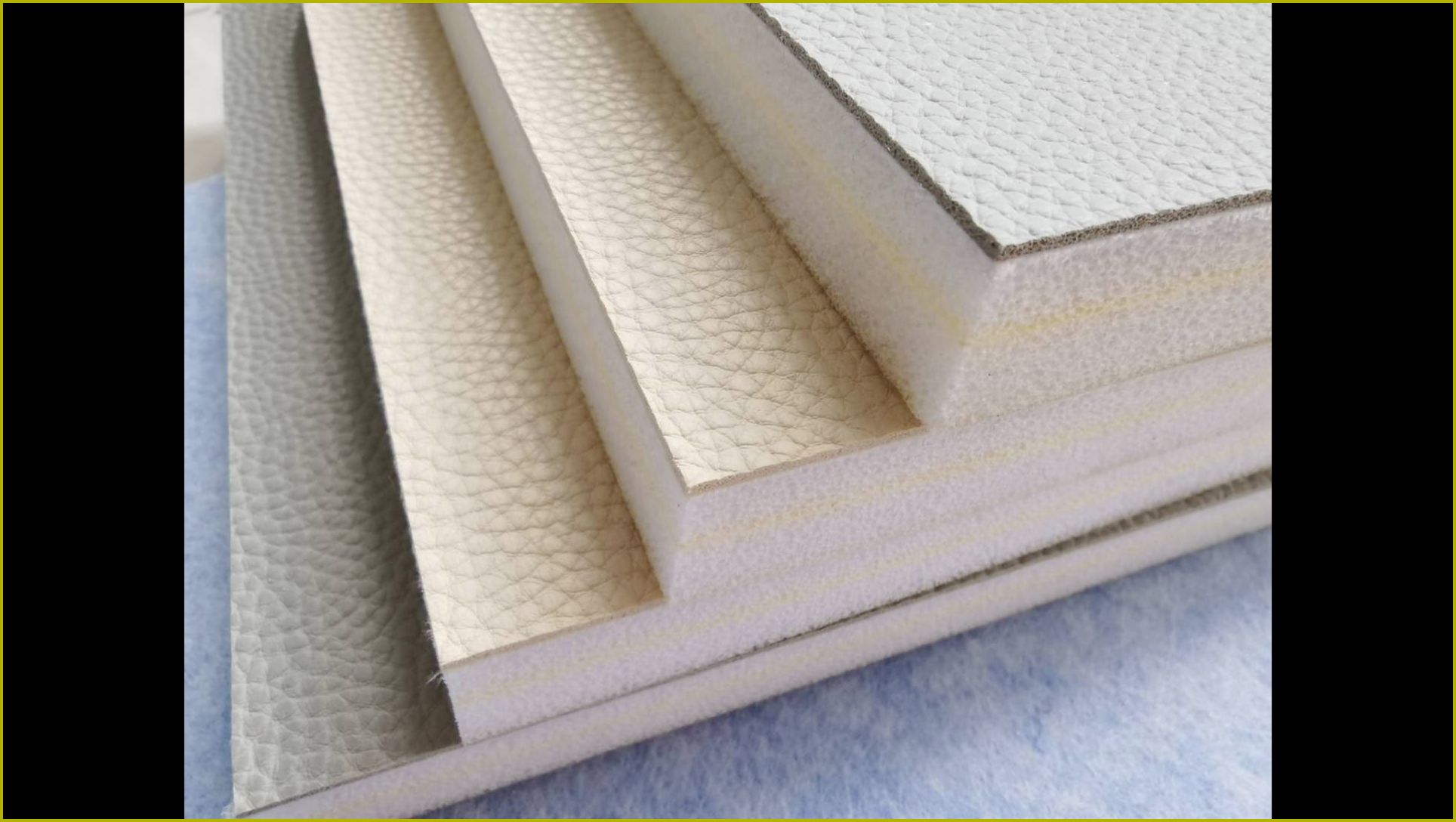
Felt acoustic ceiling tiles, pressed PET in 9 to 24 mm thicknesses, come in both formats and mount either flat or on standoffs; 12 mm solid felt sits near NRC 0.45 to 0.60, and lifting it off the deck on rails pushes the mid band past 0.70. Pair the ceiling with acoustic wall tiles at first-reflection points and the same room drops another 15 to 25 percent in measured RT, which is why libraries and open studios spend on both surfaces. Honestly, in a private living room I would skip the grid entirely and glue six felt tiles above the sofa corner; demountable systems earn their price in offices and halls where the plenum needs service access, and they earn nothing in a home.
Painting Acoustic Ceiling Tiles Without Killing the Rating
Painting acoustic ceiling tiles is the standard response to water stains and decades of nicotine, and it ruins more ratings than any other single move on site. Roller-applied vinyl paint seals the fissures and pores that do the absorbing. Airless spray in two light passes, water-based and thinned to the manufacturer's specification, keeps most of the rating, at a cost of 10 to 20 percent of the original NRC. One heavy roller coat can drag a fissured tile from NRC 0.65 down to roughly 0.45, and the owner finds out when the retest lands on his desk.
Fire adds a second trap, because an E84 or GB 8624 result attaches to the tested product, and field painting can fall outside the tested configuration entirely; some manufacturers supply factory-painted batches with fresh reports, which is the clean route whenever acceptance obligations are attached. A community reading room I checked last spring retested at 1.05 seconds after a careless repaint, up from the 0.9 seconds on its handover sheet, and the whole ceiling had to be mist-coated again at the contractor's expense. Paint first, verify second. That sequence never flips.
What the Acoustic Ceiling Options Cost in Real Quotes
Adjectives do not pass acceptance, numbers do, so the table below is how I size up the acoustic ceiling options that actually cross my desk; absorption values come from ISO 354 or ASTM C423 reports, and prices are indicative material figures that move with volume and region.
| Format and material | Thickness | NRC (ISO 354 / ASTM C423) | Fire class (GB 8624-2012 / ASTM E84) | Weight | Material price (indicative) | Where it earns its keep |
|---|---|---|---|---|---|---|
| Mineral fiber, fissured face, 600x600 lay-in | 15 mm | 0.55-0.70 | A / Class A | about 3.5 kg/m² | $2.5-6 per m² | Offices, schools, retail halls |
| Glass wool tile, perforated painted face | 20 mm | 0.85-1.00 | A / Class A | about 2 kg/m² | $6-14 per m² | Classrooms chasing 0.6 s, meeting rooms |
| Felt acoustic ceiling tiles, solid PET | 12 mm | 0.45-0.60, past 0.70 with 200 mm cavity | B1 treated / Class A on select lines | about 1.8 kg/m² | $10-25 per m² | Lobbies, libraries, open studios |
| 12 x 12 glue-up mineral fiber tile | 10 mm | 0.45-0.55 | A / Class A | about 2.5 kg/m² | $2-5 per m² | Utility rooms, basements, budget refits |
What the quote itself must carry
- The NRC or SAA figure with its test method, mounting type and batch number, from a CMA-accredited laboratory in China or an accredited ASTM C423 lab elsewhere.
- The fire document for the same batch, GB 8624-2012 or ASTM E84, plus written manufacturer approval if any field painting is planned.
On straightforward layouts, grid hardware adds 15 to 20 percent to the material line and labor roughly matches material cost, so installed totals land near $12 to 25 per square meter for mineral fiber and $20 to 45 for high-NRC fiberglass. Fiberglass tiles at about 20 mm reach NRC 0.85 to 1.00 in ISO 354 tests, close to double the absorption of entry-level mineral fiber at equal coverage, which explains why classrooms hunting 0.6 seconds pay the premium. Where a project needs one vendor to own measurement, drawings, GB-certified production and delivery, 景丽伦英文站 dispatches its own team for free on-site measurement and design, quotes factory-direct, and attaches CMA-accredited batch reports to every shipment, which removes exactly the paperwork stall described above.
How much does it cost to install 600x600 acoustic ceiling tiles per square meter?
Budget $12 to 25 per square meter installed for commodity mineral fiber on a new T-grid, and $20 to 45 for high-NRC fiberglass systems. Grid hardware adds 15 to 20 percent on materials, and labor usually matches the material line on straightforward layouts, so treat a quote with a suspiciously tiny labor figure as a scheduling problem in disguise.
Do acoustic ceiling tiles block noise from the apartment above?
No. Tiles absorb sound inside your own room; they carry almost no mass, so airborne and impact noise from above passes through the plenum barely changed. Blocking upstairs noise requires decoupled framing, resilient channels and added gypsum mass, and impact noise needs a floating floor on the source side.
What NRC rating do I need for an office, classroom or hall?
Offices and meeting rooms perform well between NRC 0.55 and 0.70. ANSI S12.60-2010 asks classrooms under 283 m³ to hold 0.6 seconds unoccupied, which normally means NRC 0.80-plus fiberglass or generous coverage; multipurpose halls usually target 0.8 to 1.0 seconds at mid frequencies.
Can painting acoustic ceiling tiles ruin the fire rating or the absorption?
Both risks are real. Thick or oil-based paint seals pores and can erase a third of the NRC, and field painting may sit outside the tested fire configuration. Spray two thin water-based coats, obtain the manufacturer's written approval for field painting, and retest NRC whenever an acceptance target depends on it.
How long do installation and acceptance testing take for a 500 m² hall?
A disciplined crew hangs 100 to 150 m² of grid ceiling per working day, so a 500 m² hall takes three to five days once the services above are closed out. On-site reverberation testing per GB/T 36075-2018 occupies half a day, with the laboratory report due in about a week.
If any of this describes the ceiling over your head right now, send the room dimensions, the drawings, or the exact clause your acceptance failed on to the team at 景丽伦英文站; a free measurement and design proposal with factory-direct pricing comes back fast enough for you to judge every number before a single grid goes up.

Leave A Comment