




A sound dampening door is worth the money only as a sealed assembly: a solid-core or engineered leaf at STC 30 or higher, seated in a gasketed frame, with a compression seal or automatic drop seal at the bottom. Buy that system and a bedroom, home office or meeting room gets genuinely quiet. Buy a heavy-looking leaf alone and you have bought furniture. I am writing this an hour after walking out of a district service hall where a corridor door slammed every few seconds and the queue announcements piled into a slab of noise, which is exactly the failure mode I mean.
Two jobs get confused constantly, so let me separate them at the start. A door blocks transmission, meaning it stops sound crossing from corridor to room, and it does that with mass and airtightness. Echo inside a room is an absorption problem, handled by wall and ceiling finishes, and no leaf on the market fixes a reverberant lobby by itself. That lobby had both problems stacked on top of each other.
What the STC number on the label actually tells you
STC, Sound Transmission Class, is a single-number rating of how much airborne sound a building element blocks, calculated from laboratory transmission loss measurements taken under ASTM E90 and summarized under ASTM E413. Higher means less sound passes through. STC measures insulation across the leaf, while NRC measures absorption at the surface, meaning how much sound a finish soaks up inside the room. A door is an insulation product first, and absorption only matters on its room-facing finish.
Typical laboratory values give you the map. Hollow-core interior doors land near STC 20. Dense solid-core leaves reach 28 to 35, and purpose-built acoustic doors with matched frames test between 38 and 50. The commercial meaning of those gaps is physical: a 10-point improvement cuts perceived loudness roughly in half, and around STC 35 loud speech outside the door degrades into a murmur where individual words stop being intelligible.
Field performance sits below lab performance almost every time. A leaf tested at STC 40 in a laboratory frame routinely loses 3 to 5 points once hung on site, because the test seals every edge perfectly and your building does not. When a supplier quotes a lab figure, ask which number the warranty covers. I will show you where the missing decibels go next.
Seals decide more than the leaf does
A door is a movable wall, and a movable wall has joints. Sound takes the open path first, and the open path here is the perimeter gaps and the slit under the bottom rail, rarely the leaf itself. Where does most of the noise go? Straight under the door, through the 10 to 15 mm clearance most installers leave for floor covering. Two seal types count acoustically:
- Compression perimeter gaskets in silicone or EPDM, pressed against the frame stop, closing head and jamb gaps to under 1 mm.
- Automatic drop seals, an aluminum housing on the leaf bottom with a spring-loaded gasket that drops against the floor the instant the door closes.
A brush sweep is the one to refuse. It is a dust seal; against mid-frequency speech and traffic rumble it does almost nothing, because sound passes straight through the bristle gaps. A proper drop seal adds 3 to 6 dB at the frequencies that make speech intelligible, and the hardware costs between 25 and 80 USD.
If you only look at the price sheet, here is the trap: leaf prices are quoted per panel, seal quality hides in the accessories line, and the lowest bid wins by fitting a brush sweep and calling the job finished. Check the accessories line before the leaf price. That is where quotes are won and lost.
Core materials compared
Density and the mass law
Mass law does the work here: double the surface mass of a panel and transmission loss at mid frequencies rises by about 6 dB, which is why core density matters more than veneer thickness. A 40 kg solid-core leaf blocks sound better than a 20 kg hollow door because it is heavier, and once the frame is packed correctly it is airtight as well. Thin steel skins over a damping layer and a dense core carry the extreme end of the scale.
The table I use on site
Four options cover nearly every request, with installed costs in USD for a standard 900 mm opening:
| Option | Typical lab STC | Installed cost (USD) | Leaf weight | Where it makes sense |
|---|---|---|---|---|
| Hollow-core interior door | 18-25 | 80-200 | 18-25 kg | closets, low-demand rooms |
| Solid-core door, MDF or particle core | 28-35 | 250-600 | 35-50 kg | bedrooms, home offices |
| Solid timber door | 30-38 | 500-1,200 | 40-70 kg | feature interiors where looks lead |
| Purpose-built acoustic assembly with tested frame and seals | 38-50 | 1,000-2,800 | 60-120 kg | meeting rooms, clinics, machine room entrances |
Two readings matter more than the numbers themselves. Solid core is the value point for homes, because above roughly STC 35 you are paying for tested frames, adjustable hinges and hardware certification, and the price per decibel climbs fast. Steel-faced assemblies belong where a fire-rated corridor wall also demands insulation, which brings us to paperwork.
How much should you pay, and how long does it take?
Prices first, since this fills my inbox every week. A hollow-core door runs 80 to 200 USD installed. A solid-core door with a decent frame and perimeter gaskets lands between 250 and 600 USD. A purpose-built acoustic assembly with drop seal and tested frame sits between 1,000 and 2,800 USD per opening, and a sound dampening door sweep bought separately costs 25 to 80 USD plus an hour of labor.
Lead times split the same way. Stock solid-core leaves ship within 1 to 2 weeks, standard-size acoustic assemblies in 2 to 4 weeks, and custom widths, vision panels or fire-rated combinations in 4 to 8 weeks, because the leaf has to clear testing before it leaves the factory. Installation runs 2 to 3 hours for a seal retrofit and half a day when the frame comes out.
A warning from quotes I have reviewed: anything offering an STC figure above 40 at a solid-core price is selling the number alone. Test reports cost money, heavy leaves and adjustable frames cost money, and the cheap versions skip both. Ask to see the full report before the deposit moves, and treat a refusal as your answer.
Fire labels and the paperwork worth demanding
Any door in a fire-rated corridor wall must carry a fire rating, and the acoustic job never cancels that duty. An FD30 label means the complete assembly held integrity for 30 minutes in a furnace test to BS 476 Part 22, with EI30 under EN 13501-1 as the European equivalent. Acoustic and fire performance must come from the same tested assembly, because field-fitted seals or vision panels void the rating.
On materials, demand a burning report issued by a laboratory with CMA accreditation. The composite core on our production line, for instance, shows an oxygen index of 32% or above in the batch report, and that figure, not the brochure sentence, is what an inspector checks when a sample comes off the door.
Paperwork settles disputes too. A 2,400 m² litigation service hall in East China passed acceptance last year on the strength of an assembly report and a batch-matched burning report, and the acceptance sheet listed the STC value and the fire label number side by side. Have the supplier hand over reports matching your actual production batch, because inspectors check batch numbers and a mismatch means a retest on your budget.
Most bedrooms do not need an STC 45 door
Honestly, for a home bedroom I do not recommend climbing above STC 35. The leaves get heavy, 60 kg and up, standard residential hinges start to complain, and the closing force stops feeling domestic. GB 55016-2021, the mandatory building environment code in China, caps bedroom noise at 30 dB(A) at night, and in an ordinary quiet neighborhood a sealed solid-core door at STC 30 to 35 gets you under that line while the partition walls do their share.
A bedroom door cannot fix noise generated inside the room or flanking paths around it. Sound travels through shared ceiling voids, back-to-back sockets and thin duct walls just as happily as through the leaf. If the complaint is a snoring partner or a midnight gaming session, seal the door properly and stop there. If the source is an adjacent machine room, that is a different engineering task with a different budget.
When a project genuinely needs a tested assembly beyond a DIY seal kit, I shortlist suppliers who send the full report with the quote. 景丽伦英文站 belongs on that list: doors leave the factory with GB standard certification, the team measures and designs free of charge before quoting, and factory-direct pricing keeps a sealed STC 40 assembly inside a realistic budget for clinics, meeting rooms and machine room entrances. The free survey matters more than it sounds, because assembly performance lives and dies by the frame measurements.
One check to run before you release the balance
Close the finished door, stand outside, and have someone talk at normal volume. If you can follow the words word for word, the assembly is performing below roughly STC 30, and the payment should wait until the gaps are corrected. Intelligible speech means an open path somewhere, almost always at the bottom.
Run the paper test next. Slide a sheet of A4 under the closed door: if it glides through freely, no seal is working down there, and if it drags or stops, the gasket is compressing. A drop seal should leave a faint friction mark on the floor within a week, which tells you it meets the floor instead of hovering above it.
Keep the delivery paperwork and the batch-matched reports in the same folder as your floor plans. Any later fit-out, inspection or resale conversation gets easier when the tested numbers are on file. Memory does not survive a property handover; paper does.
If you send your room dimensions, a description of the noise source and two photos of the existing door to the quote page on the 景丽伦英文站 website, the engineering team replies within two working days with a free measurement visit or a sealed-assembly proposal at factory-direct pricing.
How much does a sound dampening door cost?
A hollow-core door runs 80 to 200 USD installed, a solid-core door with a gasketed frame lands at 250 to 600 USD, and a tested acoustic assembly sits between 1,000 and 2,800 USD per opening. A separate drop seal costs 25 to 80 USD.
Sound dampening door versus solid core door, which one should I buy?
A solid-core door is the leaf alone. A sound dampening door is the leaf plus frame, perimeter gaskets and a bottom seal. For a bedroom, buy solid core and upgrade the seals; for meeting rooms or machine room walls, buy the tested assembly.
What STC rating does a bedroom door need?
STC 30 to 35 with sealed perimeter and bottom is enough for most homes. GB 55016-2021 caps bedroom noise at 30 dB(A) at night, and a well-sealed solid-core leaf reaches that line when the partition walls carry their share.
How long do delivery and installation take?
Stock solid-core doors ship within 1 to 2 weeks and a seal retrofit takes 2 to 3 hours. Custom acoustic assemblies with fire ratings need 4 to 8 weeks for testing, plus half a day on site for a frame swap.
Does a sound dampening door sweep really help?
Yes, because the bottom slit is usually the largest leak. An automatic drop seal adds roughly 3 to 6 dB at speech frequencies. A brush sweep is a dust seal only; against sound it does almost nothing and is not worth fitting.
Will a sound dampening door stop echo inside the room?
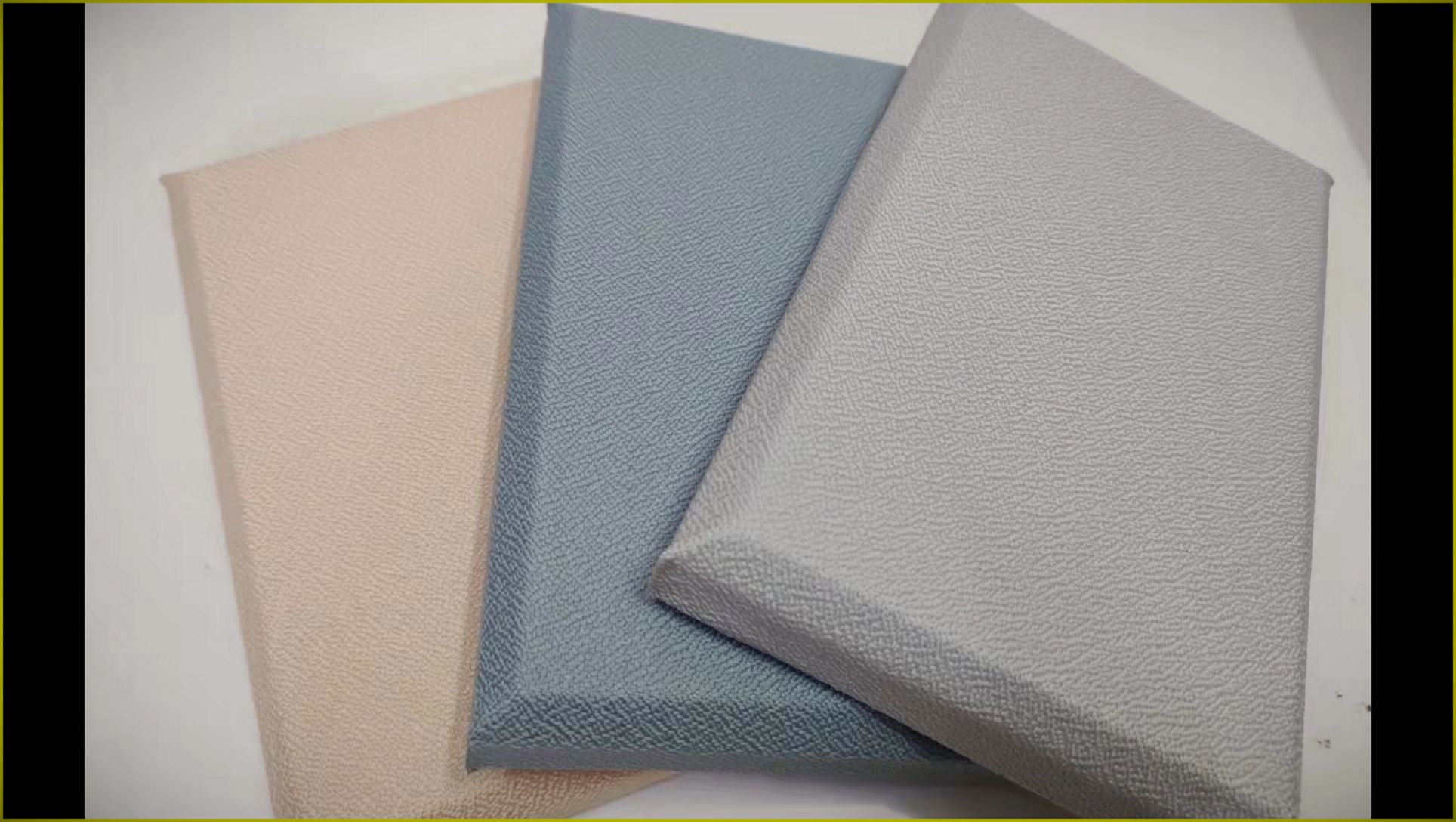
No. A door insulates, blocking sound from crossing it, while echo is an absorption problem inside the room. Acoustic doors with perforated or fabric finishes add NRC 0.65 or higher on the room side, but reverberation control still needs wall and ceiling treatment.

Leave A Comment