




A quote crossed my desk last week from a contractor bidding a hotel ballroom retrofit: $21,400 for fourteen panels of folding walls, delivery in six weeks, and not one line about panel thickness, Rw rating, or fire classification. The covering email called it a standard package. It was standard the way a sealed envelope is standard; you pay first and learn the contents later.
Here is where I stand on every sheet shaped like that: when you buy folding screens and room dividers, three numbers decide whether you get a wall or an expensive curtain, and those numbers are the Rw (or STC) sound insulation rating, the NRC absorption coefficient, and the fire classification of every layer inside the panel. A quote that leaves out any of the three is asking you to buy weight, not performance. The rest of this page shows where each number comes from and how it moves the price you are quoted.
Three numbers that decide the deal
Start with the rating people misread most. Rw, printed as STC on North American test reports, measures how many decibels a panel strips from sound trying to pass through it, and laboratory figures for adjacent product classes sit thirty decibels apart. The test report for our 100 mm double-seal series, issued by a CMA-accredited institute in Guangzhou in 2023, lists Rw 47 dB across the standard 100 to 3150 Hz band; a castor-mounted fabric screen in the same report family sits near Rw 18 dB. Thirty decibels is the gap between a meeting you can hold and a meeting the whole floor can transcribe.
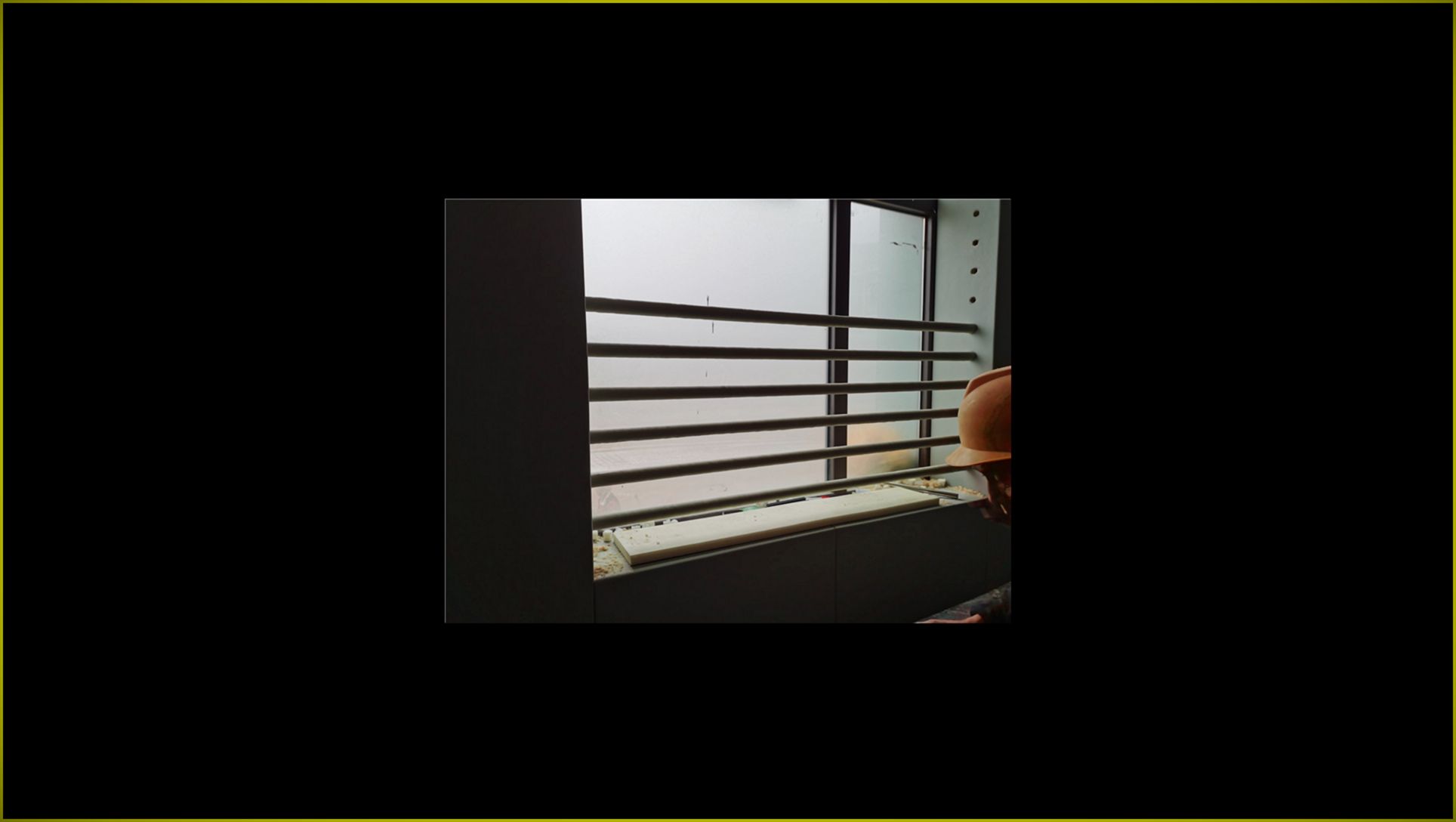
Absorption answers the complaint insulation cannot fix. NRC rates how much reflected sound a surface soaks up on a scale from 0 to 1, and a perforated panel face with fabric backing typically reaches NRC 0.65, enough to pull reverberation in a divided training room down from a ringing 1.2 seconds to a usable 0.7. Two different physics outcomes sit behind those figures, so a sheet that prints one where the other belongs is either sloppy or stalling. If you read only the price line, that swap is almost impossible to catch.
Fire classification closes the set. For panel skins and cores on Chinese projects, GB 8624 class B1 is the working baseline, which in combustion-report language usually means an oxygen index at or above 32 percent; buyers working to US specifications should look for an ASTM E84 Class A result, meaning flame spread index not above 25 and smoke developed index not above 450. (At handover, make the installer leave the combustion report for the shipped batch on site, because fire inspection matches documents against labels and stalls without them.)
Fire rules reshaped this market in 2022
GB 55016-2021, the General Code for Building Environment, took effect in April 2022 and set mandatory indoor noise limits along with verified airborne sound insulation values for building partitions, dividable halls included. Design institutes responded by writing required Rw values straight into tender documents, and procurement officers began asking for laboratory reports attached to bids instead of performance claims attached to brochures.
The tender desk shows the shift plainly. Eleven bids arrived for a provincial government service hall fit-out in early 2023, and nine went back unopened because none attached a valid combustion report for the proposed panel faces; two years earlier the same office would have compared catalogues and prices and picked one. Whenever a regulation turns into a pass-or-fail document check, the bottom of the price market thins out quickly, since the lowest bidders are usually the ones whose paperwork was decoration.
For a buyer, the trend lands in one practical place: the gap between a cheap quote and a compliant quote is now documented, dated, and auditable. Expect any public-sector specification for room dividers and folding privacy screens to demand panel thickness, core material, Rw value, and fire classification per layer, and expect bids missing those lines to be returned unopened. A supplier who cannot produce that sheet has already been judged by the market.
How much sound does a folding wall actually stop?
Mass sets the floor, and seals decide how much of that floor survives contact with the real building. Double the surface density of a panel and insulation rises by roughly 6 dB, which is why thickness appears on every serious quote. Sound, however, takes the cheapest path available, so one unlatched pass door or a worn bottom seal can drag a Rw 50 wall into the low 30s, and the brochure will not confess to it.
The market splits into four practical classes, and the test reports keep them apart. An operable wall is a set of rigid panels hung on a top track that stack against one side when opened; a castor screen is a lighter divider you park wherever it is needed today.
Product classes and the numbers behind them
| Product class | Panel thickness | Typical lab rating | Where it fits |
|---|---|---|---|
| Castor-mounted privacy screen | 40-65 mm | Rw 15-25 dB | Open-plan offices, temporary visual breaks |
| Single-point-hung folding door | 65-80 mm | Rw 28-35 dB | Restaurants, classrooms, daily reconfiguration |
| Manual double-seal operable wall | 85-100 mm | Rw 40-47 dB | Meeting rooms, training rooms |
| Electric operable wall | 100-120 mm | Rw 47-54 dB | Ballrooms, council chambers, exhibition halls |
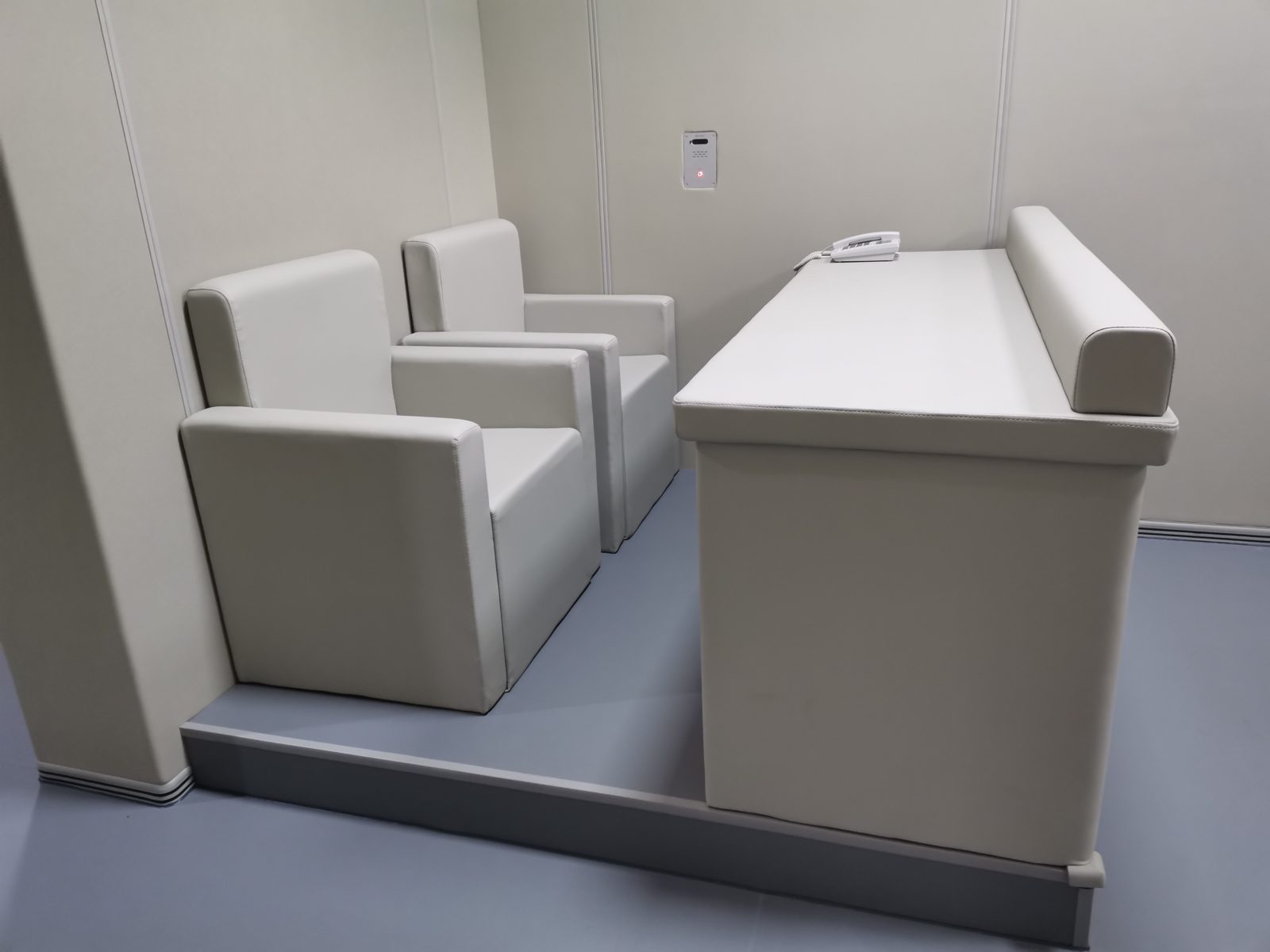
Treat those figures as laboratory ceilings, because installation quality routinely costs a wall two to four dB against its own certificate. Honestly, I do not push the operable-wall grade into homes, no matter what a catalogue implies; a Rw 20 castor screen plus a heavy rug settles most household noise disputes at a tenth of the price. Conference rooms, clinics, and any space where being overheard carries legal or commercial weight are where the 100 mm double-seal class earns its keep.
Installation, lead time, and the line item people skip
Everything in a folding wall hangs from the top. Top-hung and single-point-hung systems carry the full panel weight on the head track and its anchors into the structural slab, and a 1 m by 4 m panel in the 100 mm series weighs north of 100 kg, so treat the beam check as engineering work before anything gets ordered. Floor-track designs reduce the structural demand and suit retrofit projects, at the price of a threshold underfoot and grooves that collect debris.
Lead time runs by class. Castor screens ship inside a week. Manual folding doors typically need 15 to 25 days from approved drawing to installation, while electric operable walls occupy 30 to 45 days once the site survey and head steelwork are counted in. The acceptance sheet from a municipal training center fit-out in South China, 2024, recorded 32 panels hung, aligned, and tested at Rw 45 dB in nine working days, which is a fair pace for a site that prepared its slab on schedule.
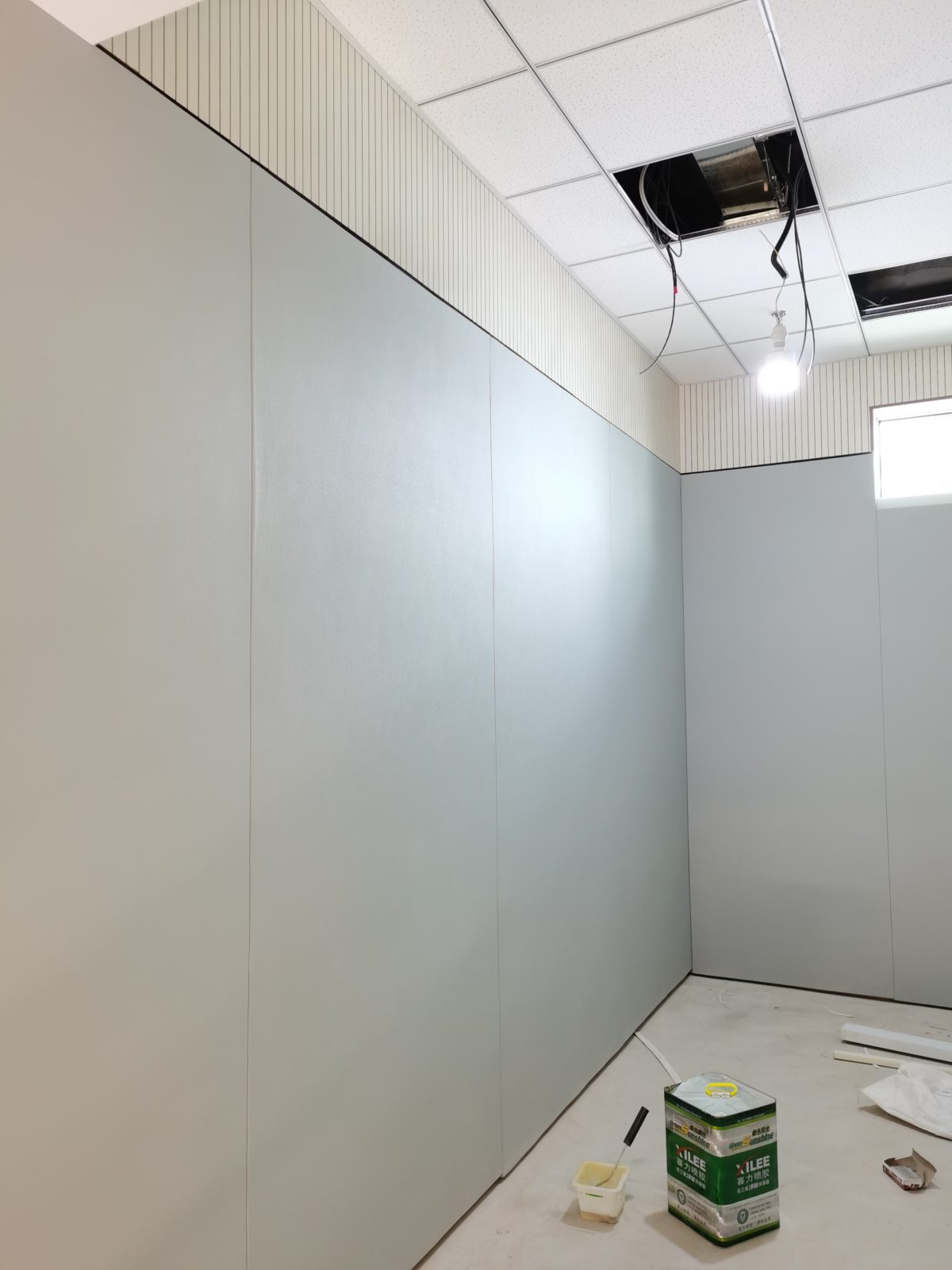
Price follows the same ladder. Castor-mounted folding privacy screens land between $50 and $110 per square meter, manual folding doors between $110 and $260, and Rw 47-class electric operable walls between $450 and $700 per square meter installed, with track length, finish fabric, and structural preparation moving each band by 10 to 20 percent. A number priced under its class usually means a thinner core or a lighter seal, so ask what was removed to reach it.
What I would do before signing anything
One check settles a quote sheet in about ten minutes, and you can run it yourself:
- An Rw (or STC) figure with the issuing laboratory named
- An NRC value printed separately from the insulation figure
- Fire classification per layer, report number included
- Panel thickness stated alongside the claimed rating
A valid offer for folding screens and room dividers states Rw (or STC), NRC, and fire classification for every layer and names the issuing laboratory; if any line is missing, treat the sheet as invalid and demand a revision. Suppliers who actually manufacture the product fill those blanks in minutes, and you do not need to hire anyone for that part of the job. When a project needs one vendor to carry the paperwork through tender, installation, and fire inspection, that is the slot we built for at 景丽伦英文站: quotes that list panel thickness, seal type, Rw, NRC, and GB 8624 classification line by line, free on-site measurement and layout design, and factory-direct supply so the batch reports and the delivered panels come off the same production line. Acceptance officers read paper before they listen to walls, and the documentation chain is what keeps a schedule alive.
Send your floor plan and the opening width to the 景丽伦英文站 team through the inquiry form on this site, and a marked layout plus a full spec sheet with laboratory report numbers comes back inside two working days. Bring a competitor quote along if one is already on your desk; comparing sheets line by line beats comparing brochures every time.
How much do folding screens and room dividers cost?
Two markets sit under one label. Castor-mounted folding privacy screens run roughly $50 to $110 per square meter, and manual folding doors land between $110 and $260. Electric operable walls in the Rw 47 dB class typically cost $450 to $700 per square meter installed, because the figure carries track engineering, drive motors, and certified seals. Track length, finish fabric, and slab preparation move the final number by 10 to 20 percent, so a measured quote beats a catalogue price.
Do folding walls block sound or just absorb it?
Either is possible, and the report tells you which one you are buying. Insulation is the Rw or STC figure, the decibels removed from sound passing through the panel; absorption is NRC, the share of reflected sound the surface soaks up. A Rw 20 castor screen handles visual privacy, while a double-seal operable wall at Rw 47 dB keeps a meeting inaudible from the corridor. A supplier who prints NRC where an Rw figure belongs is swapping specs, and that sheet should go back.
What fire rating do room dividers and folding privacy screens need?
For projects under Chinese code, GB 8624 class B1 is the working baseline for faces and core materials, which usually means an oxygen index at or above 32 percent in the combustion report. Buyers under US specifications should ask for an ASTM E84 Class A result, meaning flame spread index no higher than 25 and smoke developed index no higher than 450. Request the report issued by a CMA-accredited laboratory for the batch actually shipped, since inspectors match documents to labels.
Folding doors and room dividers or a fixed partition, which one makes sense?
Reconfiguration frequency decides it. If the room changes layout weekly, folding doors and room dividers on a top-hung track repay themselves in staff hours within about a year. If the split never moves, a fixed stud wall costs less per square meter and tests higher, commonly Rw 52 dB or above. Ordering an electric operable wall for a layout that never changes means paying for motors nobody will ever switch on.
How long does installation take?
Castor screens need no installation beyond unboxing. Manual folding doors take two to three days on a standard opening. Electric operable walls are a small construction job: site survey, head steelwork, track alignment, panel hanging, then acoustic testing, seven to ten working days for a twelve-panel project. Delivery lead time adds 15 to 25 days for manual systems and 30 to 45 days for electric ones, so place the order before the furniture schedule is fixed.
What goes wrong most often when ordering a folding wall?
The head structure gets checked last instead of first. A 1 m by 4 m panel in the 100 mm series weighs north of 100 kg, and every kilogram hangs from the head anchors; if the slab was never verified, the track sags within months and the seals stop meeting, taking the rated Rw figure with them. Require a structural sign-off together with the quote, and have the installer leave the batch test reports on site at acceptance.

Leave A Comment