




An acoustic insulation door reaches its labeled rating only when the frame, perimeter gaskets, drop seal and frame-to-wall sealant work as one continuous assembly, and the leaf by itself decides less than half of the field result. That single sentence explains most of the complaint calls that land on a factory after-sales desk.
Last week a business hotel in a provincial capital sent me meter readings: banquet trolleys had pushed the corridor to 68 dB(A), the guest room behind a leaf labeled Rw 40 held 52 dB(A), and the owner wanted to ship four doors back. The doors were innocent. The installer had left a 12 mm undercut with no working drop seal and filled the frame cavity with expanding foam instead of mineral wool.
What follows comes from that kind of call, from lab reports stacked beside my desk and from acceptance sheets signed on site. The comparison table below puts the acoustic metal door, acoustic wooden door, acoustic double door and acoustic louver door builds next to each other with real numbers, so the decision gets made against the room you have rather than the brochure in a salesman's hand.
The Door Leaf Is Rarely the Reason an Acoustic Door Fails
Our complaint log makes the pattern blunt: across 31 recorded field complaints about door insulation sound performance, 24 traced to perimeter gaskets, drop seals or missing frame sealant, 5 to foam-filled or empty frame cavities, and 2 to the leaf itself. Sound treats a gap the way water treats a crack; it finds the path nobody detailed. A 3 mm slit under the leaf undoes more attenuation than any core upgrade adds, which is why both leaf-related cases in that log were hollow-core doors sold to buyers as solid.
Field numbers line up with physics, because an open leak path collapses the transmission loss of a partition far faster than any laboratory curve predicts. You can audit a door in ten seconds without an instrument: close the leaf on an A4 sheet at the head, at the lock side and at the sill, then pull. Wherever the sheet slides free, that gasket is decorative, and the number printed on the label stays fiction until the seal is fixed.
Steel, Wood, Double Leaf or Louver
Two numbers run this market. STC is a single-number laboratory rating measured across sixteen one-third-octave bands from 125 Hz to 4000 Hz under ASTM E90 and condensed according to ASTM E413, while Rw under ISO 717-1 does the same job in ISO markets and lands within a few points of STC for door assemblies. Under China's grading standard GB/T 8485, door sound insulation is scored in 5 dB steps, and a leaf below 30 dB has no honest place in speech-privacy work.
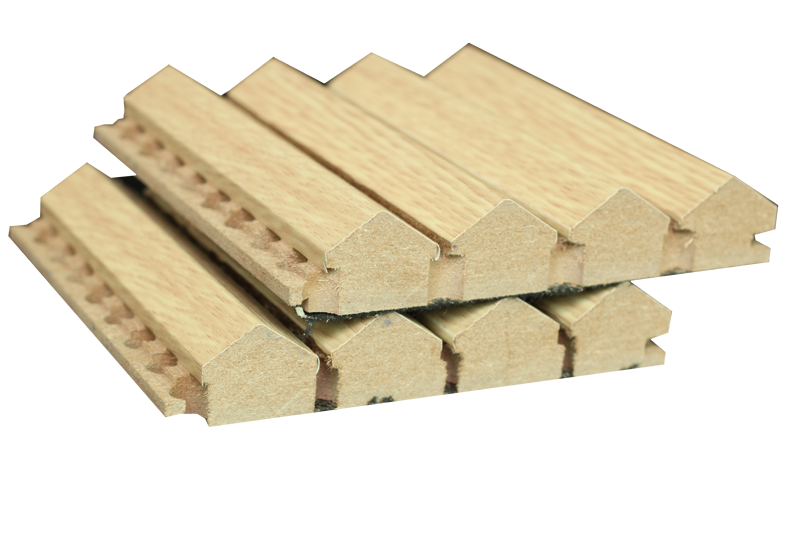
Construction sets the ceiling long before marketing gets involved. An acoustic metal door pairs cold-formed steel skins with a rock wool or honeycomb core and an infilled frame; an acoustic wooden door leans on a solid or laminated core, damping interlayers and dense edge lipping; an acoustic double door adds a second leaf, a real air cavity and frames decoupled from each other; an acoustic louver door cuts ventilation openings through the leaf and claws back a little attenuation with silencer blades.
| Construction | Typical lab rating | Leaf weight | Fire performance | Installed price band | Fits |
|---|---|---|---|---|---|
| Acoustic metal door, steel skin over rock wool core | Rw 40-50 dB / STC 43-52 | 45-60 kg/m² | Class A, 1.5 h per GB 12955-2008 | $380-850 per leaf | Plant rooms, machine rooms, secure corridors |
| Acoustic wooden door, solid core with damping layer | Rw 32-40 dB / STC 35-42 | 35-45 kg/m² | B1 flame-retardant, report from a CMA-qualified testing agency | $240-580 per leaf | Hotels, clinics, meeting rooms |
| Acoustic double door, twin leaves with vestibule | Rw 50-60 dB / STC 52-60 | 85-120 kg/m² combined | Follows leaf class, steel build reaches Class A | $900-2200 per set | Studios, auditoria, cinema control rooms |
| Acoustic louver door, silencer-blade vents | STC 18-28 even with attenuated louvers | 25-35 kg/m² | Depends on leaf, louvers add a combustible path | $170-420 per leaf | Electrical and server rooms with continuous airflow |

Where each construction earns its keep
Match construction to the room before chasing the biggest number on the sheet. Plant rooms, kitchen corridors and any wall rated for fire separation take steel, where Class A certification per GB 12955-2008 comes as standard on an acoustic metal door while wooden builds usually stop at Class B. Hotels, clinics and meeting rooms take wood, because the acoustic interior doors that guests touch every day should not read like vault hardware. Studios, auditoria and cinema control rooms take the acoustic double door with a vestibule, since two leaves over a real cavity usually add 8-12 dB over the same leaf used singly in the same wall. An acoustic louver door deserves honesty: it works as a ventilation product that traded away most of its rating to move air, so when a server room needs 500 m³/h of continuous airflow, spend the budget on wall isolation and accept the lower door figure.
What Does a Fair Price Look Like, and How Long Does It Take?
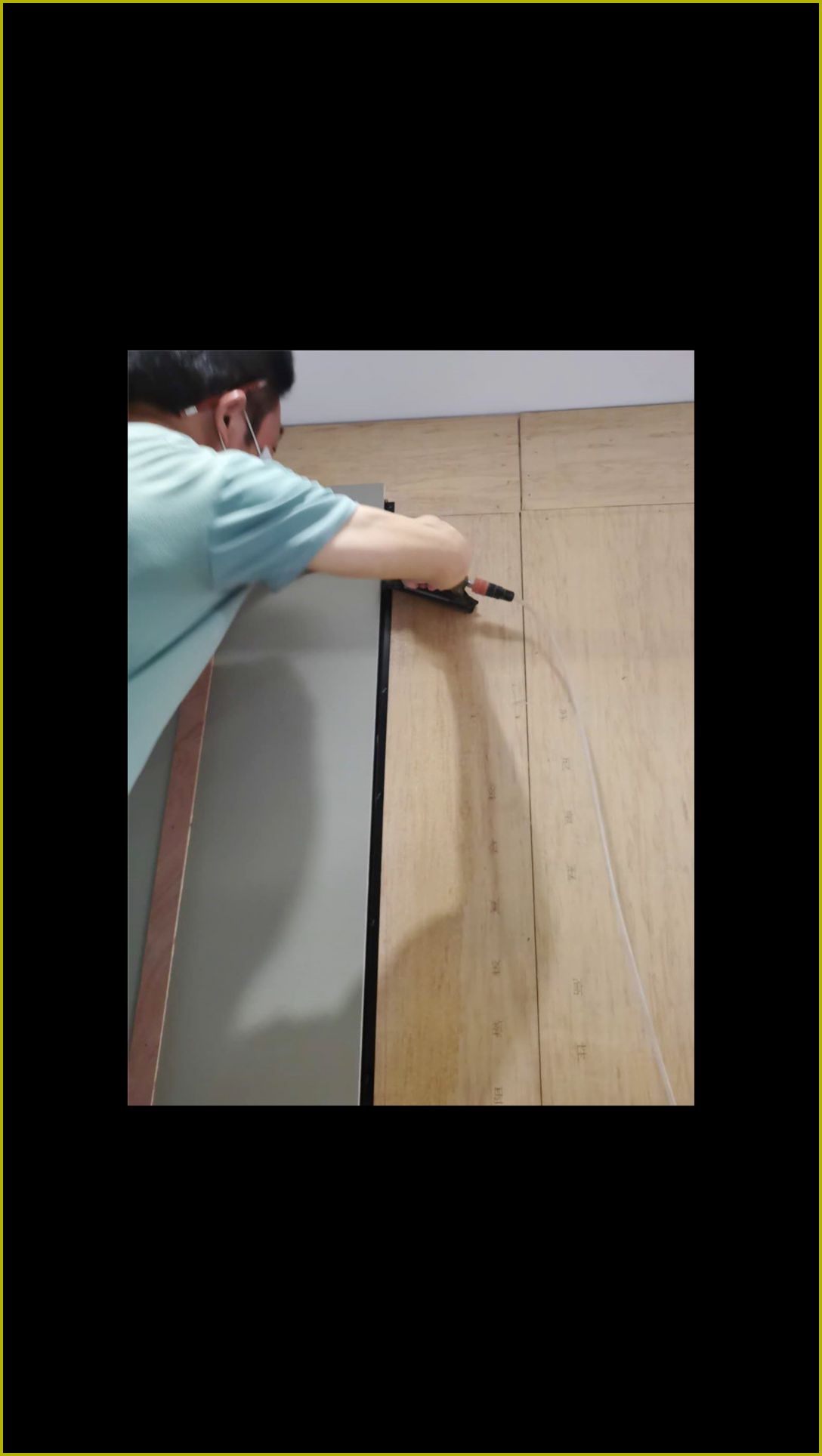
Price follows two things that have nothing to do with the brand printed on the quotation: the leaf construction and the seal-and-hardware package. A brush strip under the door costs $15 and does almost nothing; an automatic drop seal that falls 8-10 mm when cam-lift hinges swing the leaf shut runs $60-90, with the hinges adding another $40-70 per set. Mineral wool frame infill instead of hollow or foam cavities adds $60-120 per opening and usually buys more decibels per dollar than a thicker leaf. When a quote shows one line reading acoustic door with a round number beside it, you are not comparing prices, you are comparing unknowns.
Schedule runs shorter than buyers fear and longer than salespeople admit. Standard single leaves leave the works 15-20 working days after opening dimensions are locked; one door installs in a day, an acoustic double door with a vestibule needs two days, and seal adjustment plus a meter check takes another half day before final payment. Honestly, for a home bedroom I would not quote a Class A steel door, because an STC 38 acoustic wooden door with a proper seal kit settles the snoring-and-television complaint at roughly half the cost, and a vault door in a bedroom ages badly with everyone who lives there. Take the two quotes you are holding into the final section and read them against the checklist line before comparing totals.
Fire Ratings and the Paperwork That Decides Handover
Fire classification is where an acoustic metal door justifies its premium over wood. GB 12955-2008, the Chinese standard for fire-resistant door sets, grades Class A at 1.5 hours, Class B at 1.0 hour and Class C at 0.5 hours, and a steel leaf over rock wool with core materials rated A per GB 8624 arrives with the combustion report to prove it. A wooden acoustic door rarely reaches Class A, so the realistic ask there is B1 flame-retardant classification plus a combustion report issued by a CMA-qualified testing agency and matched to the delivered batch rather than a scanned page from somebody's 2019 tender file.
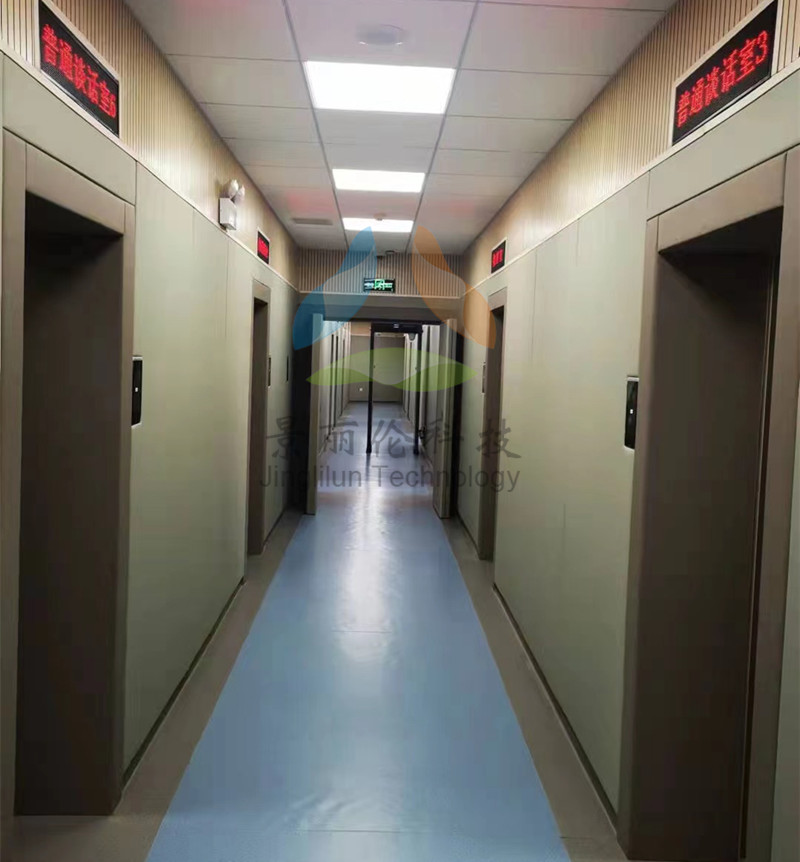
Paperwork ends more projects than acoustics does. On a security-room upgrade at a county detention center in East China, the acceptance sheet recorded a field average of 38 dB reduction across six Rw 42 steel leaves, and the fire inspector signed only because the combustion report for that exact batch came stapled to the delivery note. GB 55016-2021 turned the acoustic environment into a mandatory item in completion acceptance across China, which means the inspector who once waved doors through now reads reports. (Have the installer bring the acoustic and combustion reports for the delivered batch to handover day; a missing report parks finished doors in the corridor for weeks while the paper chase runs.)
A Field Checklist for the Final Decision
Write one line above the desk before the next supplier meeting: a quote deserves a signature only when it itemizes the drop seal by model, the perimeter gasket layout, the frame-to-wall sealant and a tested assembly number for the complete package. Every complaint call in my log shares a root cause, a sealed leaf sold as part of an unsealed system, and credible quotes name those parts because the seller knows the field result lives there. An Rw 45 leaf set in a hollow frame behaves like an Rw 28 door on site; the same leaf over an infilled frame with twin gaskets and a cam-lift drop seal keeps its rating where it counts, at the ear.
- Opening width, height and wall thickness, measured at three points each
- An A-weighted background noise reading taken on each side of the wall, after dark
When the project deserves measurement instead of guesswork, the factory-direct sequence changes what money buys. The 景丽伦英文站 team sends engineers to record opening dimensions, wall build-up and background noise on both sides before pricing anything, designs the seal package around the measured spectrum, builds to ratings tested under GB/T 8485 and GB 12955, and ships the batch reports inside the crate. Factory-direct supply also removes the reseller layer that explains why two doors with identical STC labels differ by 40 percent in price, whether the job is one studio door or a forty-leaf hotel floor.
Send 景丽伦英文站 your door schedule, opening sizes and the two noise readings above through the contact page, and an engineer replies within one working day with a sized door package, seal layout, production date and factory-direct pricing; keep that checklist line open while you read the reply, and let the quote prove itself item by item.
How much does an acoustic insulation door cost?
An acoustic metal door rated Rw 40-50 dB runs about $380-850 per leaf with frame and hardware; an acoustic wooden door at Rw 32-40 dB runs $240-580; an acoustic double door set starts near $900 and reaches $2200 with a vestibule. Add $100-250 per opening for automatic drop seals, cam-lift hinges and frame sealant.
Which is better, an acoustic metal door or an acoustic wooden door?
The room decides. Steel wins where fire classification, heavy traffic or Rw 45 dB and above matter, such as plant rooms and secure corridors; wood wins on looks, weight and price for hotels, clinics and meeting rooms in the Rw 32-40 dB band. Pick steel for compliance-driven spaces, wood for occupied interiors.
What STC rating does a meeting room or studio need?
A meeting room holds speech privacy at STC 40-45 with sealed walls; rehearsal and podcast rooms need STC 45-50; recording studio control rooms start at STC 52 and normally use an acoustic double door with a vestibule. Home offices and bedrooms settle at STC 35-40 with a quality automatic drop seal.
How long do production and installation take?
Production runs 15-20 working days after opening dimensions are confirmed, longer for glazed or double-leaf builds. A single door installs in one day, a double door with vestibule in two, plus half a day of seal adjustment and meter verification before final payment. Finished walls and level floors protect that schedule.
Why does my new acoustic door still let noise through?
In 24 of 31 recorded complaints the leak sat in perimeter gaskets, an uncompressed drop seal or an unfilled frame rather than in the leaf. Close the door on an A4 sheet and pull; if it slides out, that gasket does nothing. Confirm 8-10 mm of drop seal compression and mineral wool inside the frame cavity.

Leave A Comment