




Tuesday morning, 340 square meters of acoustic ceiling board came back down because one line on the batch combustion report read B2 where the acceptance sheet demanded B1. Pick an acoustic board by test data first and surface finish second; every demolition order I have watched in review season started with those two priorities reversed.
The project review ran long again, same plot as last quarter: a contractor swapped the specified board for a cheaper cousin, nobody checked the batch paperwork, and a crew now spends its week re-hanging panels instead of starting the next job. I left the meeting, sat at the workshop desk, and wrote this instead of another memo nobody reads.
The Story Behind Those 340 Square Meters
The room was a multipurpose hall in a community cultural center in East China, 340 square meters of suspended ceiling. The drawing called for a B1 mineral-fiber acoustic ceiling board in a T-grid. The contractor ordered a 9 mm decorative PET board instead, saved about $600 on the lot, and nobody opened the report until the acceptance inspector asked for it on handover day.
Two codes control that situation. GB 50222-2017, the code for fire prevention in building interior design, sets minimum burn classes for finishes by occupancy, and ceiling finishes in assembly-type spaces commonly must reach Class A or B1. GB 55016-2021, the mandatory general code for the built environment in force since 2022, sets numeric indoor noise limits for dwellings, schools and hospitals, which is why inspectors now walk in with sound level meters instead of eyeballing the ceiling.
The rework bill: removal and reinstallation labor cost about $8,400, the schedule slipped 17 days, and the center postponed its opening event. The $600 saving sits in a landfill. If you only compare unit prices on the quote sheet, this exact outcome is waiting for your project too.
What Should a Credible Test Report Actually Contain?
An acoustic wall insulation board is a porous fiber or foam panel fixed to a wall or ceiling to absorb sound energy and shorten reverberation time, and it is not a barrier against airborne noise. Mixing up those two jobs is the most expensive misunderstanding in this trade. A 12 mm absorber makes a loud canteen tolerable and does nothing about noise passing through a thin partition wall.
NRC averages sound absorption measured at 250, 500, 1000 and 2000 Hz, and the value changes with mounting, a detail most catalogs leave out. Our current 12 mm polyester acoustic panel board tests at NRC 0.60 fixed directly to hard wall and NRC 0.80 with a 50 mm air cavity behind it, per the report from our CMA-accredited lab. Same board, different buildup, one third more absorption.
Burn performance follows GB 8624-2012: Class A means non-combustible, which is mineral and glass wool territory, while flame-retardant polyester boards usually certify as B1. The combustion report for our current production batch lists oxygen index above 32 percent, one number that beats any brochure photo. (Have the crew carry the current batch report on acceptance day; inspectors do ask, and a five-year-old PDF convinces nobody.)
The Ceiling Grid Does Not Forgive a Wrong Module
600x600 mm is the module shared by mainstream T-bar systems, which is why acoustic board 60x60 dominates suspended ceilings worldwide. Drop a 625 mm panel into a 600 frame and you get gaps at every tee, or a crew trimming every edge freehand on a ladder. Confirm the module on the drawing before the order goes out, not after the truck arrives.
Weight and sag come next. A 12 mm polyester acoustic wallboard weighs around 2.6 kilograms per square meter and sits comfortably in a standard acoustic board ceiling frame; above 20 mm on a 600 mm module, check the grid load allowance and tighten tee spacing in humid rooms where absorbed moisture adds weight. Border cuts are the second failure point, so add 5 percent spare panels for perimeters.
An 800 square meter open-plan office in South China reused its existing grid last spring: crew leveled tees on day one, dropped boards from day two, finished borders on day four, and the grid inspection passed first time. The facility manager's only complaint was cutting dust, which a vacuum head on the saw would have solved.
Same Catalog Page, Very Different Rooms
Recording rooms and podcast booths are where black acoustic board earns its spot, and the reason goes past looks. Matte black PET panels behind a camera or above a mix position kill stray reflections without the glare a white ceiling throws into a monitor screen. Voice-over rooms in our delivery records typically target mid-band reverberation under 0.5 seconds, and a 50 mm cavity build reaches that without touching the walls.
Humidity flips the logic. Fabric-faced and mineral-fiber boards drink moisture in pool halls and changing rooms, then sag and spot, so those rooms get PVC-faced PET or sealed-edge products from the first line of the spec. A gym in central China learned this after one winter; the supplier blamed abnormal use, and I call it a wrong material choice on the drawing.
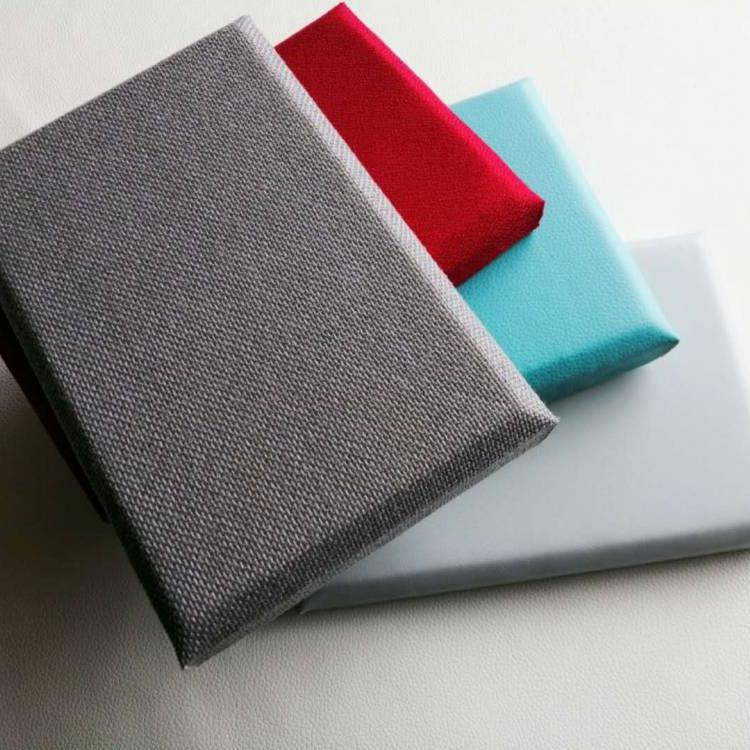
Speech spaces carry measurable targets. After we lined the walls and ceiling of a municipal public security training hall in East China with light-gray acoustic wallboard, the acceptance measurement showed mid-frequency reverberation falling from 1.4 seconds to 0.6 seconds. Honestly, for a home theater I would not cover every surface with high-density board either; 12 mm panels on furring with a 50 mm cavity handle most living rooms, and the leftover budget does more work on the door seals.
No Batch Report, No Deal
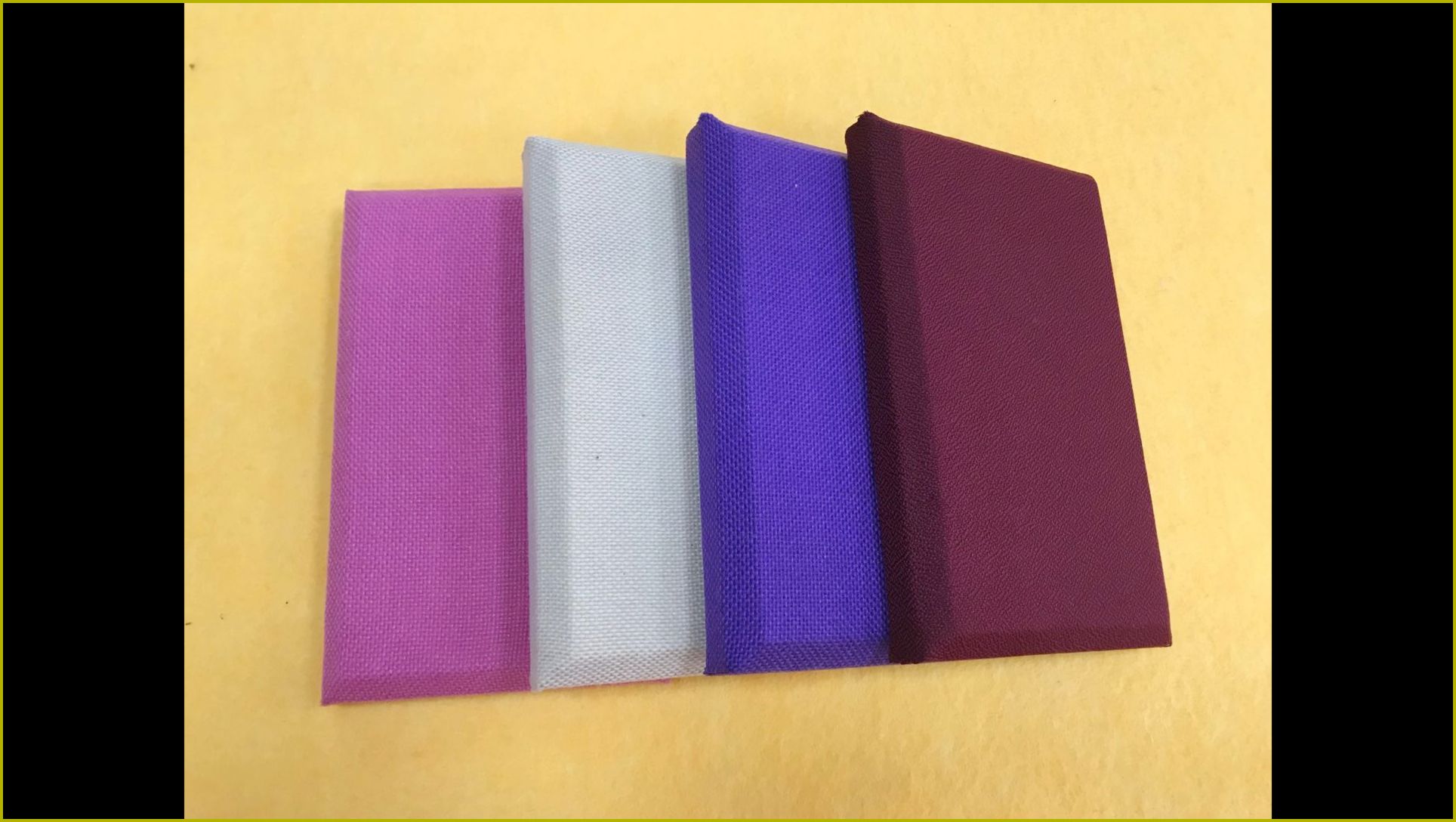
A supply package worth signing starts with two documents: the current-batch combustion report from a CMA-accredited lab, and an NRC datasheet that states the mounting condition. Layout drawings and module tolerances matter too, though those two reports decide whether an order survives acceptance. We hold our own shipments to that rule, and customers should hold every supplier to it, us included.
That package is what we assemble at 景丽伦英文站 for each project: free on-site measurement and layout design before the quote, boards certified against GB standards with batch-matched reports, and factory-direct pricing because panels ship from our own production line without a distributor in between. The measurement visit costs nothing and usually catches grid or wall problems before they turn into change orders.
Watch how a supplier reacts when you ask for paperwork. A factory sends the batch report within hours because it exists; a trader goes quiet, or emails a file with someone else's batch number in the footer. One dealer forwarded a competitor's report to us by accident once, same template, different company name, and that single email ended the comparison in ten seconds.
How Much Does It Cost and How Long Does It Take?
Prices move with density, facing and volume, so treat these as order-of-magnitude ranges from recent quotations. A 9 to 12 mm polyester acoustic panel board runs roughly $3 to $8 per square meter ex-works; fabric-wrapped glass wool acoustic wallboard lands between $15 and $40; mineral-fiber acoustic ceiling board in 600x600 sits near $1.5 to $4, with the T-grid frame adding $1.5 to $3.
Schedule stays predictable when the grid is ready. The South China office job needed four installers and four working days to set acoustic board 60x60 panels on an existing grid, and a 200 square meter direct-fix wall job with furring strips takes a three-person crew two to three days. Add a leveling day if the old grid rocks, and add inspection time on public projects, because the acceptance visit waits for nobody.
Put the Tuesday rework on a calculator: about $8,400 in labor, 17 days of delay, one postponed opening, all to avoid roughly $600 in board cost. The gate check before signing any order is simple: a supplier who cannot produce this month's combustion report and the NRC figure for your mounting condition within one working day does not deserve a second look, whatever the unit price claims.
Send room dimensions, ceiling type and intended use to 景丽伦英文站 through the inquiry page, and our engineering team returns a measured layout with predicted reverberation figures and a batch-matched quote within two working days. Good paperwork before the order is what keeps meetings like Tuesday's off your calendar.
How much does an acoustic board cost per square meter?
Raw 9 to 12 mm polyester acoustic panel board runs roughly $3 to $8 per square meter ex-works. Fabric-wrapped glass wool wallboard lands between $15 and $40, and a mineral-fiber acoustic ceiling board sits near $1.5 to $4. Add $1.5 to $3 per square meter for a 600 mm T-grid frame.
Does an acoustic board actually soundproof a room?
No. A standard acoustic wallboard absorbs reverberation and does not stop airborne transmission. Real insulation needs mass and decoupled layers, such as double drywall with mineral wool in the cavity. Anyone selling a 12 mm absorber as soundproofing is offering the wrong physics for the problem.
What fire rating should an acoustic ceiling board have?
For most public interiors in China, GB 50222-2017 requires Class A or B1 ceiling finishes depending on occupancy. Class A means non-combustible mineral or glass wool, while B1 covers flame-retardant polyester with a valid batch report. A B2 batch on a public project fails acceptance, every time.
Will acoustic board 60x60 fit my existing ceiling grid?
Yes, if the grid is a standard 600x600 mm T-bar system, which covers most suspended ceilings. Check tee spacing at borders, panel weight against the grid load limit, and main runner condition before ordering. Odd room dimensions mean border cuts, so add about 5 percent spare boards.
How long does installation take for a 500 square meter office?
A 500 square meter open-plan office with 600x600 acoustic ceiling board on an existing grid needs a four-person crew about three working days. Direct-fix acoustic wallboard on furring strips runs two to three days for similar area but adds wall preparation. Add one day if the old grid needs leveling.

Leave A Comment