




In a small room with two bare parallel walls, flutter echo is a scattering problem, not an absorption deficit, so the first panel worth buying is a sound diffuser. I learned it on an eight-room interrogation-area retrofit where the biggest room measured 1.3 seconds of reverberation time in the 500 Hz to 2 kHz band before treatment, and 0.42 seconds at acceptance.
The captain who called us had a folder of complaints. Recorded interviews came back with a metallic ring under every syllable, and two officers kept correcting each other's transcripts because they heard different words from the same playback. He played me one file on a laptop speaker in a corridor and I caught the problem from a meter away. That never happens with good recordings.
A room that echoed in double time
The rooms occupied the third floor of a municipal public security bureau building, each about 4.6 by 4.2 meters under a 2.9 meter slab. Painted gypsum on four walls, vinyl flooring, a steel table bolted dead center, a camera in the corner. Every surface flat, and the two long walls dead parallel.
Flutter echo is the rapid repeating slap between two parallel reflective surfaces, and it shows up as a metallic zip after a single hand clap. I clapped once in the middle of Room 5 and the bounce carried for a good two seconds, like a ping-pong rally trapped in drywall. The captain watched me wince and said, now you get the complaint.
One more thing worth logging, because it eats budgets: a transformer two floors down fed a steady 100 Hz hum into the structure. That is structure-borne noise, a vibration isolation job, and no diffuser sound panels on any wall will touch it. We measured before designing, so the hum got its own line item instead of being blamed on the acoustics after handover.
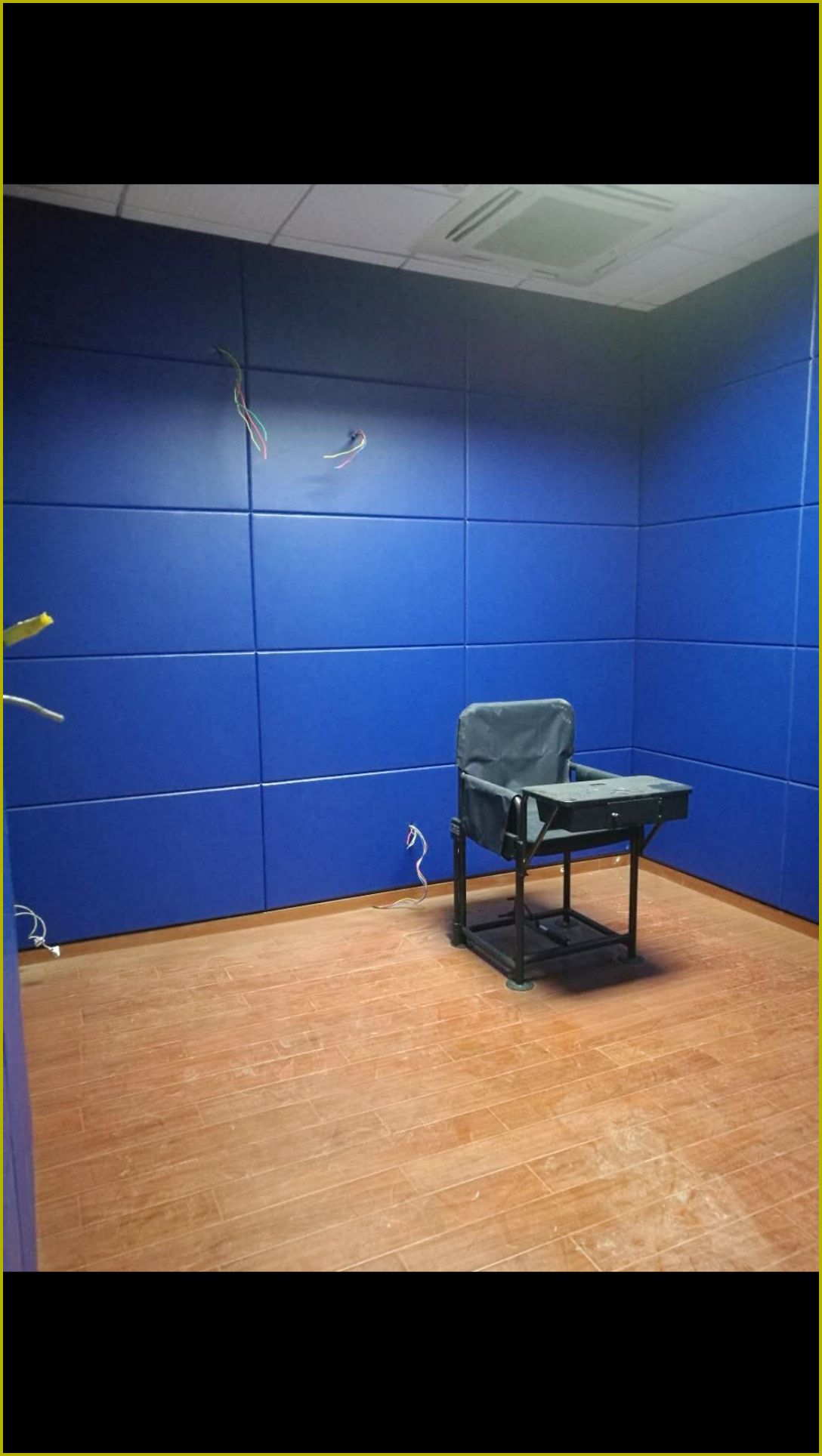
Extra absorption made the recordings worse
The first contractor proposed the obvious move: cover both parallel walls floor to ceiling with 25 mm polyester fiber panels and call it done. We mocked it up in one room anyway. On paper the numbers looked great, reverberation fell to roughly half a second and the flutter ring disappeared.
Then we recorded a five-minute mock interview and played it against the untreated file. Everyone in the room picked the treated recording as worse. The desk microphone sat in a dead zone, consonants lost their bite, and two officers who run interview rooms for a living said the space felt like a booth built for confessions, which is exactly the wrong atmosphere for a conversation you want to keep going.
Here is the physics in one breath. Absorption removes sound energy; diffusion keeps the energy but scrambles its direction and arrival timing. An acoustic sound diffuser is a panel profiled into wells or geometric ridges of calculated depths that scatters incident sound across a spread of angles and times instead of soaking it up. Studios line their front walls with audio diffuser panels for exactly this reason, because a room that is all absorber records like a padded closet.
The hybrid wall we ended up building
The layout that survived: a wood sound diffuser field of QRD panels on the rear wall behind the interviewee, 50 mm fabric-wrapped fiberglass on the side walls up to 1.8 meters, and a 25 mm polyester cloud suspended over the table. One pair of walls scatters, the rest absorbs or stays bare. Keeping the camera wall and the floor untreated preserved enough liveness that voices still sound like voices on the recordings.
The diffuser itself ran a 7-well quadratic residue sequence with a maximum well depth of 100 mm, tuned to scatter roughly 800 Hz through 5 kHz. Its scattering coefficient, tested per ISO 17497-1, came in above 0.5 from 1 kHz upward. In a room where recordings carry legal weight, that figure matters more than any NRC number on a brochure, and it also lines up with GB 55016-2021, which sets mandatory acoustic requirements for occupied rooms, so our acceptance form asked for measured numbers rather than brochure promises.
The three builds we priced before committing
| Option | Build-up | NRC (ASTM C423) | Scattering coeff. (ISO 17497-1) | Fire rating | RT60, 500 Hz-2 kHz | Material cost, USD/m2 |
|---|---|---|---|---|---|---|
| A, all absorption | 25 mm PET panels, both parallel walls fully covered | 0.75 | About 0.10 | B1 (GB 8624) | 0.50 s, flutter gone, mic dead zone | 12 |
| B, all diffusion | Wood QRD, 100 mm max well, 7-well period, rear wall plus both end walls | 0.25 | 0.62 | B1 (GB 8624, treated) | 0.90 s, flutter gone, too live | 85 |
| C, hybrid, chosen | Wood QRD rear wall, 50 mm fabric-wrapped fiberglass side walls, 25 mm ceiling cloud | 0.60 weighted | 0.55 on rear wall | Class A absorbers (ASTM E84), B1 diffusers | 0.42 s, flutter gone | 58 |
Fire performance narrowed the field faster than price did. GB 50222-2017 governs interior finish materials in occupied public-security rooms, and the design brief demanded B1 per GB 8624 on every wall-mounted product, so the sound diffuser wood question, treated pine against raw MDF, died in the first meeting on that clause alone. The fabric-wrapped absorbers carried Class A per ASTM E84, which by definition means a flame spread index of 25 or under and smoke developed of 450 or under.
Two documents ended up deciding payment on the acceptance form:
- A reverberation report measured on site per ISO 3382-2, before and after treatment, room by room.
- A combustion report from a CMA-accredited laboratory for the exact production batch mounted on our walls, showing B1 per GB 8624.
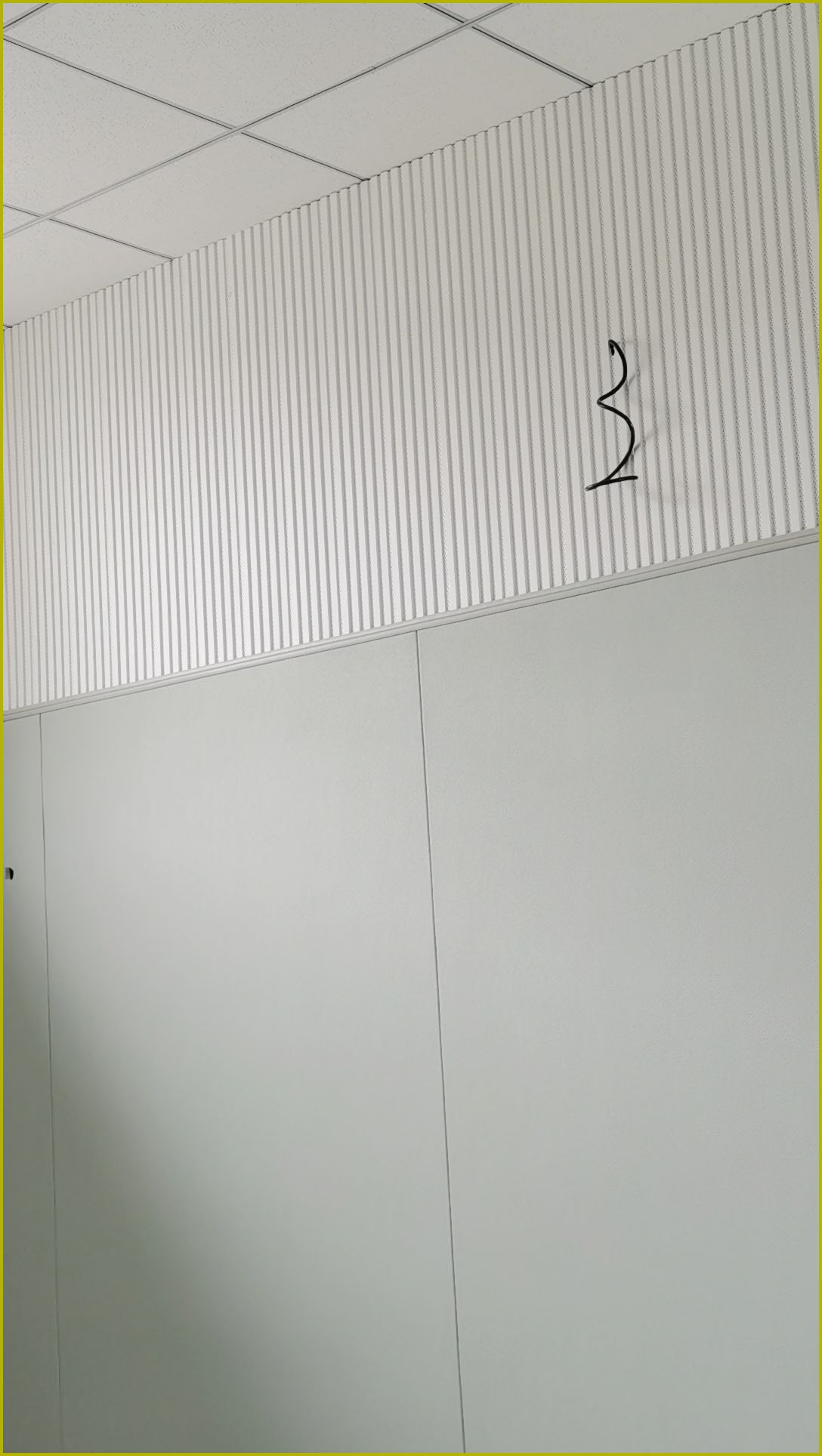
What does a wood sound diffuser actually cost?
Numbers from the project, since nobody publishes these. The 100 mm-deep QRD panels landed at $85 per square meter delivered, factory-direct from 景丽伦英文站, against a $130 quote for near-identical spec from a trading company. The 50 mm fabric-wrapped absorbers ran $38 and the 25 mm polyester panels $12, with mechanical installation on furring strips adding about $9 per square meter in labor.
If you stack quote sheets side by side, you will miss the variable that actually drives price: well depth. Depth means material, weight and freight, so a 200 mm architectural unit can cost triple the 100 mm one, while a shallow 50 mm cosmetic panel costs a third. Compare the depth column, the sequence length and the existence of scattering test data before you compare prices. Any diffuser with sound-scattering claims and no ISO 17497-1 report behind it is selling you a decorative shelf.
One honest aside. For a home studio I would not pay for 100 mm QRD at all; a 50 mm unit scattered across a narrower band does fine where nobody is taking legal notes. This depth class exists for rooms where the recording has to survive in court.
Install day, and the adhesive mistake I caught
Day twelve of the schedule: two workers kneeling on the vinyl, a bucket of full-bed construction adhesive open between them, one troweling it across the back of a QRD panel like he was laying bathroom tile. I crossed that room fast enough to spill my coffee. Full-bed adhesive under a diffuser is how you quietly murder the design.
Glue that bridges the well floors lifts the effective depth of the whole sequence, and a couple of millimeters of filler across the grooves is enough to shove the scattering band upward, right past the speech frequencies the panel was tuned for. We switched the acoustic diffuser runs to point-mount brackets on a French cleat with furring strips at 400 mm centers, sealant only along the top edge, wells left open. By the final room the same worker was checking every module's orientation twice without being asked, which I count as a professional win.
Another catch that day: two adjacent modules had been hung mirrored instead of continued, which makes the wall symmetric and funnels scattered energy into predictable lobes. A QRD sequence has to keep reading left to right across modules the way a sentence reads across a page. Total run for the eight rooms and roughly 180 square meters of treated surface came to 18 working days, including three days of measurement and layout, nine days of fabrication, four days of installation and two days of acceptance testing. (At handover, make the contractor hand over the combustion report for the exact batch on your walls; the fire-safety sign-off stalls without it.)
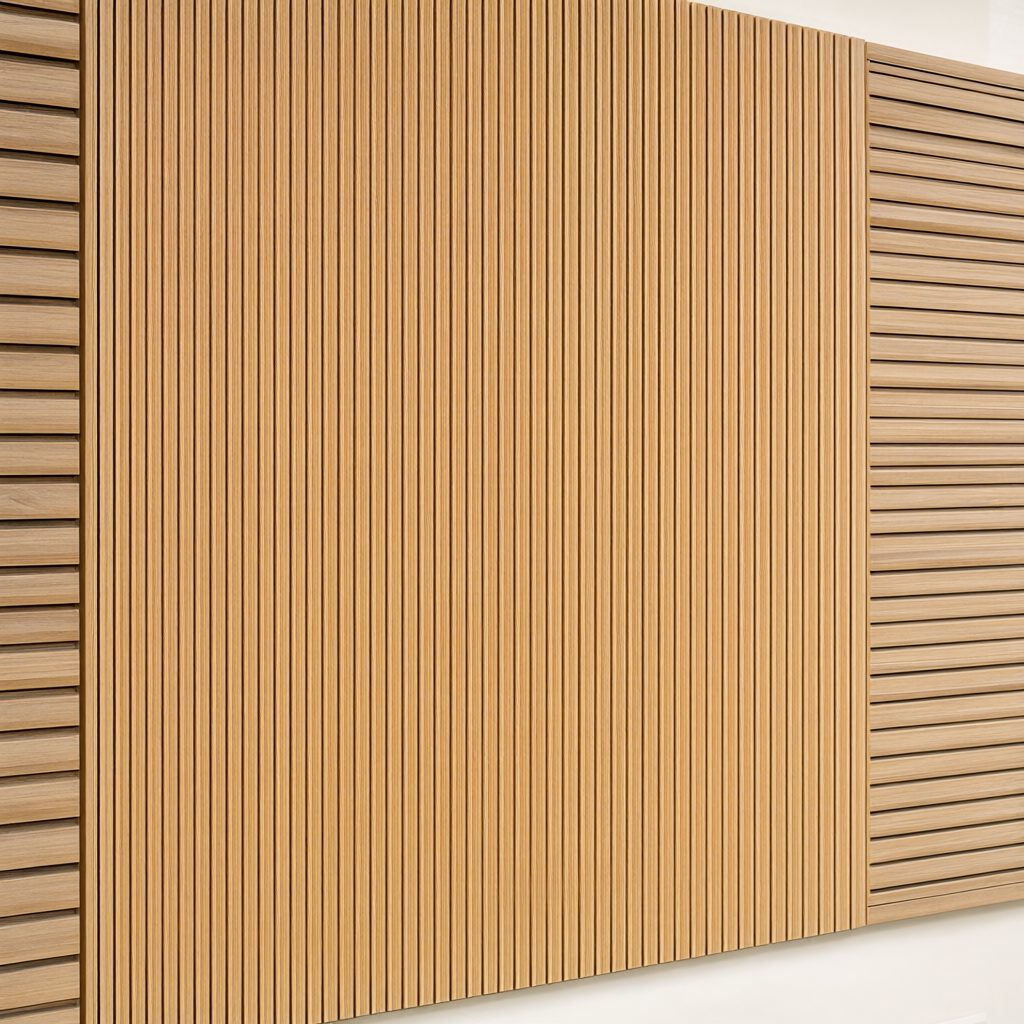
Clap once and you will know what to order
Stand in the middle of the room, clap hard, and listen to what comes back. A metallic zip repeating for a second or more between two bare parallel walls means you need scattering on one of them, and a wood sound diffuser is the honest fix. If the clap dies quickly but speech still sounds boxy or muddy, the problem is energy, so put absorption on the side walls and ceiling and leave the parallel pair alone.
If what bothers you is a steady hum that never changes pitch, day or night, stop shopping for panels entirely. A transformer, pump or elevator machine is feeding vibration into the structure, and 100 Hz of structure-borne hum will laugh at anything glued to drywall. That call goes to a vibration isolation engineer, and every dollar spent on diffusers before that fix is a donation to the wall.
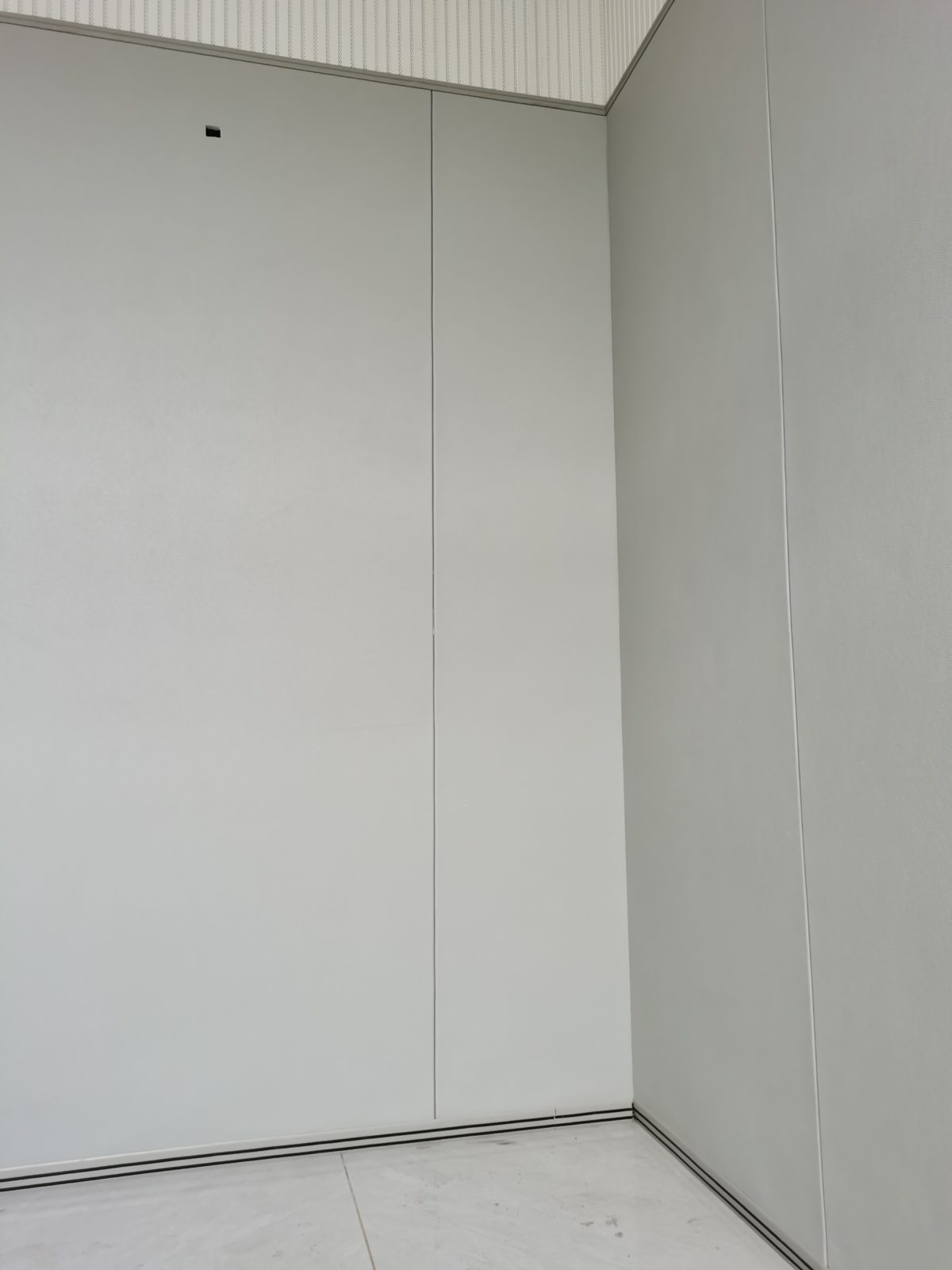
How much does a wood sound diffuser cost?
In our interrogation-room project, 100 mm-deep QRD wood diffusers cost $85 per square meter delivered factory-direct, against $130 from a reseller for near-identical spec. Shallow 50 mm decorative units run about a third of that, while 200 mm architectural depth can triple the price. Compare well depth and test data before you compare prices.
Sound diffuser or sound absorber: which one do I need?
Clap between your two bare parallel walls. A repeating metallic zip means flutter echo, and the fix is a sound diffuser on one of those walls. If the clap dies quickly but speech sounds muddy, order absorbers for the side walls and ceiling instead. Most speech-critical small rooms end up as a hybrid of both.
How long does a diffuser installation take?
Our eight-room retrofit, about 180 square meters of treated surface, took 18 working days end to end: three days of measurement and layout, nine days of fabrication, four days of mechanical installation, and two days of acceptance testing per ISO 3382-2. A single home studio typically wraps in two to three days.
What fire rating should sound diffuser panels have?
For occupied public buildings in China, wall-mounted finishes need B1 per GB 8624, which GB 50222-2017 enforces. Export markets commonly ask for Class A per ASTM E84, defined as flame spread index of 25 or below and smoke developed of 450 or below. Demand the combustion report for your exact batch at acceptance.
If any of this sounds like a room you are responsible for, send the dimensions, a photo of each wall and a note on what the recordings are used for to the 景丽伦英文站 design desk through the inquiry form on this page. The on-site measurement and the layout drawing are free, and a priced equipment list comes back within three working days.

Leave A Comment